Air ducts play an important role in maintaining indoor air quality and helping your HVAC system operate efficiently. Over time, dust, pet dander, pollen, mold spores, and other airborne contaminants can build up inside the ductwork. As air circulates throughout your home, these particles can be distributed into every room, affecting both comfort and cleanliness.
Many homeowners don’t think about their ductwork until they notice excessive dust, allergy symptoms, musty odors, or rising energy bills. Regular air duct cleaning can help reduce these issues, improve airflow, and support the long-term performance of your heating and cooling system. At Air Wolfe Air Duct Cleaning, we’ve seen firsthand how professional air duct cleaning can help homeowners throughout Needham and Greater Boston enjoy cleaner air and a healthier indoor environment.
In this guide, we’ll explore the benefits of cleaning air ducts, how duct systems become contaminated, the warning signs to watch for, and when professional air duct cleaning may be necessary.
How Air Ducts Become Contaminated
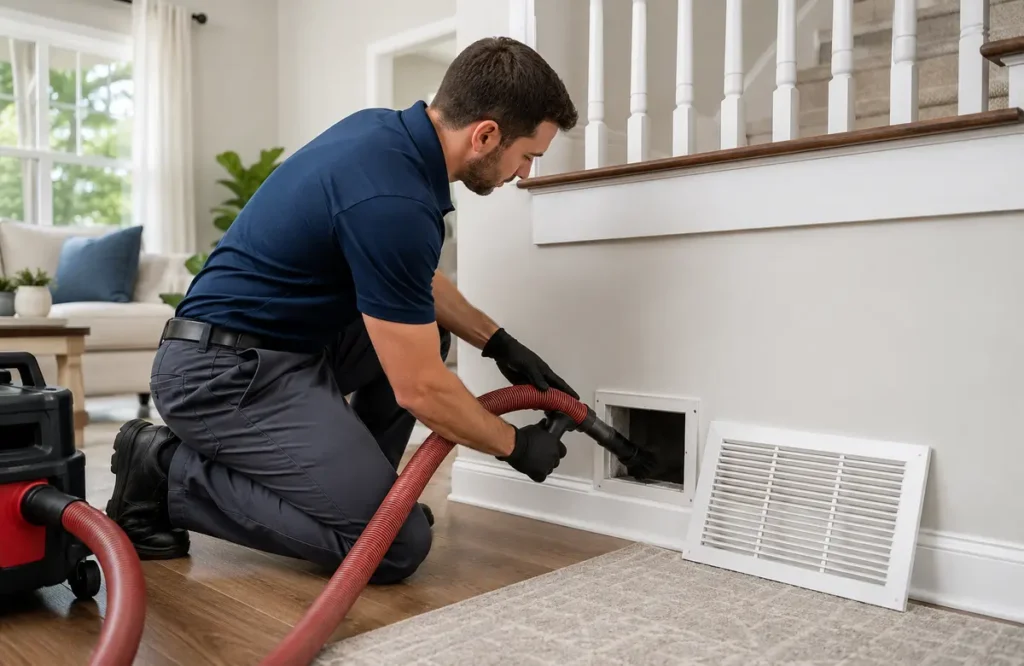
Ducts do not get dirty overnight. It is a slow build, and a few everyday things drive it.
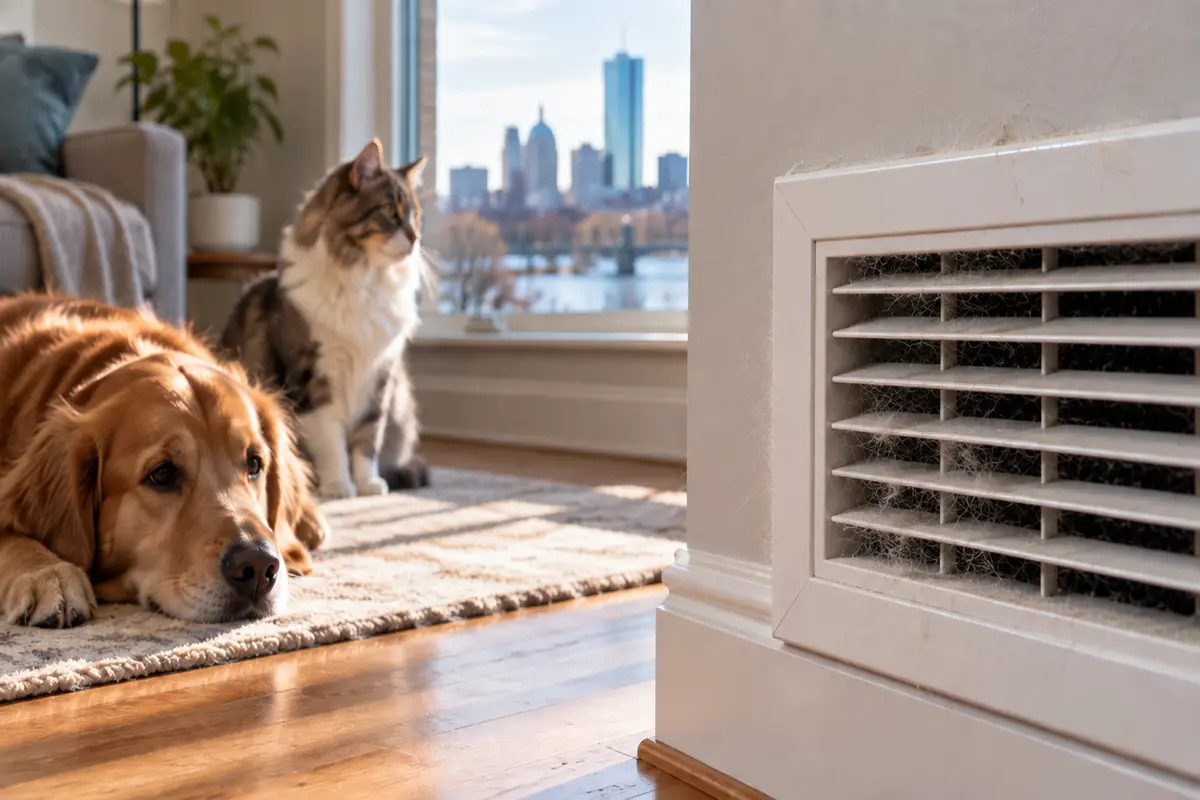
Dust and debris are constant. Tiny particles slip past your filter, settle on the duct walls, and pile up over months and years. Pets add dander and fur to the mix. Pollen drifts in through open windows each spring and fall. And in damp spots, mold can take hold and spread along the system.
Habits and events speed it up. Skip filter changes and buildup races ahead. A home renovation sends drywall dust deep into the ducts. Seasonal debris piles up with each change of weather. The EPA notes that indoor air can be more polluted than the air outside, and your ductwork is a big part of why. The more a system runs without attention, the more it collects, until that buildup starts circulating right back into your living space.
Older Needham homes feel this faster. Decades-old ductwork tends to hold more, and our long heating season keeps the system running for months, circulating and depositing dust the whole time. Humid summers add moisture to the mix, which is exactly what mold needs to settle in. It all adds up to ducts that need attention sooner than a generic national timeline would suggest.
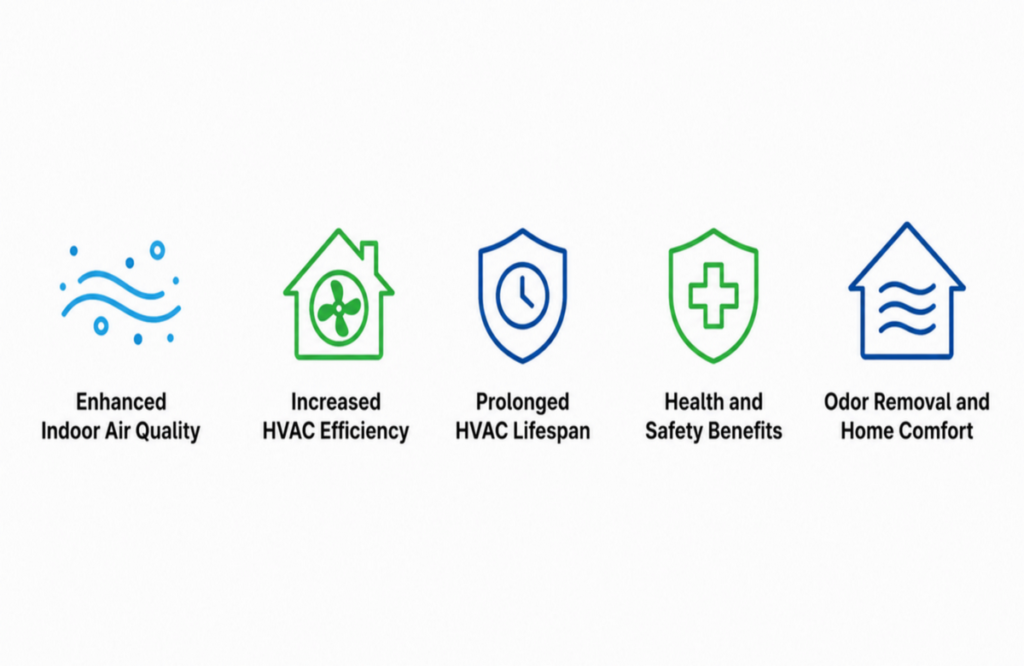
Top Benefits of Cleaning Air Ducts
A thorough cleaning of air ducts pays off in more ways than most people expect. Some you notice within days, others show up quietly on a bill or over the years. Here is what you actually gain.
Enhanced Indoor Air Quality
This is the big one. Clean ducts hold far less dust, pollen, and mold spores, so the air moving through your home carries fewer of them. For anyone who battles allergies or struggles to breathe easily indoors, that drop in airborne irritants is something you feel. Less sneezing. Clearer mornings. Fewer triggers are floating around with every cycle of the system.
Everyone in the household, not just the allergic ones. Babies, the elderly, and the kids with asthma spend most of their day inside, breathing re-circulated air. Reducing the contaminant load at the source means that everybody in the home breathes cleaner air all day long.
Increased HVAC Efficiency
Think of buildup as friction. Dust coating the inside of your ducts forces the HVAC system to shove air through a narrower, grittier path, and shoving harder burns more electricity. Clear it out and the air glides through the way it should. The system relaxes, cycles less often, and that ease lands on your power bill as a smaller number. It also spares the components that grind themselves down whenever the unit is straining.
If lower running costs interest you, our breakdown of air duct cleaning cost in Needham, MA, weighs the spend against the savings.
Prolonged HVAC Lifespan
A strained system wears out faster, plain and simple. When your furnace or air handler fights against clogged ducts month after month, the motor and moving parts take the hit. Easing that load helps the equipment reach its full lifespan instead of failing early. Given that a replacement runs into the thousands, a clean system is cheap insurance.
There is a knock-on benefit too. A system that is not constantly overworked needs fewer repairs along the way, which means fewer service calls and fewer surprise bills between now and the day you eventually replace it.
Health and Safety Benefits
Allergies are only the start. Ductwork left dirty can turn into a home for bacteria, mold, sometimes pests, and every time the system fires up, it carries a little of that through the house. A cleaning thins out the airborne pathogens and the asthma triggers riding along with them. It also strips away the moisture and grime that lured the bacteria and pests in to begin with. Households with young kids, aging parents, or anyone whose immune system is already taxed have the most to gain here, since they are the ones breathing it in hardest.
Odor Removal and Home Comfort
You know that stale, musty whiff some homes get the moment the heat or AC switches on. Nine times out of ten it is coming from the ducts, cooked up by trapped dust, a patch of mold, or lingering damp. Scrub the source and the smell leaves with it, because you are not just masking the symptom. The bonus is airflow. A clean system breathes better, and a home that breathes better is one that simply feels nicer to sit in.
Signs You Need Air Duct Cleaning
Your home tends to tell you when the ducts are overdue, if you know what to listen for.
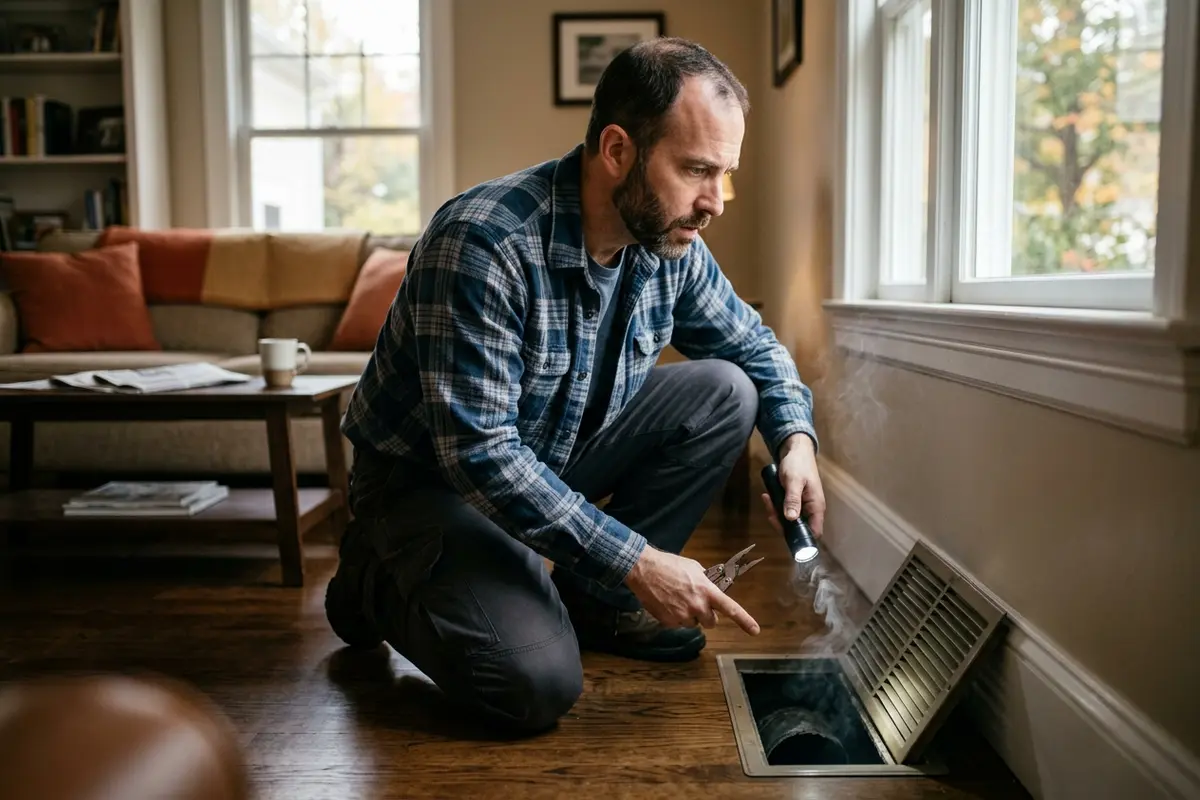
Dust is the obvious tell. Wipe the grilles and vent covers, and if they get gray again within days, debris is cycling through the system. Smell matters too — a damp, earthy odor when the unit runs usually means mold or heavy buildup somewhere in the ductwork. Then there are the allergies. When sneezing, congestion, or itchy eyes ease up the moment you walk out the door, the air inside is often the reason, and your ducts are feeding it.
Watch the system itself, as well. An HVAC unit that runs longer than it should, or struggles to hold the temperature you set, may be fighting restricted airflow from all that buildup. Catch two or more of these together, and it is worth booking an inspection before things get worse.
Professional vs DIY Air Duct Cleaning
You can do a little of this yourself, though the limits show up fast.
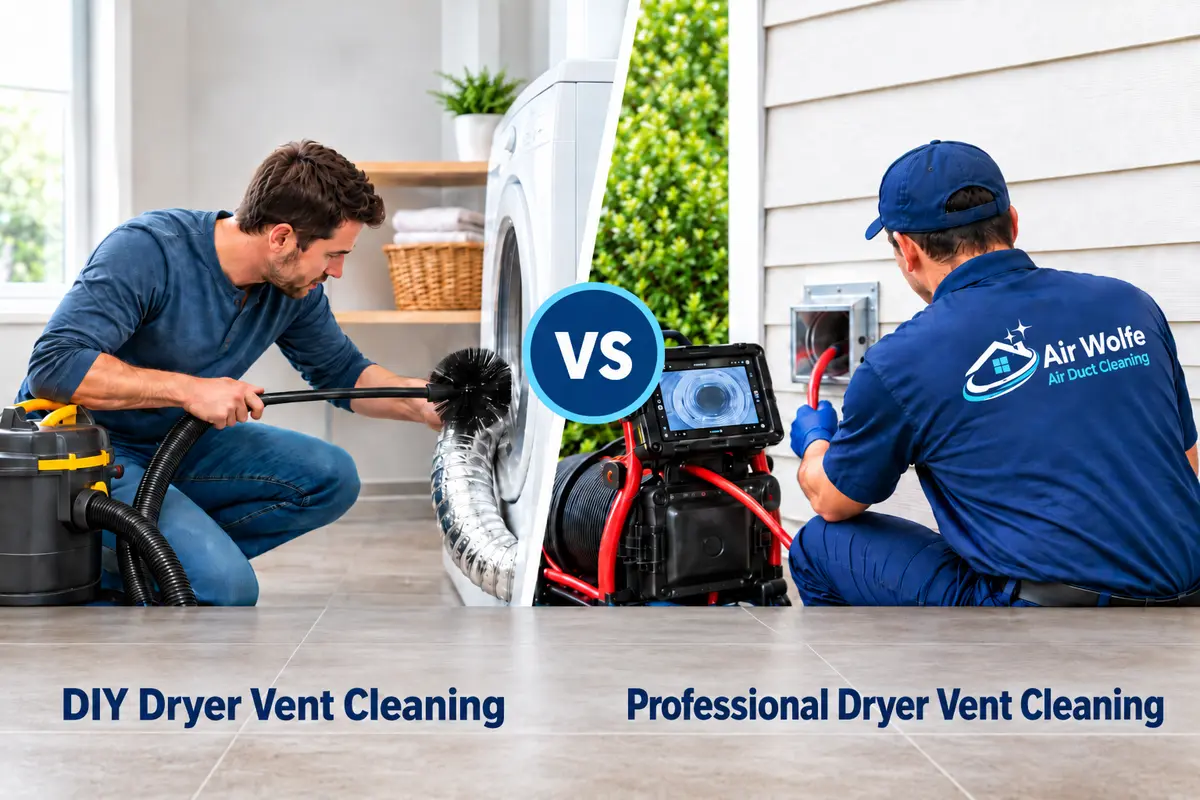
With a household vacuum, you will reach the vent covers and maybe a few inches of duct beyond them. That handles light surface dust and not much else. The real system runs well past where any home tool can get, and household suction simply cannot drag packed debris off the duct walls. Worse, poke at a patch of mold without proper containment, and you risk scattering spores around the house rather than pulling them out of it.
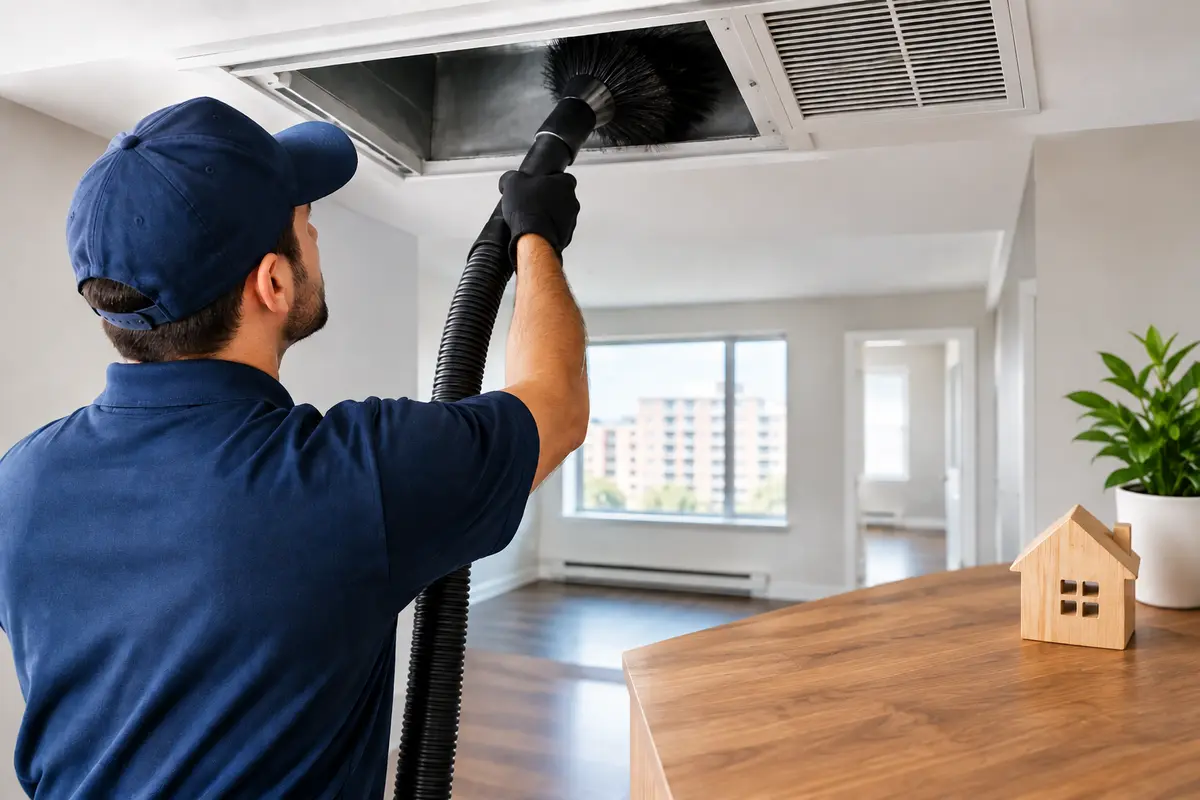
Where DIY stops, the pros pick up. Truck-mounted vacuums, rotary agitation tools, and technicians who do this daily clear the whole system and safely deal with mold. Picking a company comes down to a few checks: licensing and insurance, pricing you can see up front, NADCA certification, and reviews from actual neighbors. Get those four, and you have likely found a keeper.
And steer clear of the $79 or $99 whole-home deals. That figure rarely holds once the work starts, and the add-ons surface after the crew is already standing in your hallway. A written quote that lays out the full scope before anyone arrives is the real mark of a company worth trusting.
The Professional Cleaning Process Explained
Curious what your money actually buys? A real cleaning moves through a set order, and any decent company will talk you through each stage as it happens.
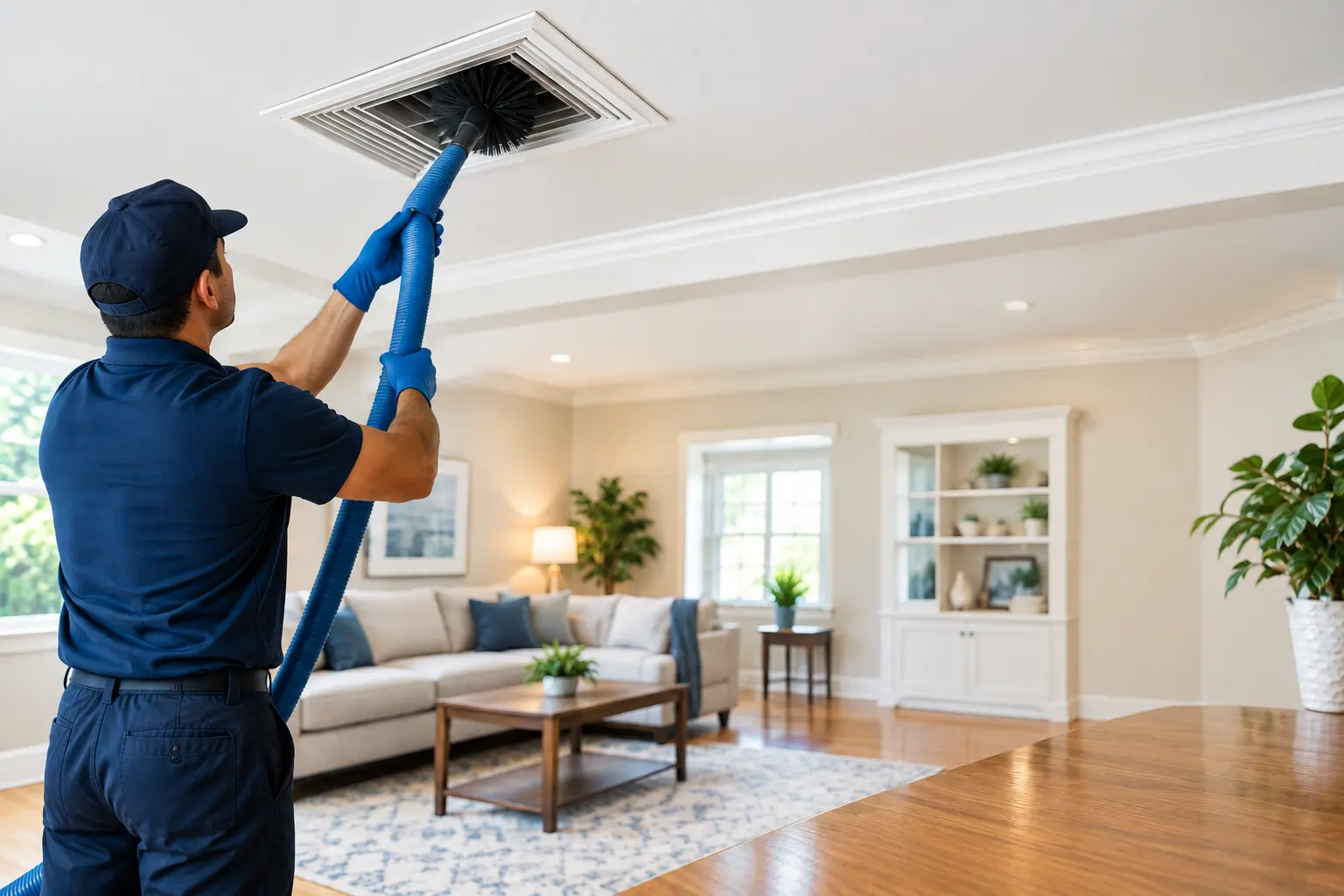
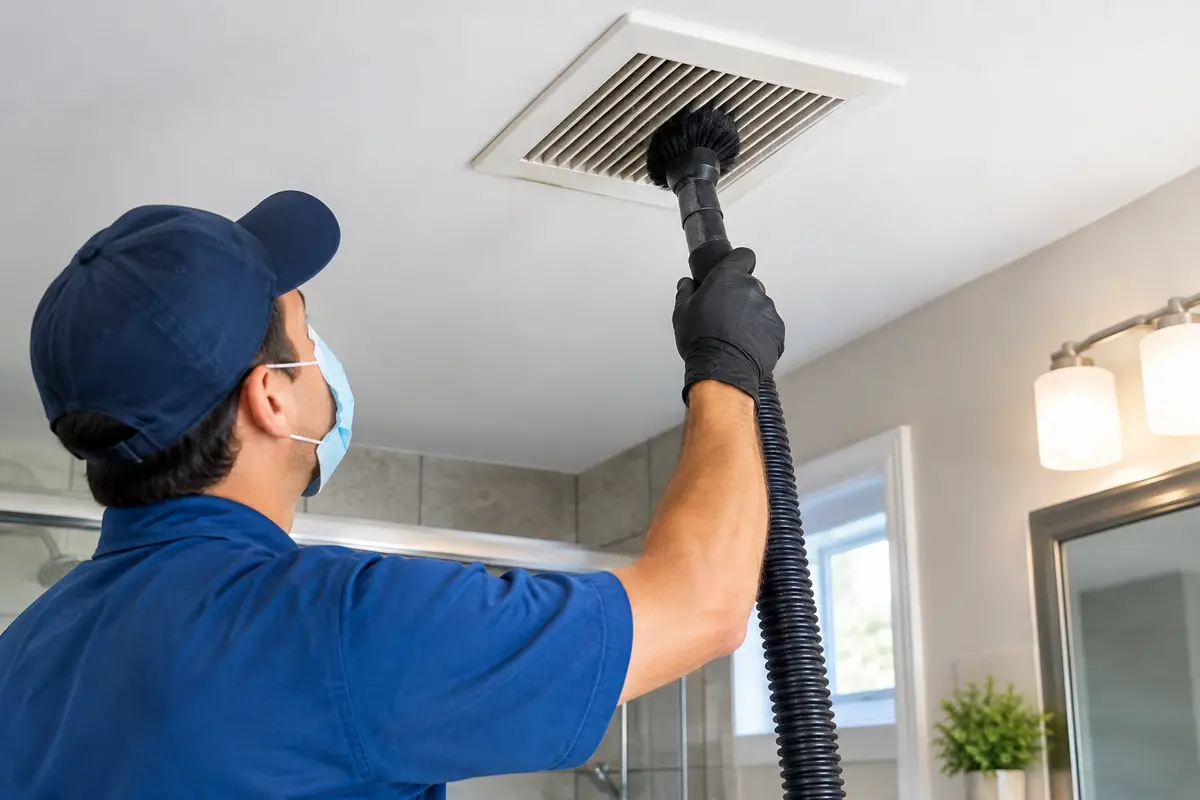
It starts with eyes on the system. The technician reads your duct layout, finds where the buildup is thickest, and notes any mold or damage before a single tool comes out. Then the negative-pressure vacuum hooks in — industrial suction built to swallow everything that breaks loose instead of puffing it back into your rooms.
Agitation comes next. Rotary brushes and bursts of compressed air knock the caked dust off the duct walls while the vacuum hauls it away. Should mold or odor turn up, an optional sanitizing pass coats the interior with an eco-friendly antimicrobial treatment.
Then it closes the way it opened, with an inspection — this time a written report showing what came out and the shape your system is in. Every professional air duct cleaning we run ends right there. No mystery. No surprise upsell at the door.

Cost Factors and Return on Investment
There is no flat sticker price here. A few details decide where your quote lands.
Size carries the most weight, because more square footage means more ductwork and more vents to work through. After that, it is the length and layout of your ducts, how filthy the system has gotten, and how easily a technician can actually reach everything. Tucked-away ducts in a cramped crawl space cost more in labor than a wide-open basement run ever will.
Most homes settle into the few-hundred-dollar range, and badly soiled or oversized systems climb from there. Set that against what you get back, though. Trimmer energy bills every single month. Fewer allergy flare-ups around the house. An HVAC system that keeps running for years longer than a neglected one would. Our guide on how much air vent cleaning costs lays out every pricing factor in detail. Look at it that way, and a cleaning is a modest, occasional cost that quietly shields some far bigger ones.
There is a resale angle too, worth a quick mention. A documented cleaning history and clean, efficient ductwork are small selling points when the time comes, and they signal a home that has been looked after rather than let slide.
How Often Should You Clean Your Air Ducts?
For most homes, every three to five years is the general standard, though many Needham, MA households do well on a two-to-three-year rhythm. Certain situations call for more frequent attention. Here is a simple guide.
| Your Situation | Suggested Frequency |
|---|---|
| Standard home, low use | Every 3 – 5 years |
| Most homes, average use | Every 2 – 3 years |
| Pets or allergy sufferers | Every 1 – 2 years |
| After a renovation | Once the dust settles |
| Commercial spaces | Annually or per contract |
Pets, allergy concerns, or a recent remodel? Lean toward the shorter end of the range. Renovation dust in particular settles deep, so a clean once the work wraps up is well worth it. Our full guide on how often air ducts should be cleaned walks through every scenario in detail.
One simple practice helps to fill the “cleaning gap”: change your filters on time. New filters trap more before it even gets to the ducts, which delays buildup and extends the interval before your next professional cleaning.
Final Thought
Fewer smells, fewer allergens, and equipment that lasts longer.
Cleaning air ducts can improve so many aspects of the way your home feels and functions that it’s easier to become fond of the idea of cleaning air ducts.
If the warning signs sound familiar, or it has simply been a few years, your system is probably due. There is no downside to a quick inspection, and plenty of upside if it turns something up.
Protect your home’s air quality — schedule a cleaning of air ducts today. Contact Air Wolf for a free estimate or call (617) 991-6651. Cleaner air starts here.
The EPA states that the air within homes and other buildings can be more seriously polluted than outdoor air in even the largest, most industrialized cities — and that people spend approximately 90% of their time indoors.
Source: U.S. Consumer Product Safety Commission
Frequently Asked Questions
Can duct cleaning improve allergies?
Yes, for most people. Cleaning air ducts removes the dust, pollen, and mold spores that get rerouted through the house, and therefore there is less of these in the air to trigger a reaction. Add in the use of good filters and you are giving allergy sufferers a much better chance of having relief indoors.
Is duct cleaning messy or disruptive?
Less than you would think. The vacuum equipment runs loudly for a few hours, and technicians move from room to room, but the negative-pressure system keeps debris contained rather than spilling into your home. Most people carry on with their day while the work happens.
How long does cleaning take?
Two to four hours for a typical home. Smaller spaces finish faster; large houses with multiple systems take longer. You will get a firm estimate once a technician has sized up your setup.
DIY vs professional — which is safer?
Professional, when it comes to real cleaning. DIY is fine for wiping down vent covers, but reaching deep into the system or dealing with mold takes equipment and training that a homeowner does not have. Done wrong, DIY can spread contamination instead of clearing it. If there is any sign of mold, leave it to the pros entirely.