If you’ve gotten a quote for dryer duct cleaning anywhere between $75 and $300, you’ve probably wondered what’s actually different between the cheap and expensive options. At Air Wolfe Air Duct Cleaning, based in Needham, we get this question from homeowners across Needham, Newton, and Boston almost every week, and the honest answer is that much of the “dryer vent cleaning” on the market is a five-minute lint-trap vacuum, not a real service. Here’s exactly what a genuinely professional job includes, what building code actually requires, and why the difference matters more than most homeowners realize.
The Full Dryer Duct Cleaning Process, Step by Step
A real dryer vent cleaning covers the entire exhaust path, not just the parts you can see. Here’s what should happen on every visit:
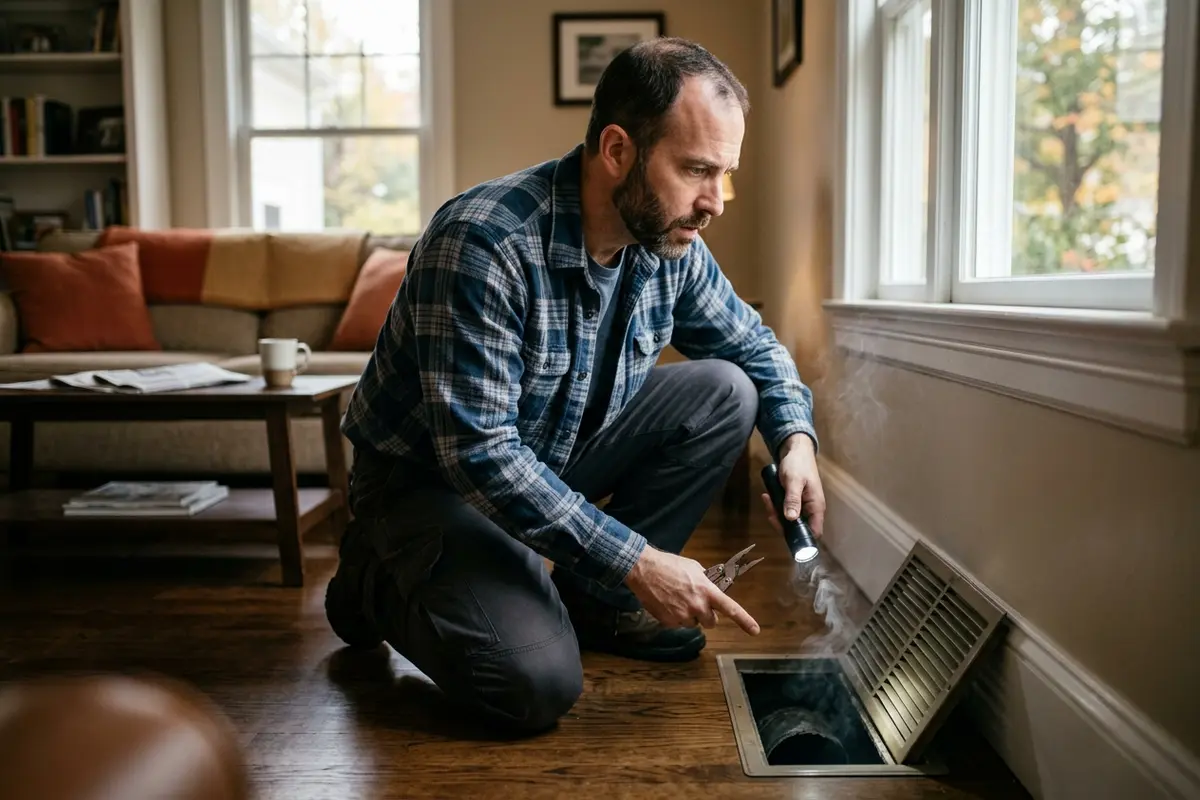
Full inspection first. A technician should check the duct material, length, number of bends, and the condition of the transition hose behind the dryer before touching anything, not just glance at the lint trap.
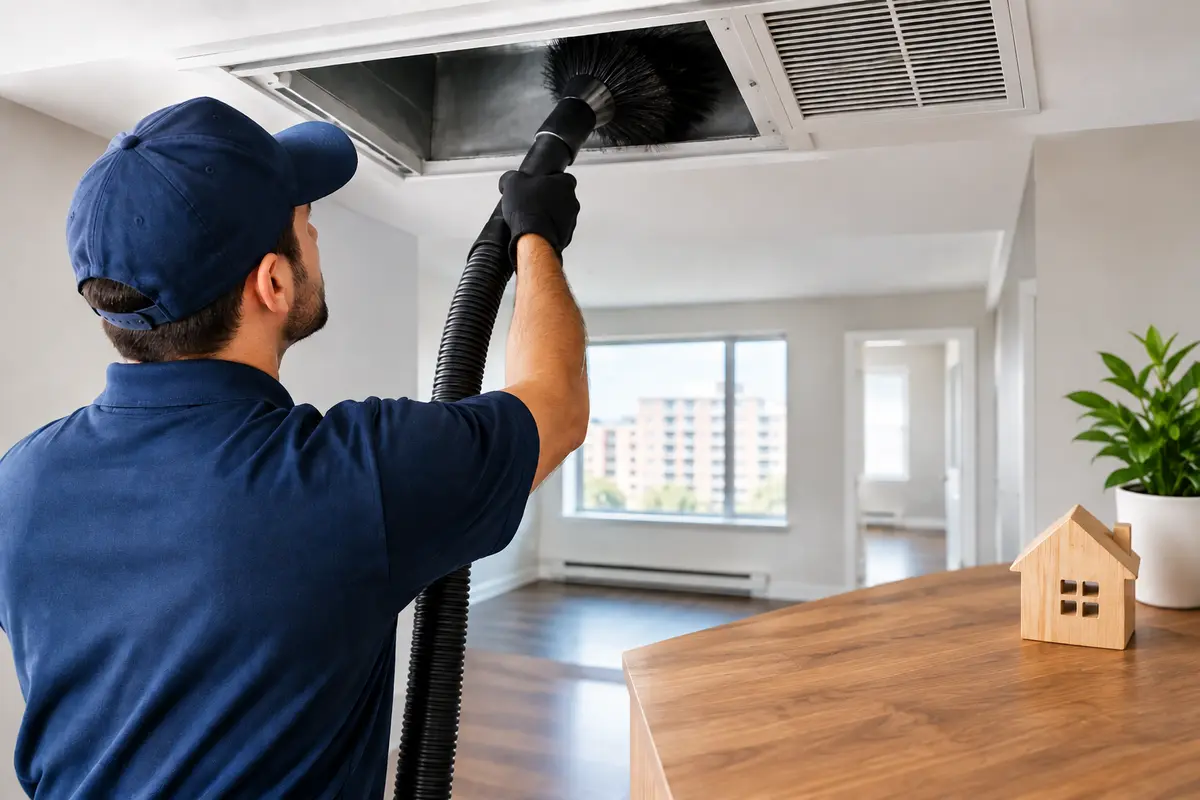
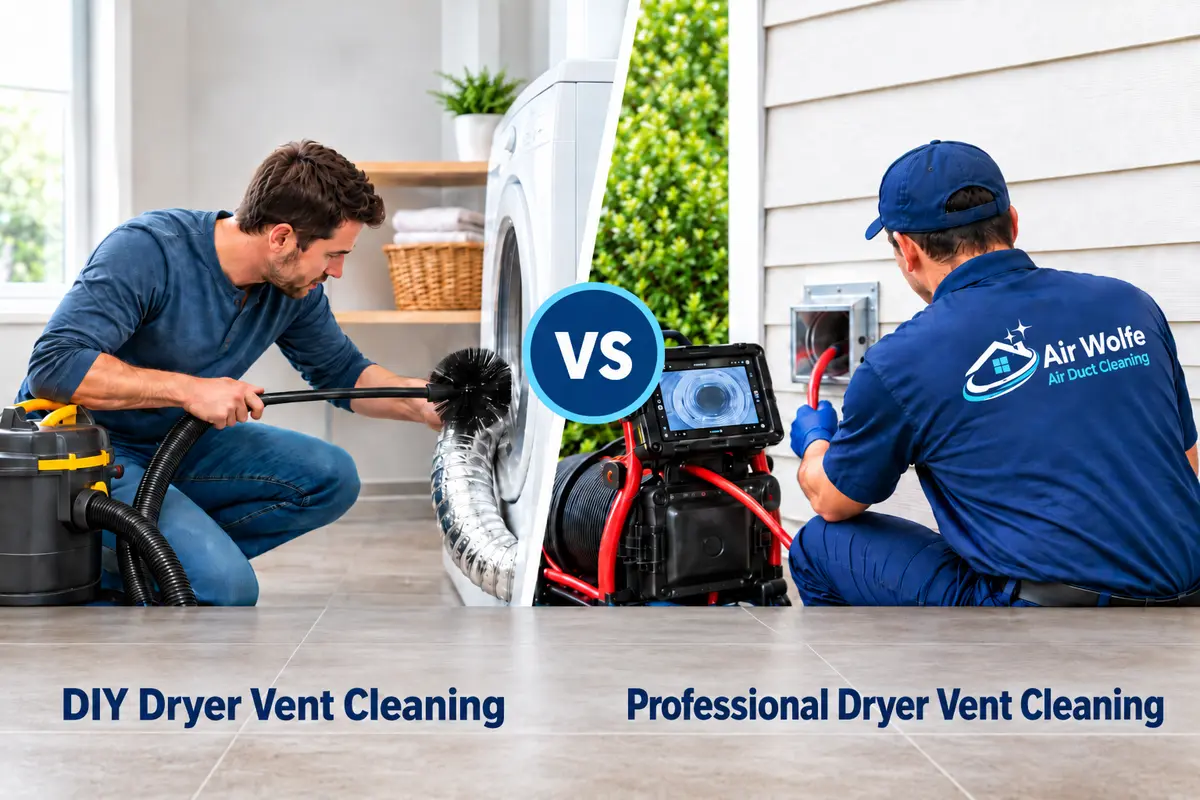
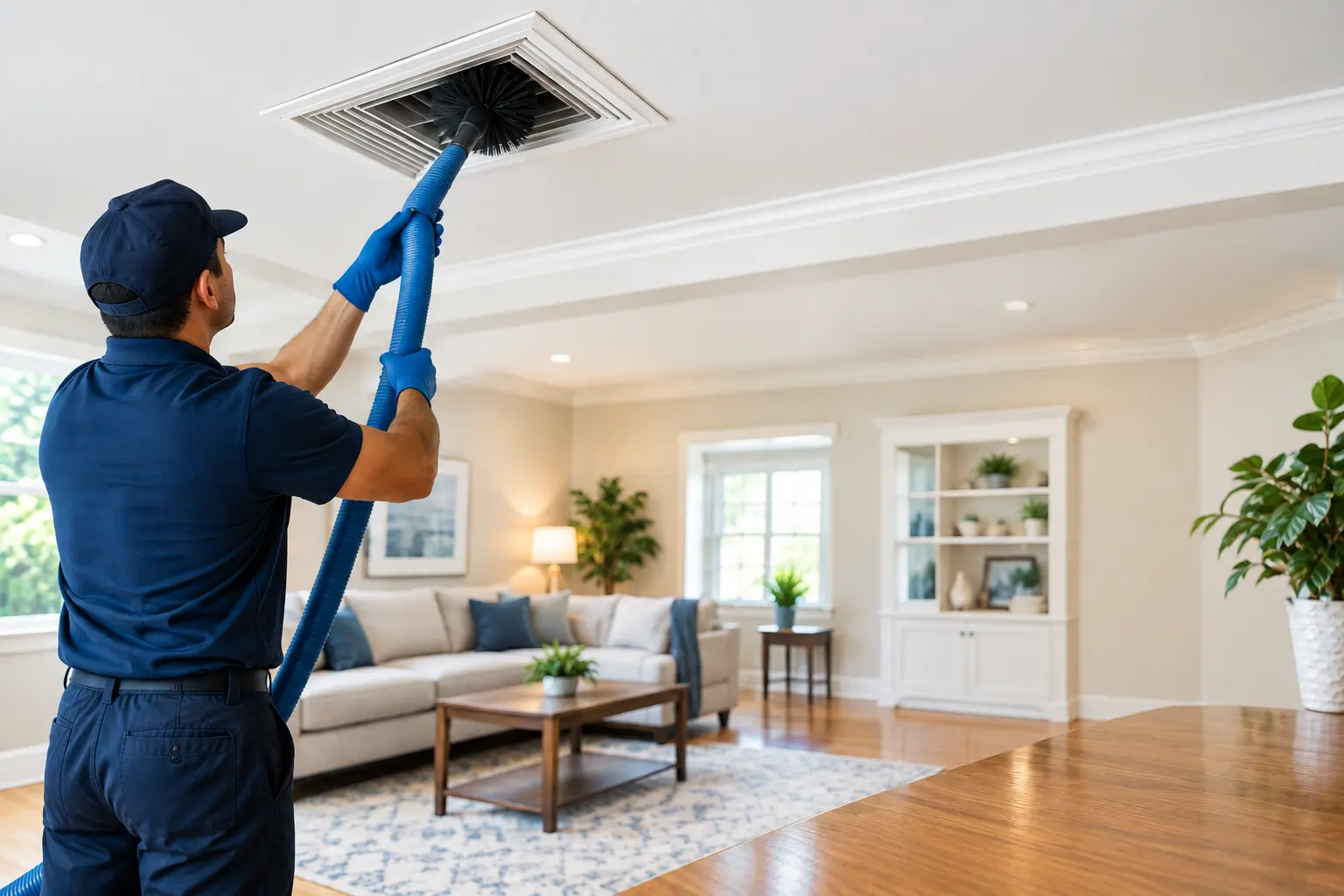
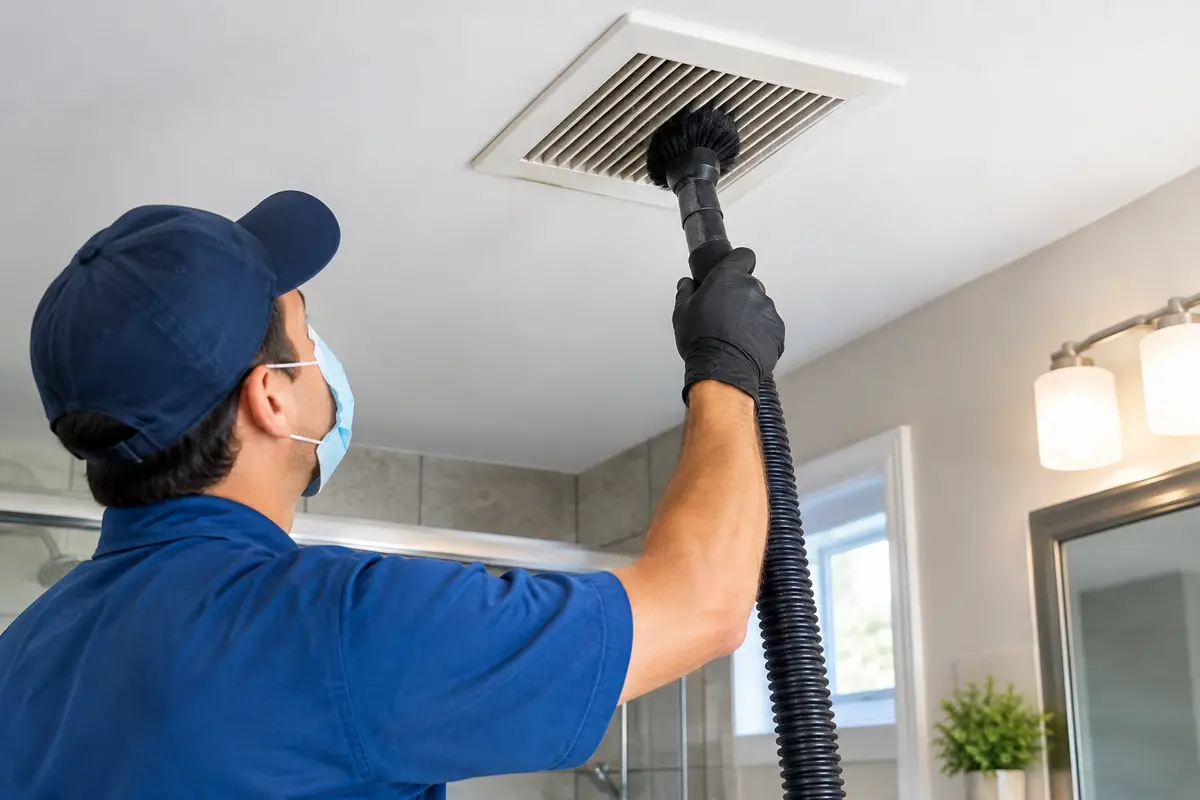
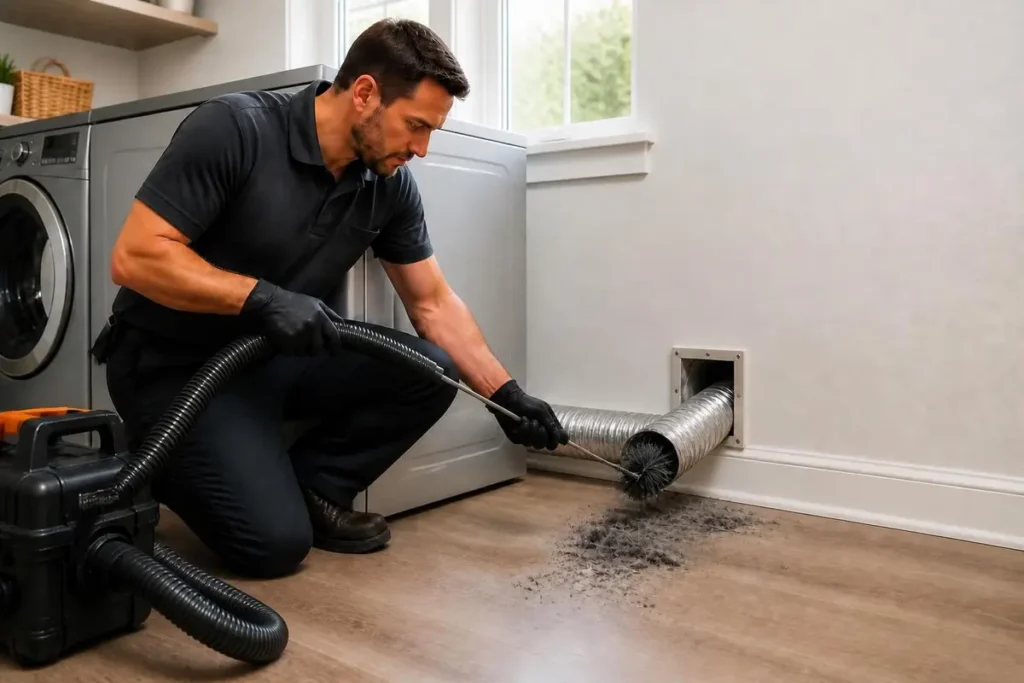
Negative-pressure extraction, not a shop vac. Professional equipment connects a high-powered vacuum to one end of the duct while a rotary brush works through the full length from the other end, dislodging compacted lint the vacuum then captures. A standard shop vac or a store-bought brush kit can’t generate the suction needed to pull lint out of a duct with multiple bends.
The exterior cap gets cleaned too. Lint doesn’t just build up inside the wall; it collects at the exterior vent hood, and bird nests or debris at the termination point are common. A cleaning that skips the outside cap has skipped half the job.
The dryer gets moved and reconnected properly. The technician should disconnect the dryer, clean the transition duct behind it, and reconnect everything correctly, not just run a brush in from the outside cap and call it done.
Airflow gets checked afterward. A thorough service confirms the fix worked by checking that air is actually moving freely through the vent once cleaning is complete, not just assuming the job is finished because lint came out.
If a quote sounds too cheap to include all of that, it usually is.
The Code Compliance Check Real Dryer Duct Cleaning Should Include
Under the International Residential Code (Section M1502), dryer exhaust ducts have to be rigid or semi-rigid metal with a smooth interior, not the flexible foil or vinyl duct that was common in older installations and is still sold at hardware stores. Foil and vinyl ducts sag, trap lint at every ripple, and are a documented fire hazard. Current code also caps duct length at 25 to 35 feet of equivalent run (depending on the code edition your town has adopted), with each 90-degree elbow subtracting roughly 5 feet from that allowance. Exterior caps are required to have a working backdraft damper and are prohibited from having a screen, since screens catch lint and eventually block airflow entirely. If your duct run exceeds the code-allowed length, a listed booster fan, not a longer run of standard duct, is the code-compliant fix. A technician who’s just running a brush through your vent without checking any of this is treating a code and safety issue like a housekeeping task. Knowing the warning signs your dryer vent needs cleaning can help homeowners identify airflow problems before they become a serious safety concern. A real professional flags these issues during the inspection step, before cleaning even begins.
Why Professional Dryer Duct Cleaning Matters More in Needham’s Older and Larger Homes
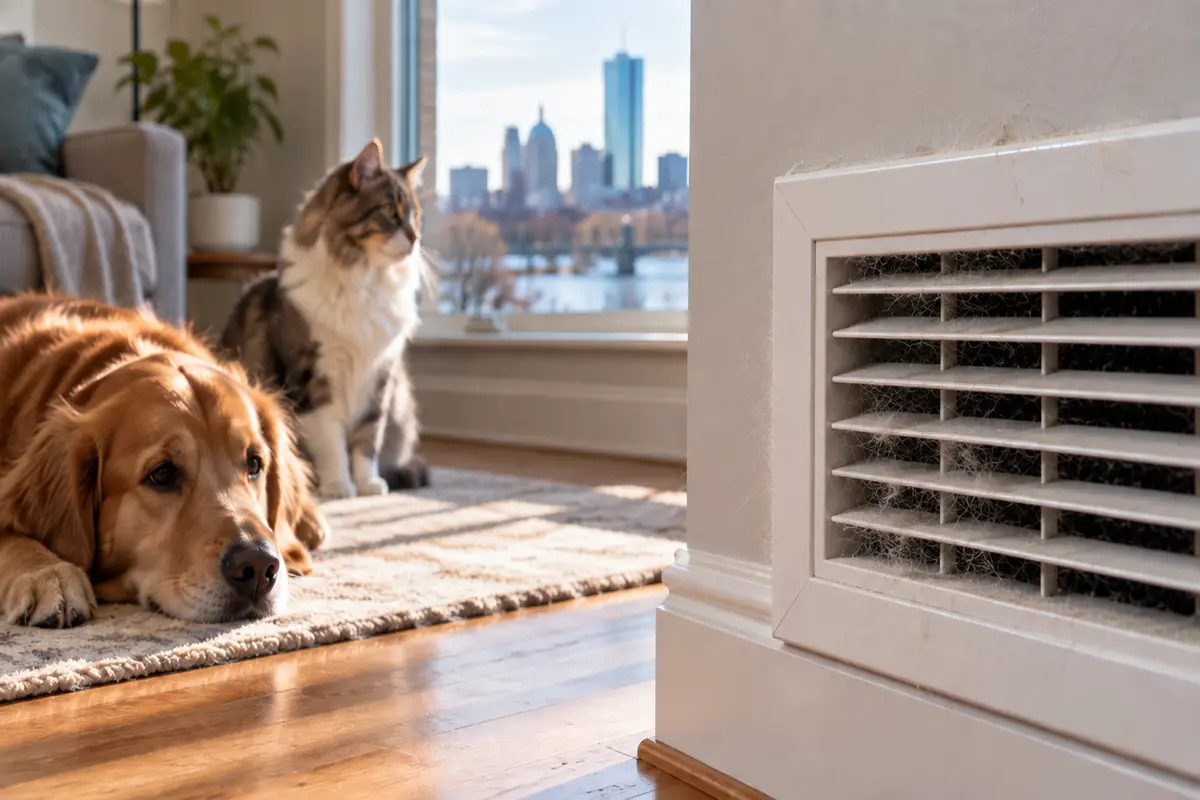
Needham and the surrounding towns have a mix of housing stock that makes this code-compliance check especially relevant. Older colonials built before the early 2000s code updates sometimes still have the original flexible foil transition duct running the full length instead of just the short connector section, a setup that was standard practice at the time but wouldn’t pass inspection today. Multi-story homes and larger properties throughout Needham, Newton, and Dover often have longer duct runs from the laundry room to an exterior wall or roofline, which increases the odds of exceeding code-allowed length and needing a booster fan to stay compliant. A clogged dryer vent fire risk is also why NFPA data on dryer fires matters locally, not just as a national statistic. The National Fire Protection Association attributes roughly a third of home clothes dryer fires to failure to clean the appliance or its venting system, and that risk compounds in a longer or older duct run where lint has more surface area and more time to accumulate before anyone notices.
What Professional Dryer Duct Cleaning Costs?
Nationally, a standard residential dryer vent cleaning runs $100 to $250, with most homeowners paying closer to $130 to $180 for a straightforward wall-exit vent. Roof-exit vents, multi-story runs, or vents with significant bird or rodent debris tend to land at the higher end of that range. The job itself typically takes 30 to 60 minutes for a standard setup, longer if the technician finds a code issue that needs to be addressed or a duct run that requires more extensive extraction. Air Wolfe Air Duct Cleaning quotes flat, written pricing before we start, and if we find a code violation or a safety issue during the inspection, we’ll tell you exactly what it is and what it would take to fix, not just clean around it and send you a bill.
FAQ
- How often should I get professional dryer duct cleaning?
Most homes benefit from annual cleaning. Larger households, homes with pets, or anyone running multiple loads daily may need service every six to nine months. - Is dryer duct cleaning the same as dryer vent cleaning?
Yes, “duct” and “vent” are used interchangeably in the industry to describe the exhaust pathway running from your dryer to the outside of your home. - Can I clean my dryer duct myself?
DIY brush kits can help with short, straight runs, but they typically can’t generate enough suction to fully clear a duct with multiple bends, and they won’t catch a code violation like a flexible foil duct or an oversized run. Most homeowners pair basic DIY lint-trap maintenance with an annual professional cleaning. - What’s the biggest sign my dryer duct needs cleaning?
Clothes taking noticeably longer to dry, the laundry room getting unusually hot during a cycle, a burning smell, or visible lint around the dryer are the clearest signs it’s time for a cleaning. - Does professional cleaning include fixing code violations like flexible foil duct?
Inspection and cleaning are typically included in the base service, but replacing non-compliant ducting (like flexible foil) is usually a separate repair. A good technician will tell you if this applies to your home rather than just cleaning around the problem.
Ready for a Real Inspection, Not Just a Quick Vacuum?
Air Wolfe Air Duct Cleaning serves homeowners across Needham, Newton, Boston, and the rest of Greater Boston with full-length duct cleaning, code compliance checks, and flat-rate pricing, no surprises. If it’s been more than a year since your last cleaning, call (617) 991-6651 or email Info@airwolfeairductcleaning.com to schedule service.