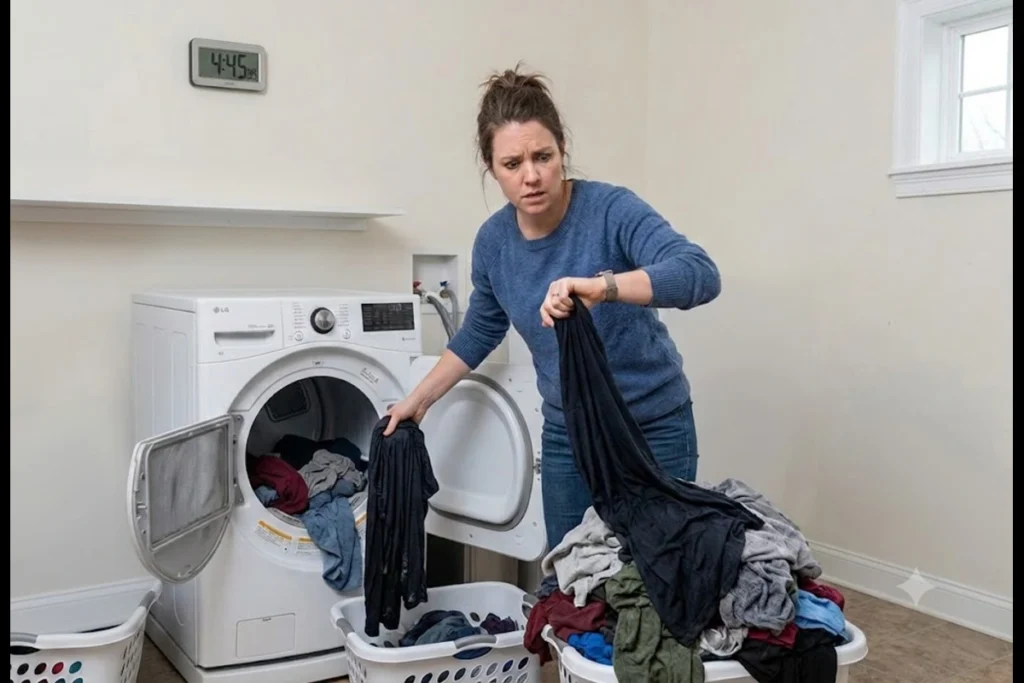
Two hours in, and your towels are still damp- sound familiar? A dryer taking too long to dry almost always points to blocked airflow somewhere in the system. At Air Wolfe Air Duct Cleaning, we help homeowners identify the root cause before it turns into a bigger and more expensive problem. You shouldn’t need three cycles just to dry a load of jeans.
A few things can cause this, and not all of them involve the vent. Sometimes it’s the lint trap. Other times it’s the vent line itself, packed with lint from months of use. Every once in a while, though rarely, the dryer’s heating element is actually giving out. The sooner you figure out which one applies, the more time and hassle you save with professional dryer vent cleaning.
Here’s the good news. Most causes are fixable, fast, and cheap compared to replacing the machine. A new dryer runs several hundred dollars at minimum, while most vent issues cost a fraction of that to resolve.
The rest of this article walks through the usual suspects, starting with the easy fixes and working toward the ones that need a professional. You’ll have a decent idea by the end whether you can solve this yourself or whether it’s time to call someone.
How Long Should a Dryer Cycle Normally Take?
A typical load runs 30 to 45 minutes with a clear vent and a properly sized load. Heavier items like towels or jeans can push closer to 50. If you’re regularly hitting 90 minutes or more, or running a second cycle just to finish the job, something’s off. That’s not normal wear, and it’s not just your imagination.
You can track it for a week if you’re not sure. It helps to jot down the cycle length for a few loads, especially similar-sized ones. A clear pattern usually shows up fast, and it tells you a lot about whether the problem is minor or worth a closer look.
Is Lint Trap Blockage Behind a Dryer Taking Too Long to Dry?
Lint trap blockage causes more slow-drying complaints than anything else, by a wide margin. A trap packed with lint blocks airflow right at the source. It helps to clean it after every load, not every few loads, and you’ll rule out the simplest cause in about ten seconds.
What a Clogged Trap Actually Does
Even a thin layer of lint left behind reduces airflow more than people realize. Across a week of loads without a full clean, that adds up to a real problem. Some fabric softener sheets make it worse too, leaving a residue that clogs the mesh even after you think you’ve cleaned it.
You can run your fingers across the trap after wiping it down to check. A waxy or slick feeling means residue is still there, even if it looks clean to the eye. A wash with warm water and a bit of dish soap every month or so clears that film out completely.
When Does a Dryer Vent Inspection Become Necessary?
A dryer vent inspection becomes worth scheduling once you’ve ruled out the lint trap and the problem sticks around. The vent line running from your dryer to the outside wall collects lint the trap never catches. Over months, sometimes just weeks in a busy household, that buildup narrows the whole passage. Left unchecked, it can also become a serious fire hazard. Learn how a clogged dryer vent can cause a fire and why regular maintenance matters.
A homeowner in Fall River swapped her lint trap habits, cleaned it religiously, and still fought two-hour drying times. It turned out her vent line had a sagging section behind the wall where lint had been collecting for years. A proper inspection found what a filter change never could.
Vent length plays a role too, and it’s worth knowing before you assume the worst. A straight run of eight feet or less rarely causes major issues on its own. Longer runs, especially ones with multiple turns, need cleaning more often simply because there’s more surface area for lint to grab onto along the way. A lot of Massachusetts homes built before the 1980s have dryers tucked into basements or interior laundry rooms. That layout usually means a longer run than a newer build with the laundry room against an exterior wall.
What Are the Overheating Dryer Symptoms to Watch For?
Signs of an overheating dryer deserve more attention than most homeowners give them. A dryer running hotter than normal isn’t just inefficient. It’s a safety issue too.
• Burning or hot plastic smell
• The dryer’s exterior feels unusually warm
• The auto-shutoff trips before clothes are dry
• Clothes come out hot enough to feel uncomfortable
None of these are things to shrug off. If you notice even one, unplug the dryer and get the vent checked before running it again. If your appliance is also taking multiple cycles to dry a load, learn why your dryer is not drying clothes before the problem gets worse.
Could Vent Airflow Problems Be Bigger Than Just Lint?
Vent airflow problems sometimes go beyond lint entirely. Crushed or kinked flexible ducting restricts airflow just as badly as buildup does. Birds and small animals occasionally nest in exterior vent covers, especially in spring. Even a poorly installed vent cap can block enough air to slow drying times noticeably.
A few installation issues cause more trouble than homeowners expect.
• Vent runs longer than the manufacturer recommends
• Too many sharp 90-degree turns in the ducting
• Flexible foil or plastic ducting instead of rigid metal
• A damaged or missing vent cap outside
Dryer Taking Too Long to Dry? When to Call a Professional
You can handle the lint trap and the visible parts yourself, no question. The vent line running through your walls or attic is a different story.
Air Wolfe Air Duct Cleaning handles both the simple checks and the deep vent work in one visit. Professional tools reach sections you simply can’t, and they clear buildup without damaging the ducting.
A dryer taking too long to dry, even after you’ve done the basics, usually means it’s time to bring in someone who can see what you can’t.
Cost worries hold a lot of people back from calling, understandably. But weigh that against a higher electric bill every month, a dryer that wears out years early, and a real fire risk sitting behind your laundry room wall. A single inspection usually costs less than one month of the wasted energy a bad vent quietly racks up.
Vent maintenance matters for safety as much as convenience. The Consumer Product Safety Commission reports that clothes dryers are linked to thousands of home fires every year, many tied to lint buildup. A clear vent protects your home, not just your laundry schedule.
A slow dryer usually isn’t a sign you need a new machine. It’s a sign your vent needs attention. You can contact Air Wolfe Air Duct Cleaning today to schedule an inspection and get your drying times back to normal.