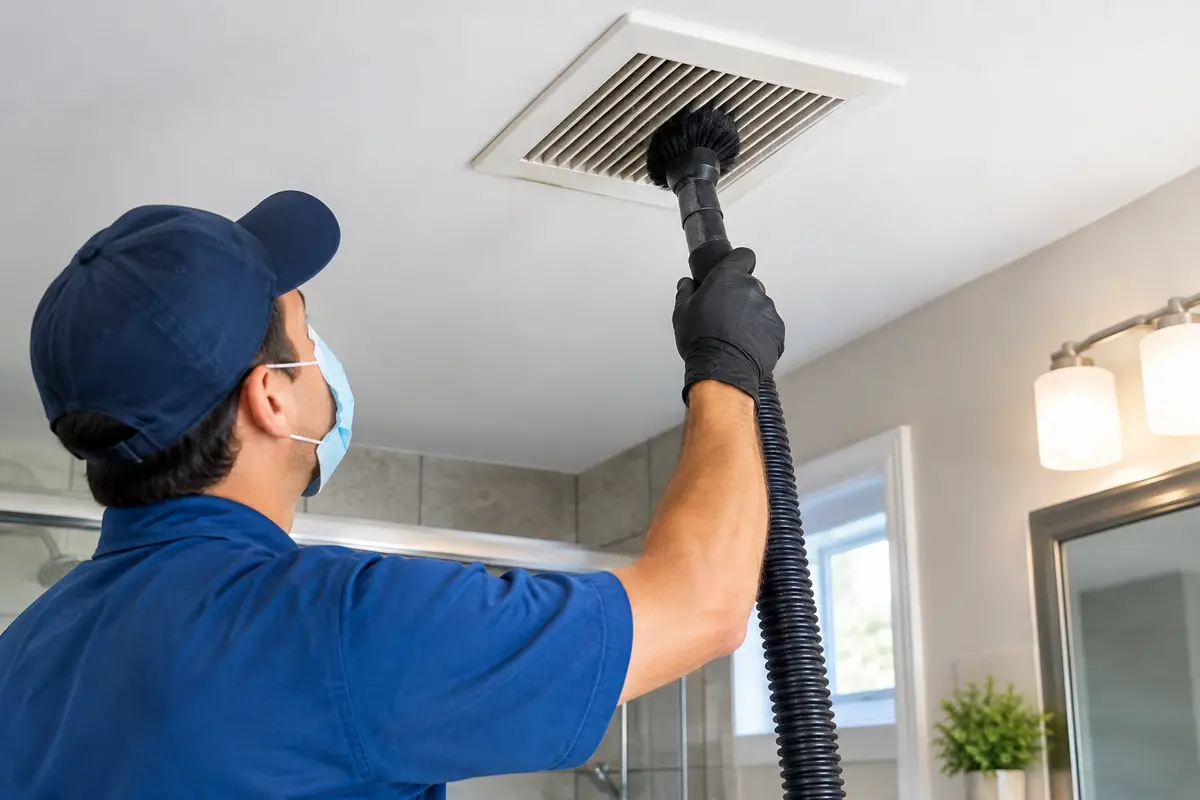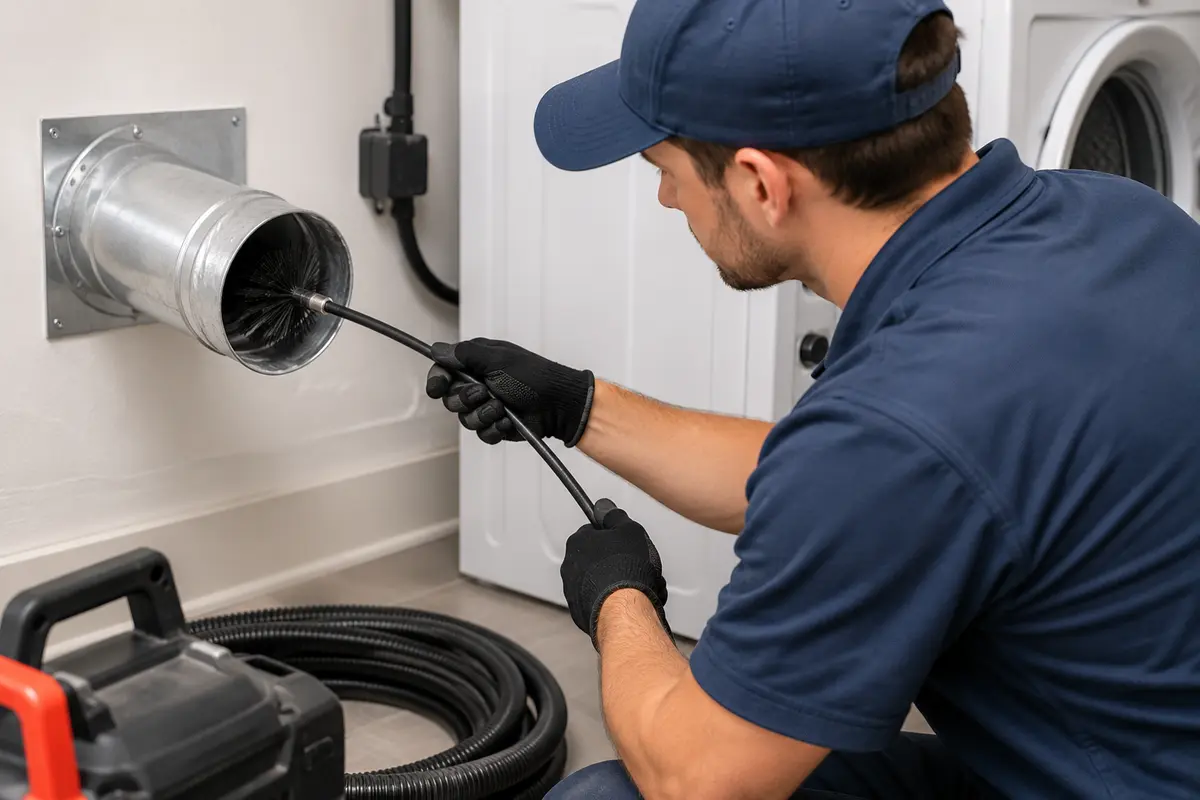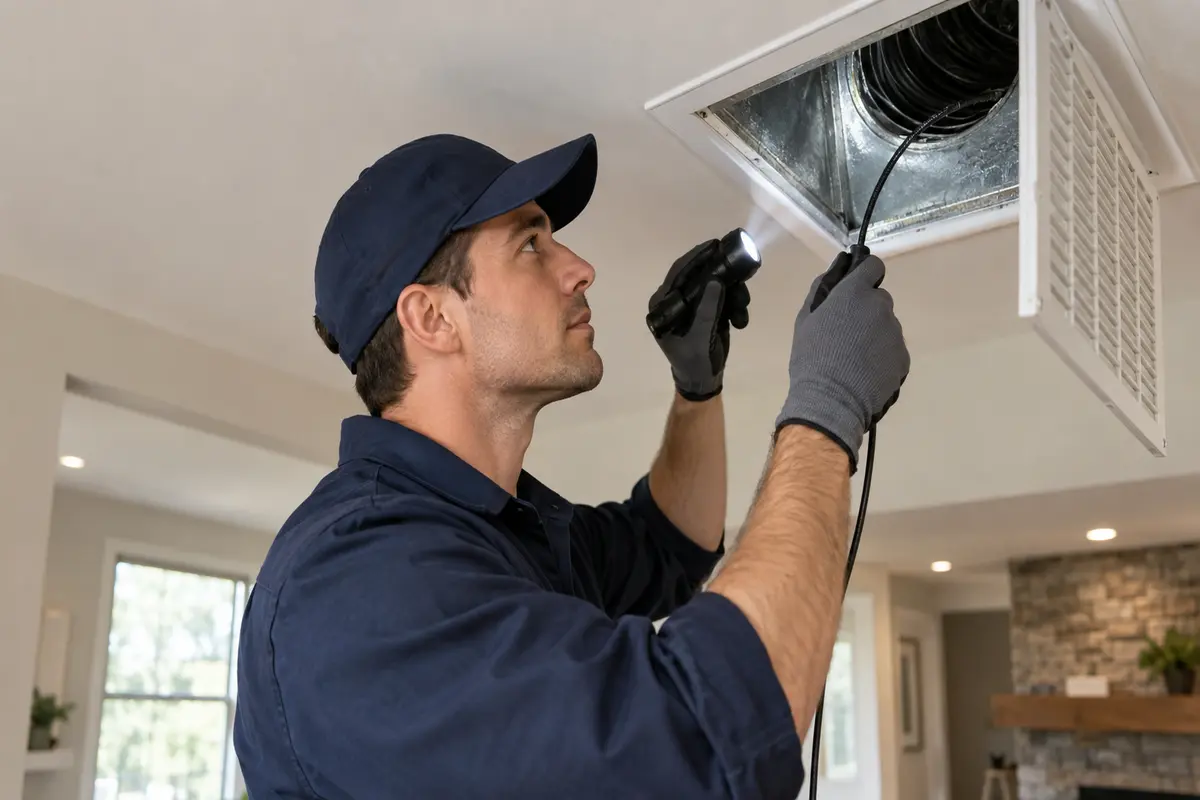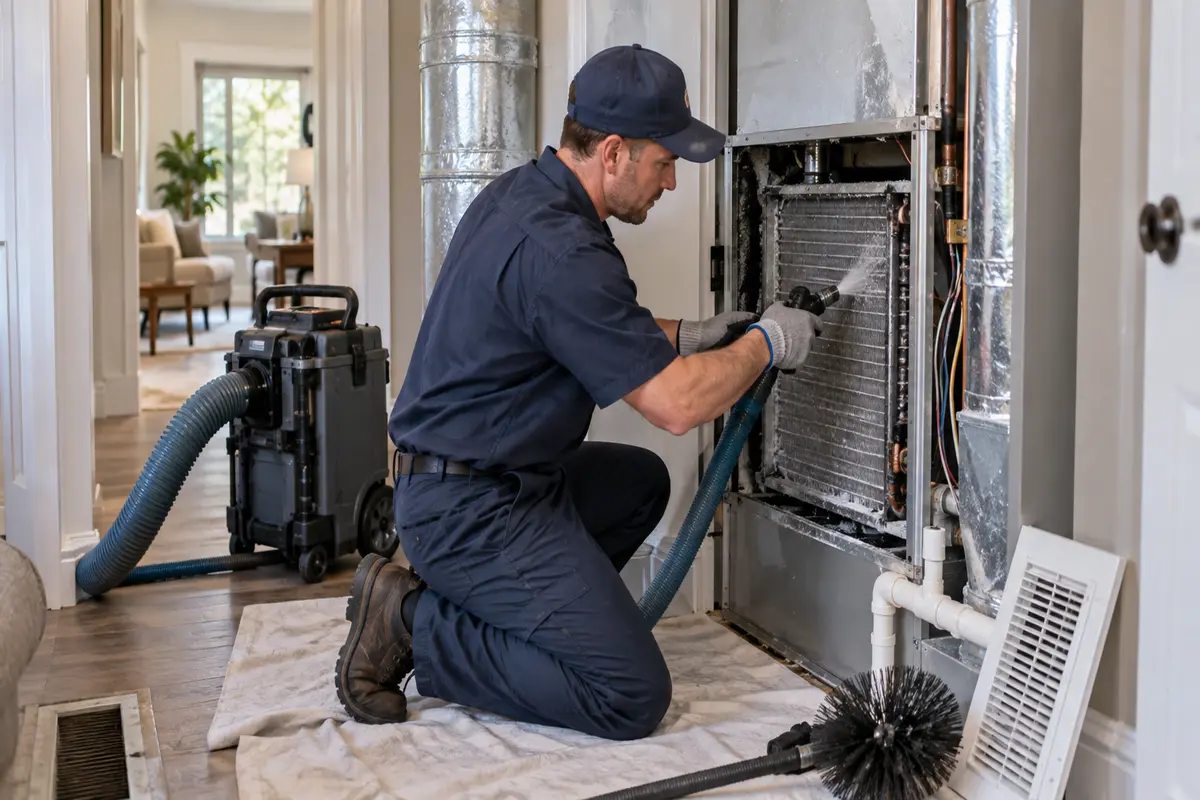
Most homeowners in Dover know to keep an eye on their dryer vent, but the exhaust fan pulling steam out of the bathroom every morning gets almost no attention until it starts rattling or stops working altogether. Air Wolfe Air Duct Cleaning routinely finds bathroom exhaust vents packed with the same kind of dust and lint that makes a dryer vent dangerous, sitting inside a fan that’s run for years without a single cleaning. Here’s why that buildup matters, how to tell if your vent needs attention, and what bathroom exhaust vent cleaning actually involves.
What Causes a Bathroom Exhaust Fan Fire
A bathroom exhaust fan pulls warm, moist air out of the room, and along with that moisture, it pulls in dust, hair, and lint from towels and bath mats. Over months and years, that debris builds up inside the fan housing and around the motor. Once enough accumulates, it acts as insulation around a motor designed to release heat, not trap it. A motor running hotter than it should, combined with a buildup of flammable lint sitting right against it, is exactly the combination fire departments point to when a bathroom fan fire starts.
This isn’t a hypothetical risk. Local fire departments across the country have documented residential fires that started inside bathroom exhaust fans because the fan hadn’t been cleaned in years, and the fire’s location inside a ceiling cavity often lets it spread before anyone notices smoke.
Signs Your Bathroom Vent Needs Cleaning
A few signs suggest a bathroom exhaust fan has more buildup than it should:
- The fan is noticeably louder or rattles more than it used to
- Steam or moisture lingers in the bathroom longer after a shower than before.
- Dust is visibly matted on the fan cover or grille.
- The bathroom mirror stays fogged for an unusually long time after the fan has been running.
- The fan feels warm to the touch after running for its normal cycle.
Any one of these on its own is worth a look. A fan that’s both louder and taking longer to clear steam is a stronger sign that airflow is genuinely restricted, not just cosmetically dusty.
How to Clean a Bathroom Exhaust Vent Safely
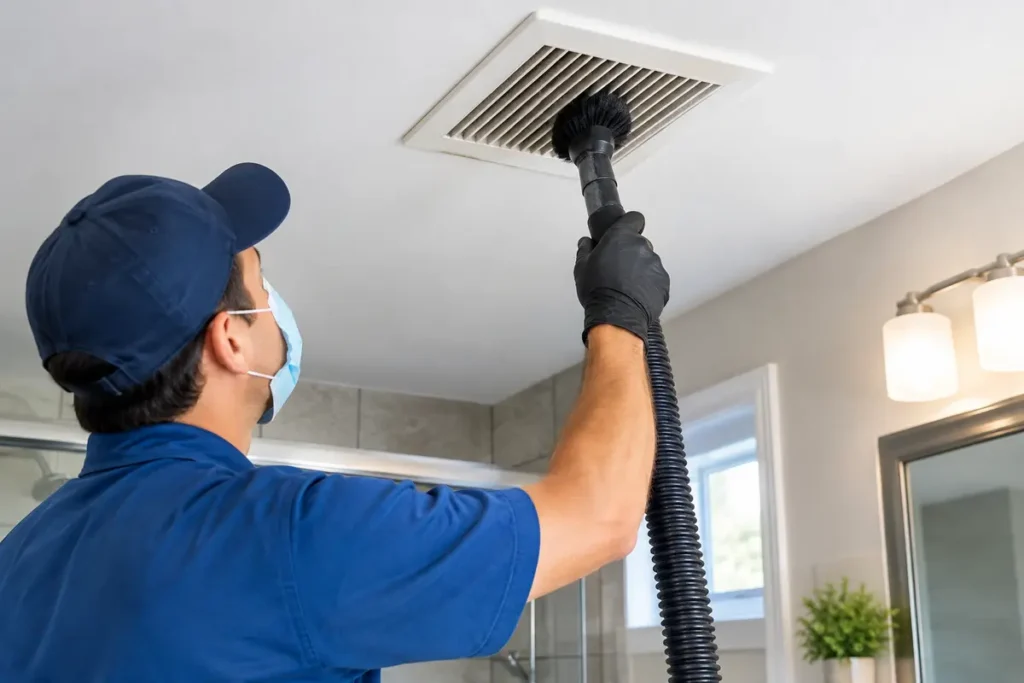
A basic cleaning is within reach for most homeowners. Turn off power to the fan at the breaker, remove the cover, and vacuum out visible dust and lint from around the motor and housing using a brush attachment. You can usually wash the cover in warm, soapy water and dry it completely before reattaching it.
What a homeowner typically can’t reach is the ductwork running from the fan housing to the exterior vent, especially in a multi-story home where that duct travels through an attic or between floors. Dust and lint that make it past the fan continue collecting inside that duct run, and clearing it requires the same equipment used for dryer vent cleaning rather than a household vacuum.
When to Call a Professional for Bathroom Exhaust Vent Cleaning
A DIY cleaning of the fan housing and cover is a reasonable first step. Still, professional bathroom exhaust vent cleaning is worth scheduling when the fan is old enough that the ductwork has likely never been cleaned, when steam and odours clear slowly despite a clean fan cover, or when the fan runs warm even after basic cleaning. In those cases, the buildup is further down the duct than a homeowner can safely reach, and clearing it fully requires opening up and accessing the full run from the fan to the exterior termination point.
Bathroom Exhaust Vent Cleaning vs Dryer Vent Cleaning: What’s the Difference
The two systems share a lot in common. Both move warm, moist air through a duct to the outside, both accumulate lint and dust along the way, and both carry a real fire risk when that buildup goes unaddressed for years. A clogged dryer vent’s fire risk comes from the same basic mechanism as a bathroom fan fire: trapped heat with a ready fuel source sitting right next to it.
The main difference is scale and usage frequency. A dryer runs for a longer, continuous cycle and generates more lint per use, which is why dryer vents typically need cleaning more often than a bathroom fan. But a bathroom fan that runs daily, sometimes for extended periods if left on by habit, accumulates enough buildup over several years to become a genuine concern even though each use produces far less lint than a load of laundry.
Bathroom Exhaust Fan Maintenance for Dover, MA Homes
Dover’s older homes, along with much of the surrounding housing stock in Newton and Brookline, often have bathroom fans installed decades ago as part of a renovation, with duct runs that weren’t always built to current standards. A fan retrofitted into an older ceiling may vent a shorter distance than a modern installation would require, or terminate in a location that’s harder to inspect. If your bathroom fan has never been serviced and the house is more than a decade or two old, it’s a good candidate for a first-time inspection rather than assuming it’s fine because it hasn’t caused a problem yet.
The EPA notes that a properly functioning bathroom exhaust fan is one of the most effective ways to control indoor moisture and reduce mould growth, so keeping the fan and its ductwork clear serves two purposes at once: reducing fire risk while also protecting indoor air quality.
Get Your Bathroom Exhaust Vent Inspected
If your bathroom fan is original to the house, runs warm, or you’re not sure when it was last serviced, Air Wolfe can inspect the fan and the duct run behind it as part of a broader air duct or dryer vent visit. Reach out to Air Wolfe to ask about bathroom exhaust vent cleaning for your Dover-area home, and get a straight answer on whether it needs attention now or can wait.
Frequently Asked Questions
- How often should a bathroom exhaust vent be cleaned?
Most bathroom exhaust fans benefit from a basic cleaning of the cover and visible housing every six months, with a more thorough duct cleaning every few years depending on how often the fan runs and how long the duct is. - Can a dirty bathroom exhaust fan actually cause a fire?
Yes. Lint and dust buildup around the motor can trap heat that the fan is designed to dissipate. That combination of heat and flammable material is a documented cause of residential fires that start inside bathroom exhaust fans. - How do I know if my bathroom fan duct is clogged versus if only the cover is dusty?
If cleaning the visible cover and housing doesn’t improve how quickly steam clears from the bathroom, or the fan still feels warm after running, the blockage is likely further down the duct rather than just on the surface you can see. - Is bathroom exhaust vent cleaning the same service as dryer vent cleaning?
They’re closely related but not identical. Both involve clearing lint and dust from a duct running to the outside, but a bathroom fan duct is typically smaller and runs less often, so it usually doesn’t need the same cleaning frequency as a dryer vent. - Do new bathroom fans need to be cleaned as often as older ones?
Newer fans and ducts installed to current standards tend to accumulate buildup more slowly, but they still need periodic attention. A fan that runs daily will collect lint over time, no matter how new the installation is.