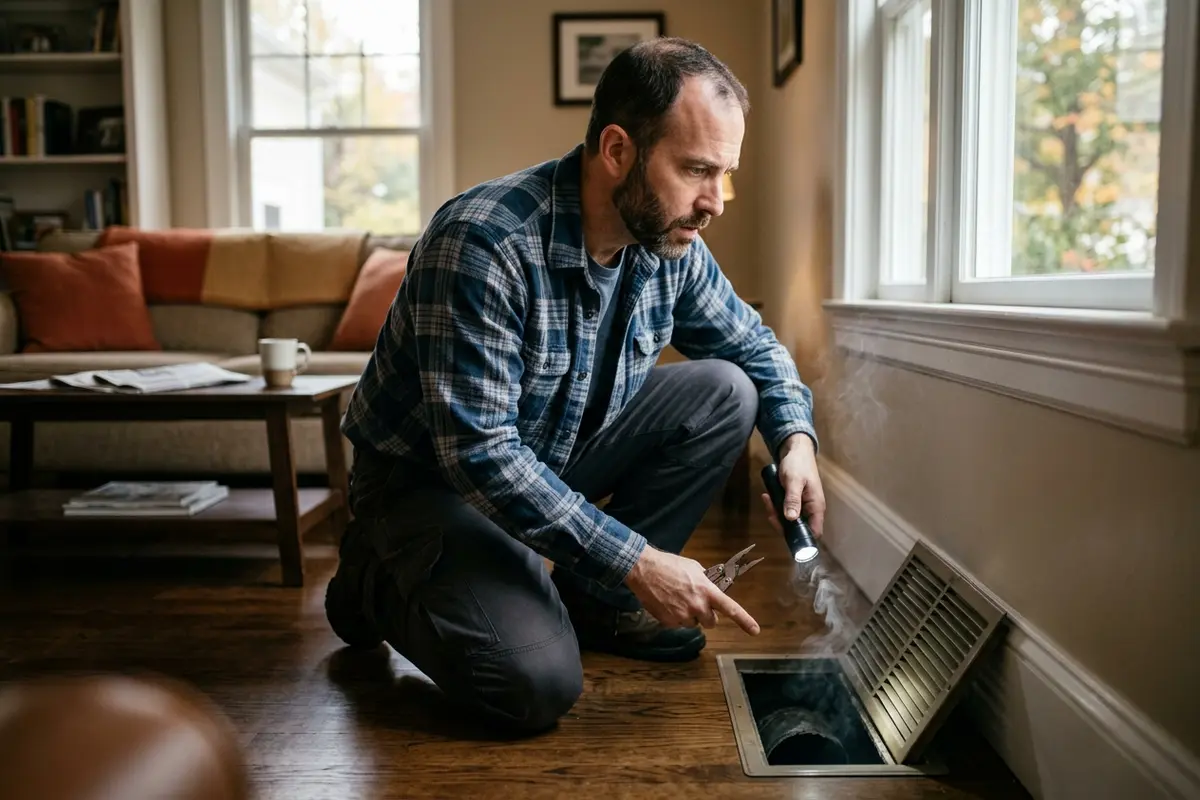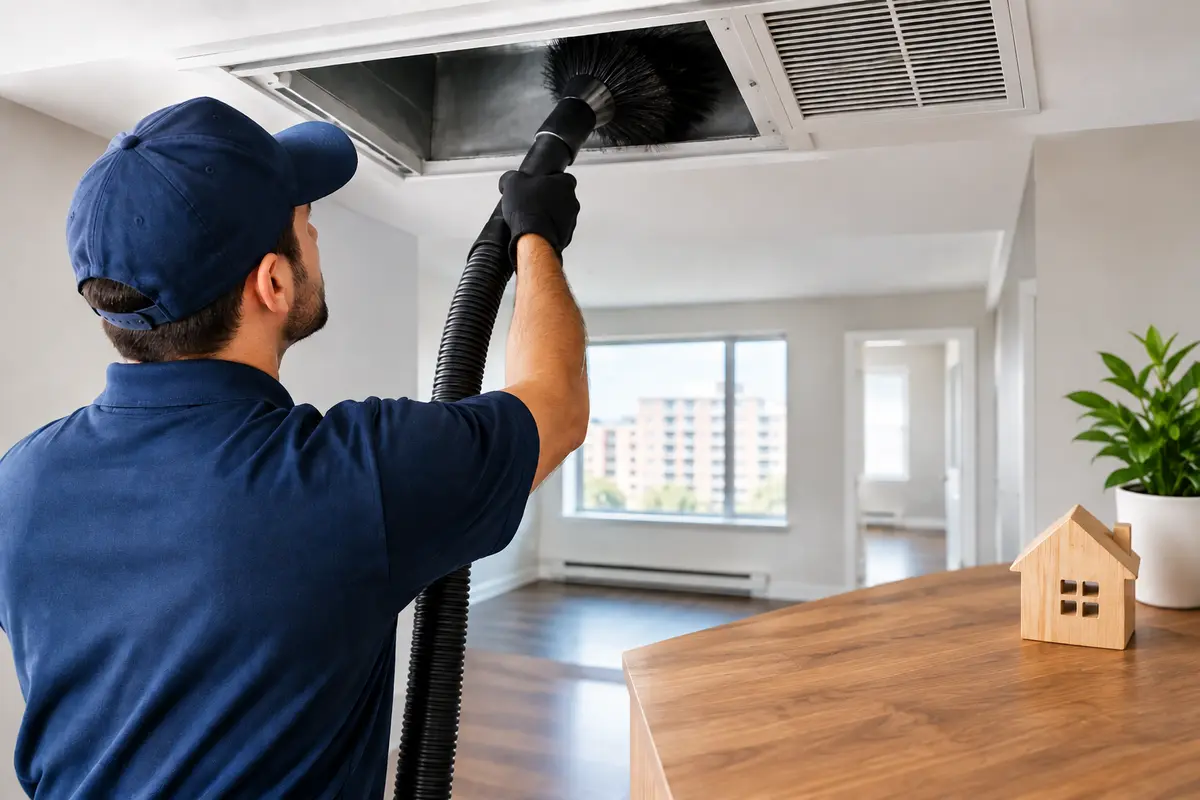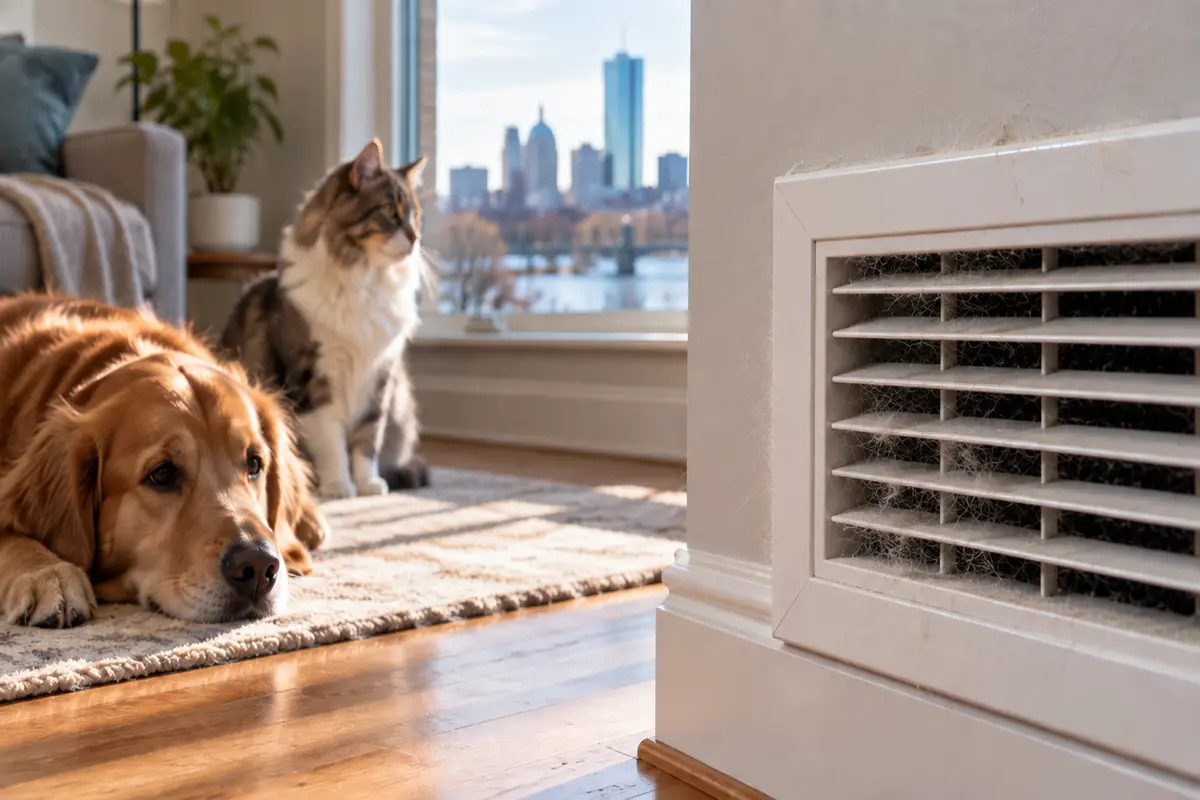
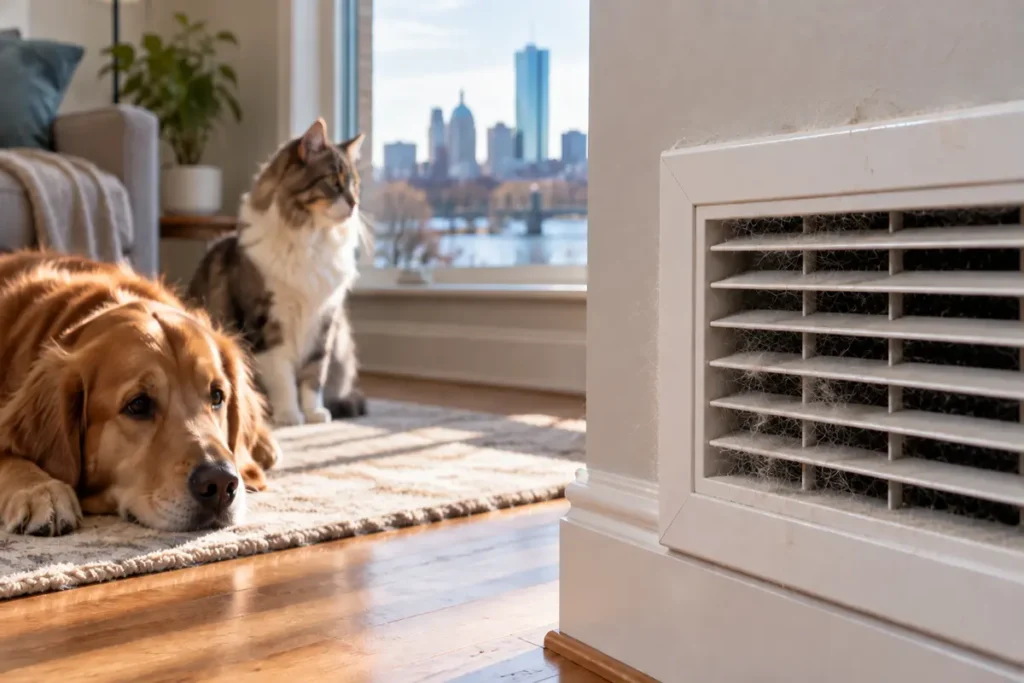
Pet dander in air ducts is easy to miss because it doesn’t look like much at first: a little extra dust on the vent cover, maybe a stray hair caught in the grille. But every time the HVAC system runs, it pulls in the same dander, fur, and skin flakes your pet sheds throughout the house, and some of it settles inside the ductwork instead of getting captured by the filter. Air Wolfe Air Duct Cleaning sees this constantly in Greater Boston homes with dogs and cats, and it’s worth understanding how it actually gets there before deciding what to do about it.
How Pet Dander Ends Up in Your Ductwork
Dander is made up of microscopic flakes of skin that pets shed continuously, not just during seasonal shedding. It’s light enough to become airborne easily, so it doesn’t just settle on furniture and floors; some of it gets pulled into the HVAC return vents along with the air circulating through the house. Your filter catches a lot of it, but filters aren’t perfect, especially if they’re not changed on schedule, and fine dander particles are small enough that some make it past even a well-maintained filter and settle on the interior walls of the ductwork.
Once it’s in there, it doesn’t just sit still. Every time the system cycles on, some of that accumulated dander gets stirred up and pushed back into the rooms it came from, which is part of why pet owners sometimes notice allergy symptoms indoors that don’t match how clean the visible parts of the house actually are.
Signs Pet Dander Has Built Up in Your Air Ducts
A few signs point toward dander and pet hair accumulating in the ductwork rather than just on visible surfaces:
- Allergy symptoms that seem worse indoors than outdoors, even in a home that’s regularly vacuumed and dusted
- Visible pet hair or dust clumps around vent covers when you remove them
- A pet odour that lingers even after bathing the animal and cleaning the house
- Filters that need replacing more often than the manufacturer’s typical recommendation
If you’re noticing more than one of these, it’s a reasonable sign that air duct cleaning can address issues surface cleaning alone can’t reach.
Can Air Duct Cleaning Actually Reduce Pet Allergy Symptoms?
For many households, yes, though it’s worth being realistic about what it does and doesn’t fix. Duct cleaning removes the dander and hair already accumulated inside the ductwork, stopping that reservoir from continuously recirculating back into the air. It won’t eliminate pet allergies, since your pet will keep shedding dander as soon as cleaning is finished. Still, it does remove a source of exposure that ordinary house cleaning can’t reach: the same circulating allergens that make dirty ducts a broader health concern beyond pet-specific symptoms.
Grooming, regular vacuuming with a pet-appropriate filter, and washing pet bedding all help reduce how much dander enters the air in the first place, and pairing those habits with periodic duct cleaning addresses both sides of the problem, not just one.
Moving Into a Home That Had Pets
New homeowners often notice unexplained allergy symptoms in a house where the previous owners had a dog or cat, even after a thorough move-in cleaning. Standard cleaning addresses visible surfaces, but the ductwork acts as a hidden reservoir that a typical deep clean never touches, so dander from a prior pet can keep circulating long after the animal is gone. If you’ve recently purchased a home and suspect this might be the case, having the ducts inspected before assuming the allergy issue is something else is worth doing early rather than after months of symptoms with no obvious cause.
How Often Pet Owners Should Schedule Duct Cleaning
Industry guidance from the National Air Duct Cleaners Association lists heavy shedding as a factor that can shorten the typical cleaning interval, along with smokers in the household, recent renovations, and residents with allergies or asthma. Rather than following a fixed number of years regardless of circumstances, it makes more sense to treat a household with shedding pets as a candidate for more frequent attention than a pet-free home, with the exact interval depending on how many pets you have and how much they shed.
Reducing Dander Between Cleanings
A few habits help keep dander from accumulating as quickly between professional visits: brushing pets regularly, ideally outside or in an easy-to-clean area, changing HVAC filters on schedule rather than waiting until they look visibly dirty, vacuuming with a filter designed to capture fine particles rather than just visible hair, and keeping litter boxes away from return air vents. None of these replaces duct cleaning once buildup has already accumulated, but they slow how quickly it comes back.
Pet Dander and Air Quality Across Greater Boston
Households throughout Needham, Newton, and the surrounding towns deal with the same basic challenge: homes that stay closed up for a good part of the year during colder months, which means whatever’s circulating through the HVAC system, including pet dander, has less opportunity to be diluted by fresh outdoor air than during warmer months when windows are open more often. That makes indoor allergen buildup, including pet dander, more noticeable during the stretch of the year when the system runs most consistently.
The NADCA guidance on residential duct cleaning factors is a useful reference for pet owners deciding whether their household benefits from more frequent service.
Schedule a Duct Cleaning for Your Pet-Friendly Home
If your home has dogs, cats, or other shedding pets and it’s been a while since the ductwork was cleaned, Air Wolfe offers a free inspection to see how much buildup has actually accumulated before recommending anything. Reach out to Air Wolfe to find out whether your system is due for a cleaning based on your specific household, not a generic schedule.
Frequently Asked Questions
- Can air duct cleaning get rid of pet odour in my home?
It can significantly reduce it if the odour is coming from dander and hair trapped in the ductwork, since that buildup gets circulated through the house every time the system runs. It won’t eliminate odour sources elsewhere in the home, like bedding or furniture, which need separate cleaning. - How do I know if it’s pet dander or something else causing my allergies?
Symptoms that improve when you’re away from home, or that seem disproportionate to how clean the visible parts of your house are, point toward something circulating through the air rather than a surface-level issue. An air duct inspection can confirm whether dander buildup is present. - Do I need special filters if I have pets?
A higher-rated filter designed to capture finer particles can help catch more dander before it reaches the ductwork, though no filter catches everything. Filters should also be changed more frequently in pet households, since they clog faster than in homes without pets. - Does having multiple pets mean I need duct cleaning more often?
Generally yes. More pets, or heavier-shedding breeds, means more dander entering the system, which tends to shorten the reasonable interval between cleanings compared to a single low-shedding pet or a pet-free household. - Will duct cleaning help if my pet has already passed away or moved out?
Yes. Dander and hair that accumulated in the ductwork while the pet lived there doesn’t disappear on its own. If allergy symptoms persist after a pet is no longer present, cleaning the ducts addresses the residual buildup that’s still circulating.