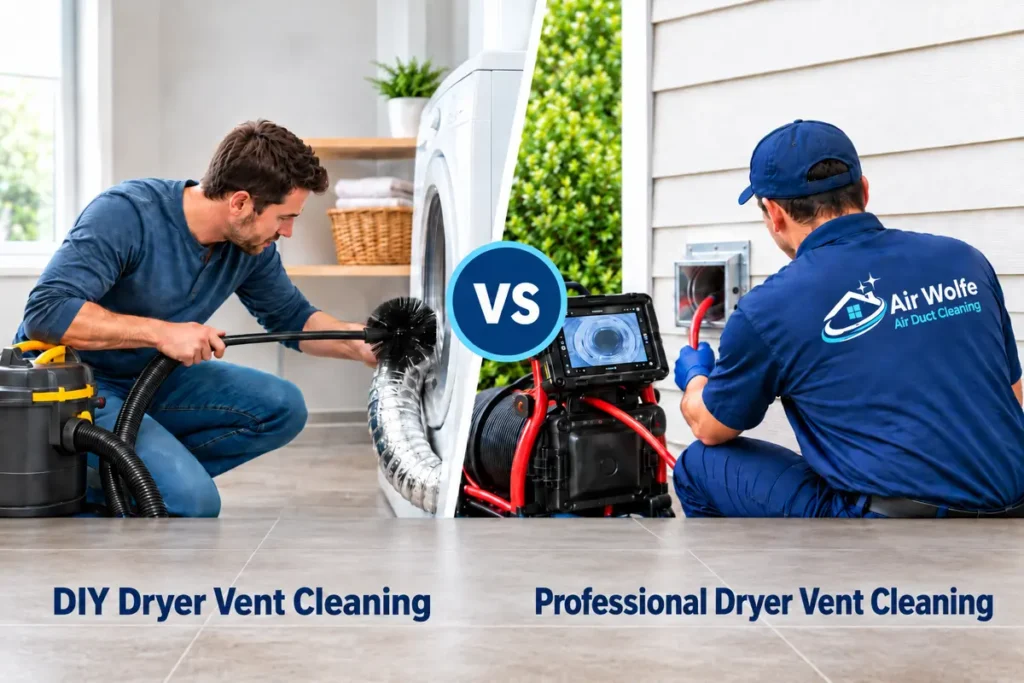
DIY vs professional dryer vent cleaning isn’t really a question with one right answer; it depends on how your vent is set up, not on which approach sounds more appealing. A short, straight vent on an exterior wall is a reasonable weekend project. A long run with several bends or a roof termination is a different job entirely, and treating both the same way is how homeowners end up with a vent that looks clean but still has most of its buildup intact. Air Wolfe Air Duct Cleaning works with Needham-area homeowners on both ends of that spectrum, and here’s how to figure out which side you’re actually on.
When DIY Dryer Vent Cleaning Makes Sense
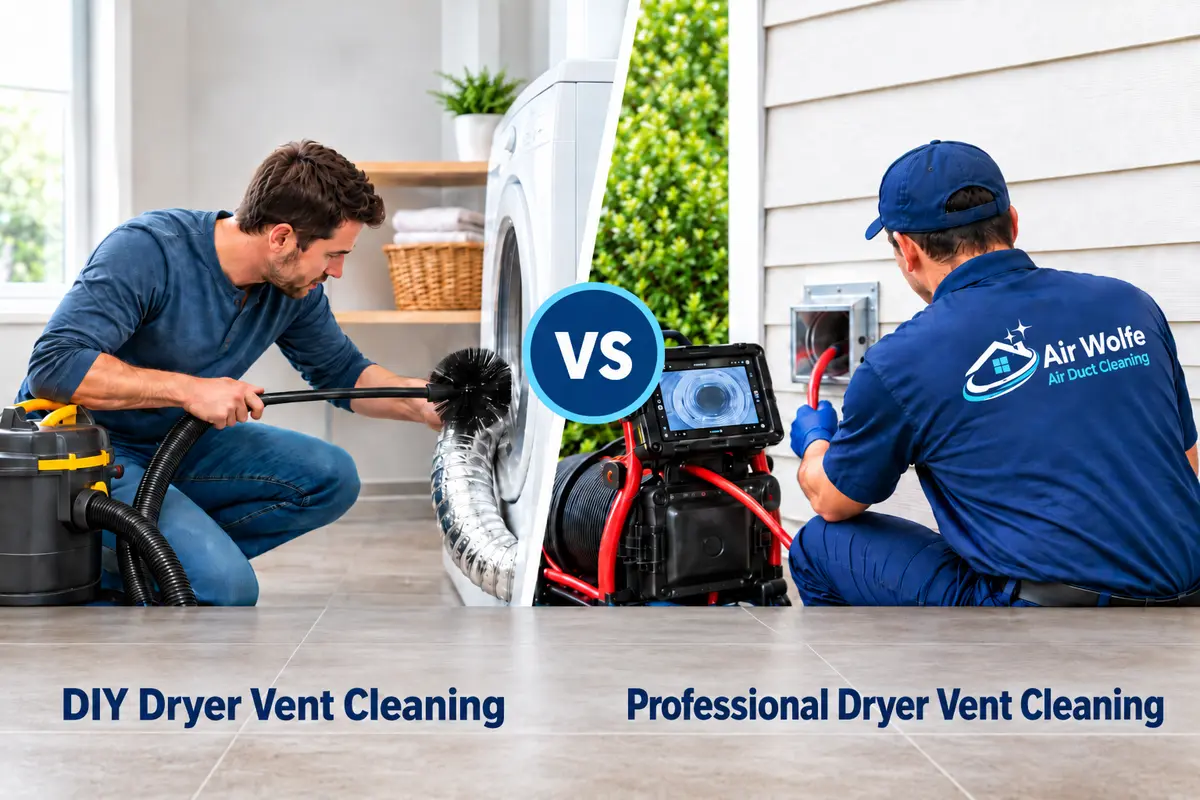
DIY cleaning is a reasonable option when your setup checks most of these boxes: the vent runs less than 10 to 15 feet, it has one bend or none, it terminates at ground level on a nearby exterior wall, and it’s been cleaned within the last year or two so buildup hasn’t had time to compact. Under those conditions, a household vacuum with a hose attachment and a flexible rotary brush kit, both inexpensive and widely available, can reach most of the duct’s interior.
The basic process is straightforward: unplug the dryer, disconnect the vent hose from the back of the machine, feed the brush through while rotating it to loosen debris, vacuum out what comes loose, and clean the exterior vent hood separately. For gas dryers, take extra care when disconnecting and reconnecting the gas line, or have someone familiar with gas appliances handle that part.
Where DIY Cleaning Falls Short
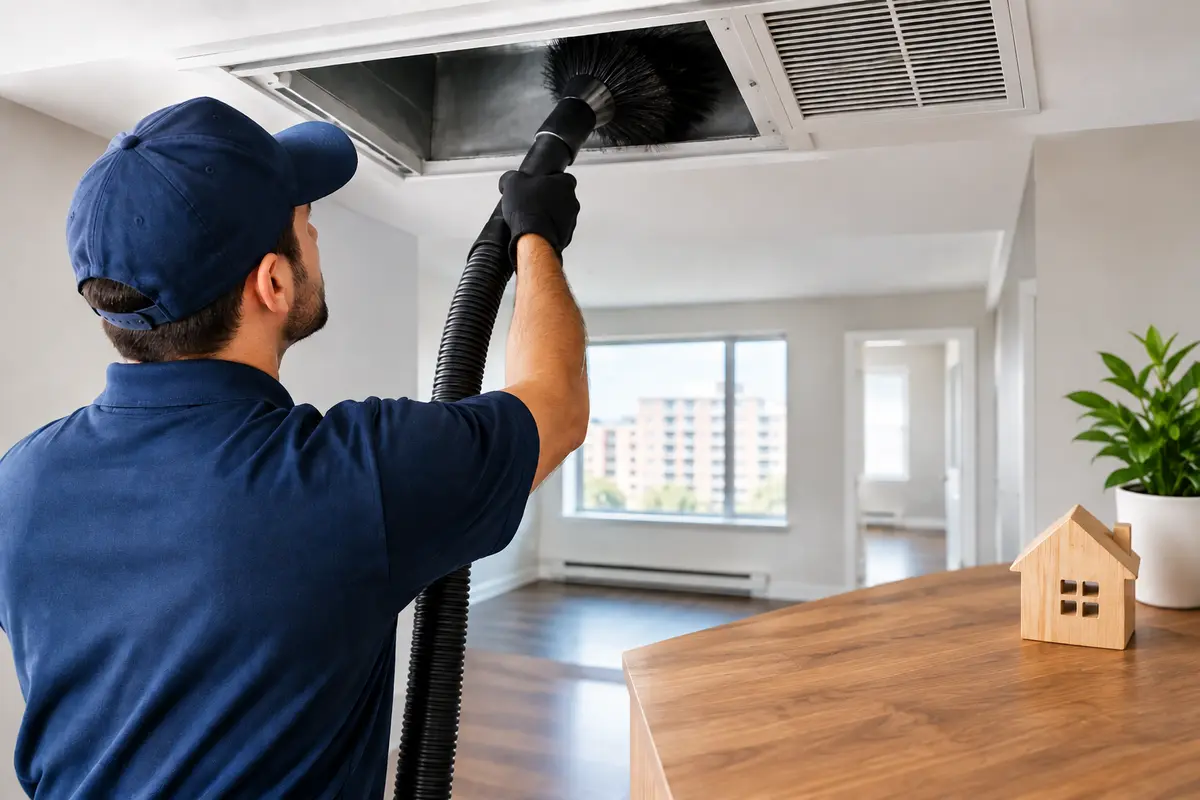
The honest limitation of any consumer kit is reach. A standard brush and vacuum can clear the first several feet of duct effectively, but once the vent extends further, curves around a corner, or climbs to a roof termination, you’re working blind, feeding a brush into a space you can’t see and hoping it’s doing the job. Compacted lint that’s been sitting for years often needs more aggressive mechanical agitation than a flexible rod can provide, and a bird’s nest or a fully collapsed section of duct isn’t something a homeowner is equipped to clear or repair.
You also can’t verify results without the right equipment. A professional dryer vent cleaning includes an airflow check at the exterior vent before and after, which confirms the cleaning worked rather than assuming it did just because lint came out somewhere along the way.
Five Questions That Actually Decide DIY vs Professional
Rather than guessing, run your setup through these:
- How long is the vent run? Under 10 feet with no bends leans DIY. Beyond that, or with multiple turns, leans professional.
- Where does it terminate? Ground-level, nearby exterior wall favours DIY. Roof-terminated vents involve exterior access that’s both harder and riskier to handle yourself.
- When was it last cleaned? Recently maintained vents have less compacted buildup. A vent that hasn’t been touched in three or more years likely has buildup a consumer kit won’t fully clear.
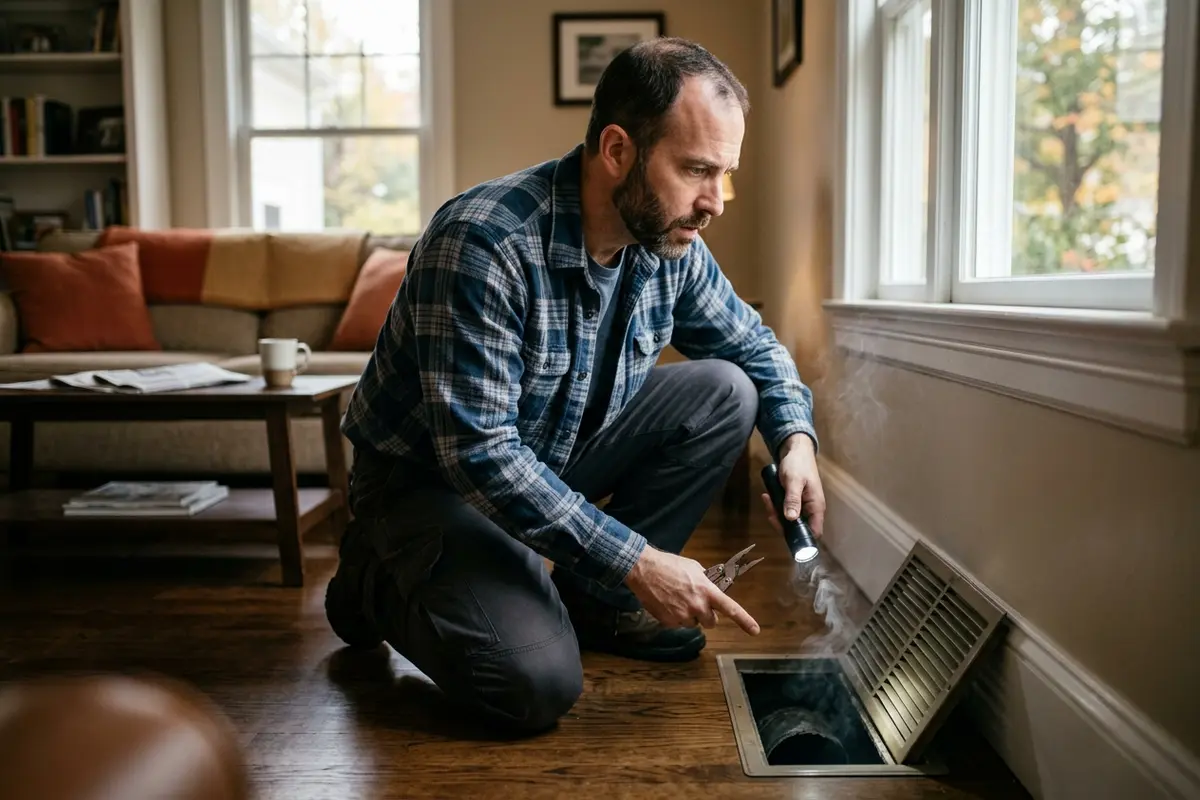
- Are you seeing warning signs? A burning smell, unusually long drying times, or a dryer that runs hot points to a problem beyond routine maintenance and calls for professional equipment and a proper inspection.
- Is this a shared or commercial system? Multi-unit buildings and laundromats involve larger, more complex venting that isn’t a reasonable DIY project regardless of the other factors.
If most of your answers point toward the DIY column, a careful weekend project is a fine choice. If two or more point the other way, it’s worth having a professional handle it rather than getting a partial result.
A Combined Approach Works for Many Homeowners
These two approaches aren’t mutually exclusive. Cleaning the lint trap after every load and clearing the accessible section behind the dryer between professional visits reduces surface buildup and can extend the interval between full professional cleanings. What DIY maintenance can’t replace is the full-duct clearing and airflow verification a professional visit provides. So treat DIY as routine upkeep between scheduled professional cleanings, not a permanent substitute.
Why This Matters More Than It Seems
A federal analysis referenced in NFPA’s research on home fires involving clothes dryers found that failure to clean is the leading contributing factor in these fires, and lint is the material most commonly first ignited. That’s the real weight behind the DIY-versus-professional decision: a rushed or partial cleaning that leaves compacted lint further down the duct doesn’t remove the underlying risk; it just makes it less visible.
What This Looks Like in Older Needham Homes
Needham’s older housing stock, like much of the surrounding area, often has dryer vents that were extended or rerouted at some point, sometimes running farther than a modern installation would require or terminating on a roof instead of a nearby wall. If your home falls into that category, it’s worth measuring or at least estimating your actual vent length and layout before assuming a DIY kit will reach the whole thing. A vent that looks short from the laundry room can still travel a surprising distance once it’s inside the wall.
Not Sure Which Side You’re On? Get a Free Assessment
If you’ve run through the questions above and still aren’t sure whether your setup is a reasonable DIY project or needs a professional, Air Wolfe offers a free assessment to review your specific vent length, layout, and condition before you decide. Reach out to Air Wolfe for a straight answer and, if a professional cleaning is the right call, a clear estimate of what it involves for your home.
Frequently Asked Questions
- Is it safe to clean a dryer vent myself?
For a short, accessible vent with no bends, yes, as long as you’re comfortable moving the dryer and disconnecting the vent hose safely. Gas dryers require extra caution around the gas line, and any vent that requires roof access is not a reasonable DIY safety risk. - How much does a DIY dryer vent cleaning kit cost compared to hiring a professional?
A basic brush-and-vacuum kit typically costs a fraction of a professional service, but the comparison only makes sense if the kit can actually reach your vent’s full length. A cheap kit that leaves buildup in a long or bent duct isn’t a real savings if the underlying problem remains. - How do I know if my DIY cleaning actually worked?
Without airflow-testing equipment, it’s hard to confirm with certainty. A noticeable improvement in drying time and the exterior vent flap opening fully during operation are reasonable indicators. Still, they’re not as reliable as a professional’s before-and-after airflow measurement. - Can I use a leaf blower or shop vac instead of a dryer vent cleaning kit?
A shop vac can help pull out loosened debris, but it isn’t a substitute for a brush that physically dislodges compacted lint from the duct walls. Combining a brush with vacuum extraction is more effective than either tool alone. - How often should I clean my dryer vent if I’m doing it myself?
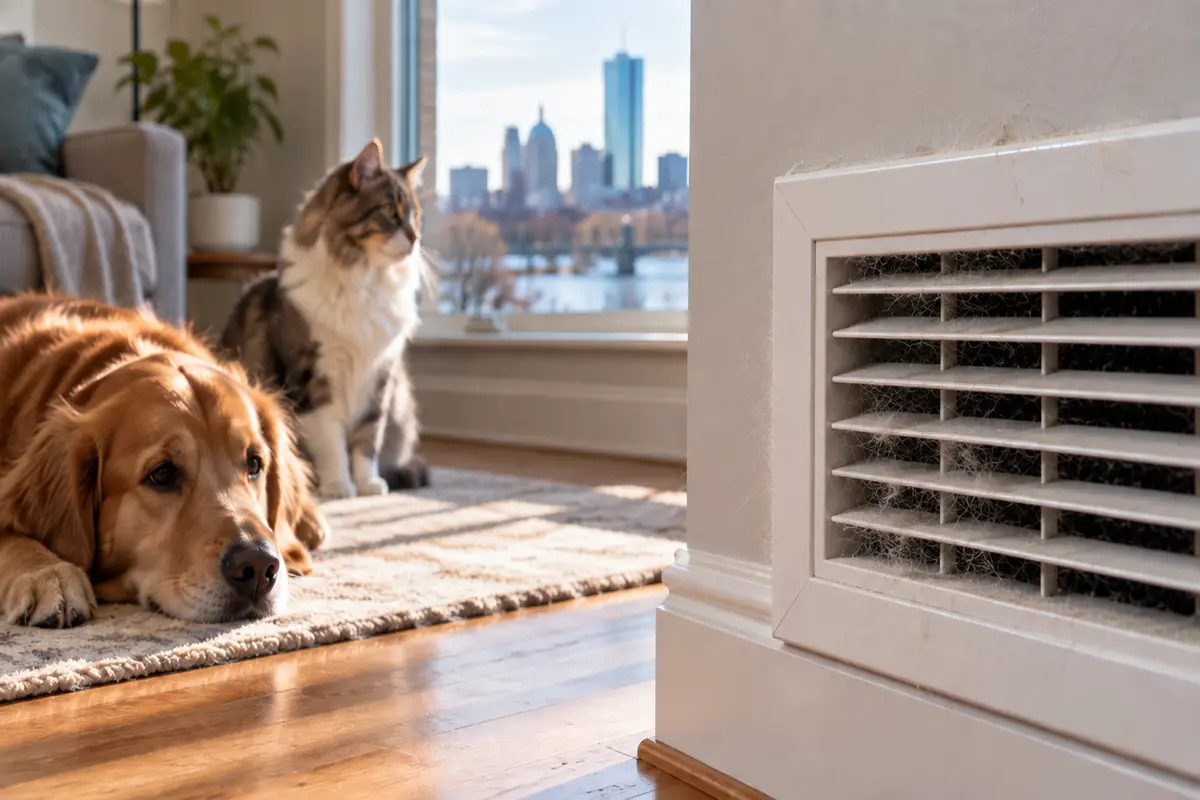
Annually is a reasonable baseline for most households, with more frequent attention for larger families doing frequent laundry loads or homes with pets that shed heavily, since both increase how quickly lint accumulates.