Yes, air conditioning duct cleaning improves cooling efficiency in most homes with restricted airflow, though the size of the improvement depends on how clogged your ductwork actually is. Air Wolfe Air Duct Cleaning sees this play out every summer across Greater Boston, from Needham to Newton, where central air systems run for months at a stretch. When air conditioning duct cleaning removes years of dust and debris, your system doesn’t have to fight its way through narrowed ductwork just to hit the temperature on your thermostat.
You’ve probably felt it. One room stays cool while another feels like a greenhouse by 3 p.m. Your electric bill creeps up every July even though you haven’t changed the thermostat setting. The AC runs almost constantly but never quite catches up. Dirty air ducts are rarely the only cause of weak cooling, but they’re one of the most overlooked ones, and they’re also one of the easiest to fix.
It helps to know upfront that this article isn’t a general overview of duct cleaning. We already cover that ground elsewhere. The piece below looks specifically at the relationship between duct cleanliness and how well your air conditioner actually cools your home, which is a narrower and, frankly, more useful question if summer comfort is what you care about.
A quick note before diving in: airflow restriction inside ductwork doesn’t just annoy you. It forces your blower motor to work harder, strains your compressor, and can even damage your evaporator coil over time. That combination is exactly why cooling efficiency and duct cleanliness are so tightly linked, and why it’s worth understanding the mechanics before you decide whether to book a cleaning.
How Does Air Conditioning Duct Cleaning Affect Cooling Performance?
Air conditioning duct cleaning affects cooling performance by restoring airflow through your supply and return ducts. A forced-air cooling system depends on a specific volume of air moving across the evaporator coil to absorb heat properly. Clogged ductwork reduces that volume, which means less heat gets removed from your indoor air per cycle, and your system has to run longer to compensate.
Why Do Dirty Air Ducts Reduce Cooling Efficiency?
Dirty air ducts reduce cooling efficiency through two separate mechanisms, and most homeowners only know about one of them.
Airflow Restriction and Your Blower Motor
Your blower motor is built to move a certain volume of air per minute. Dust and debris narrow the interior of your ductwork, and narrower ducts create more resistance. The motor compensates by working harder, drawing more electricity, and often running longer cycles to reach your set temperature. Over months of a Massachusetts cooling season, that extra strain adds up on both your utility bill and the motor’s lifespan.
How Dust Insulates Your Evaporator Coil
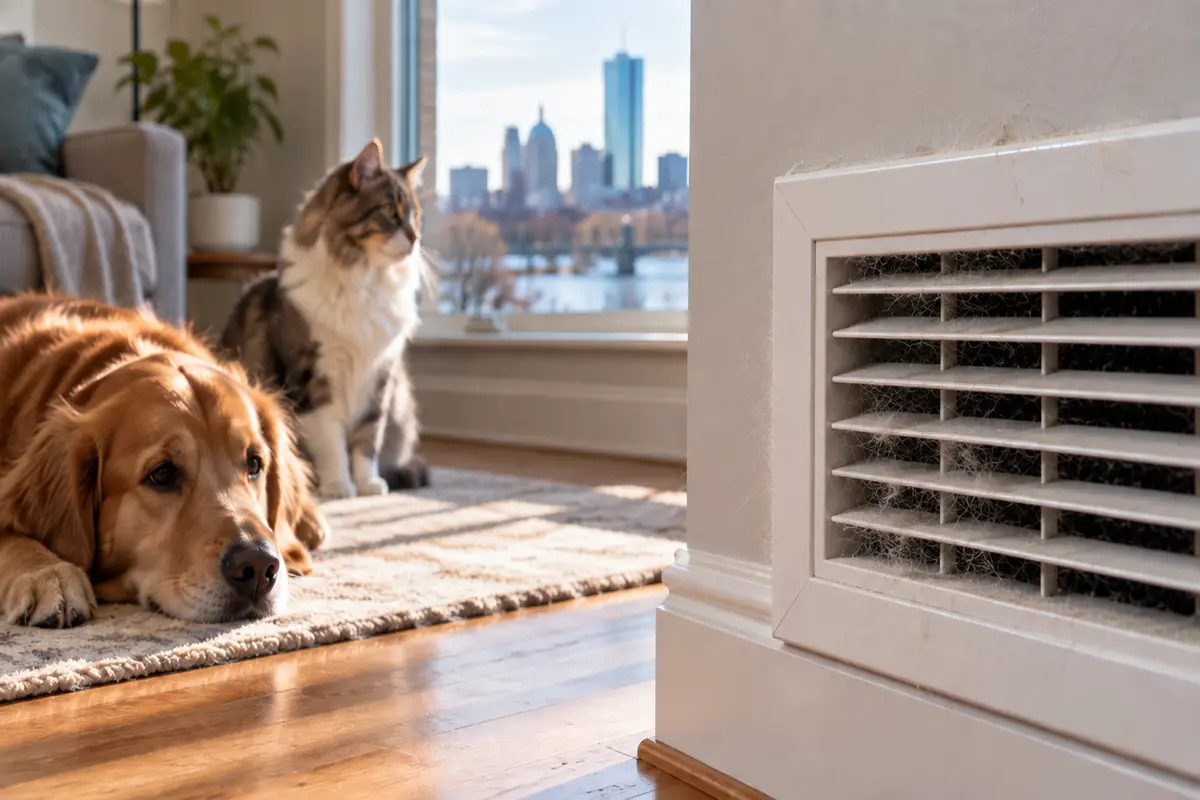
Here’s a piece most articles skip. Dust doesn’t just block ductwork. It also settles on your evaporator coil, and dust acts almost like a thin blanket wrapped around the coil’s fins. That insulating layer interferes with heat transfer, the actual physical process your AC relies on to pull warmth out of your indoor air. In a well-known 2006 field study, engineers with the American Society of Heating, Refrigerating, and Air Conditioning Engineers tested coil cleaning on a 34-floor building in New York City. Pressure dropped 14 percent after cleaning, and heat transfer efficiency improved by roughly 10 percent. That’s not a marketing number. That’s a measured result from a real building.
Why Is My AC Not Cooling Some Rooms as Well as Others?
Uneven cooling almost always traces back to airflow, not the outdoor condenser unit. If one bedroom runs warm while the living room feels fine, a partially blocked duct run is a common culprit. Ductwork narrows unevenly as debris builds up, and rooms fed by longer or more clogged duct runs simply get less conditioned airflow than rooms closer to the air handler. A homeowner in Wellesley once described her upstairs bedrooms as feeling like a different climate zone from the first floor. A duct inspection found two supply runs almost half blocked with years of dust and insulation debris. The temperature evened out within a day once those runs were cleared.
Does AC Duct Cleaning Lower Cooling Bills?
AC duct cleaning can lower cooling bills, particularly in homes where restricted airflow has been forcing longer run times for a while. The U.S. Department of Energy has noted that dirty coils and restricted airflow can reduce a cooling system’s overall efficiency by as much as 30 percent in poorly maintained systems. That’s a wide range, and your actual savings depend heavily on how bad the buildup was to begin with. A lightly dusty system won’t see a dramatic bill drop. A system that hasn’t been touched in eight or ten years often will. That’s one reason many homeowners invest in HVAC air duct cleaning to improve energy efficiency and reduce unnecessary strain on their cooling systems.
Signs Restricted HVAC Airflow Is Hurting Your Cooling System
A handful of warning signs tend to show up together when airflow restriction is the underlying issue
• Some rooms feel noticeably warmer than others
• The AC runs longer than it used to for the same temperature drop
• Vents blow weaker air than you remember from previous summers
• Your energy bill climbs without a clear explanation
• Dust builds up quickly on furniture even with regular cleaning
• The system short-cycles or struggles to reach your thermostat setting
What Does Professional Air Conditioning Duct Cleaning Involve?
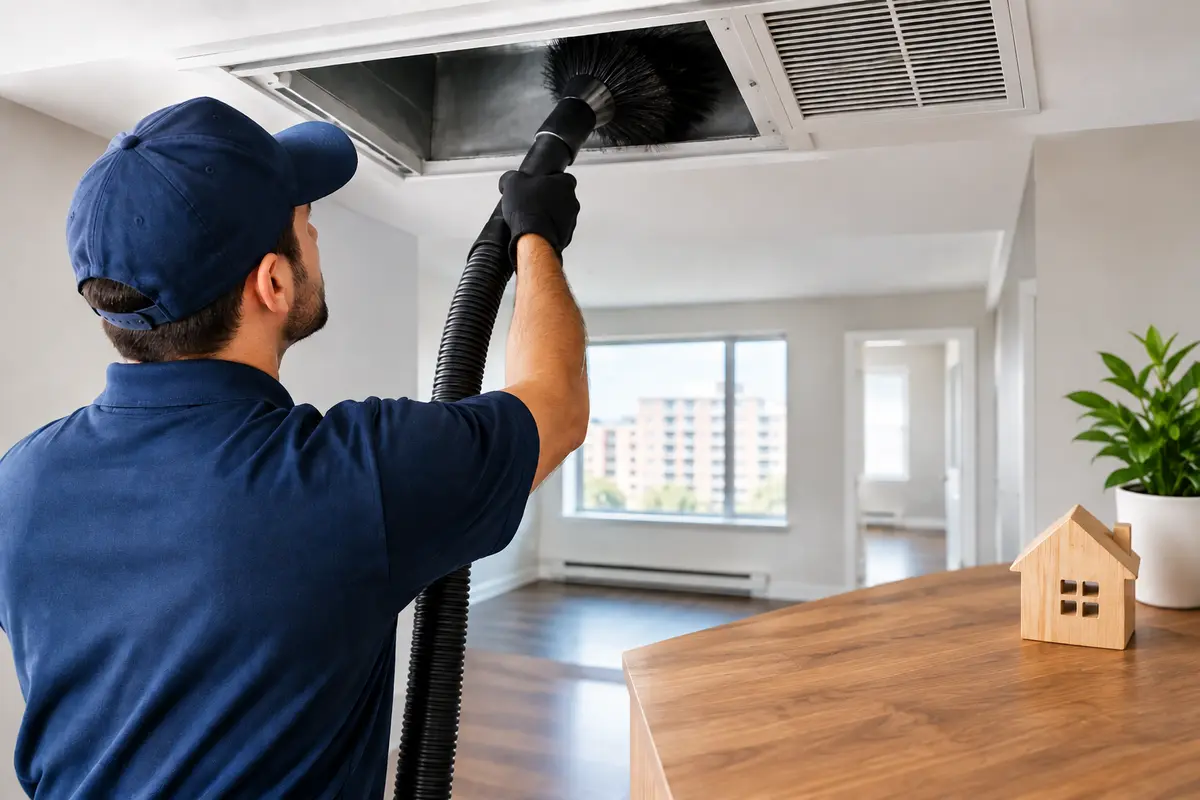
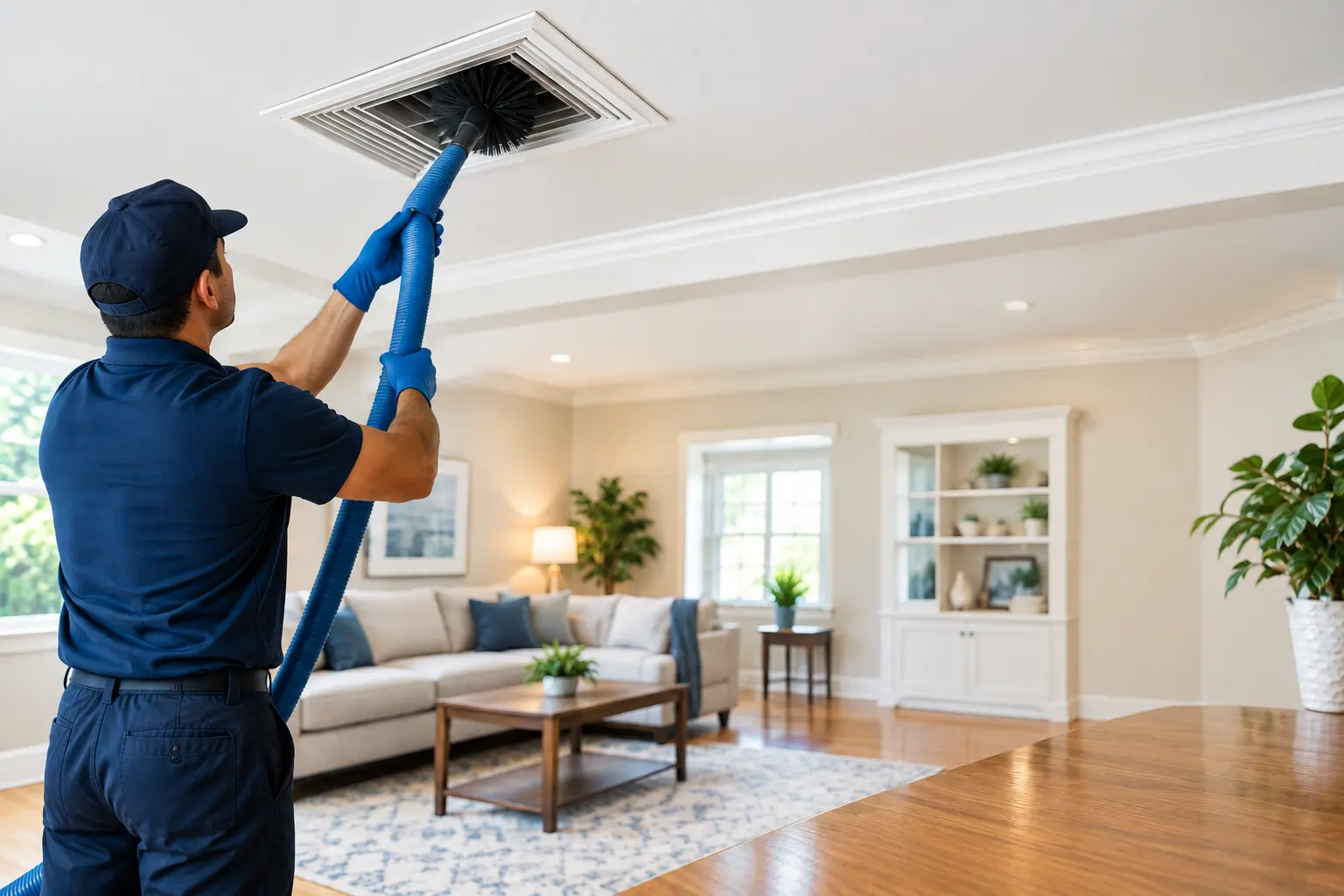
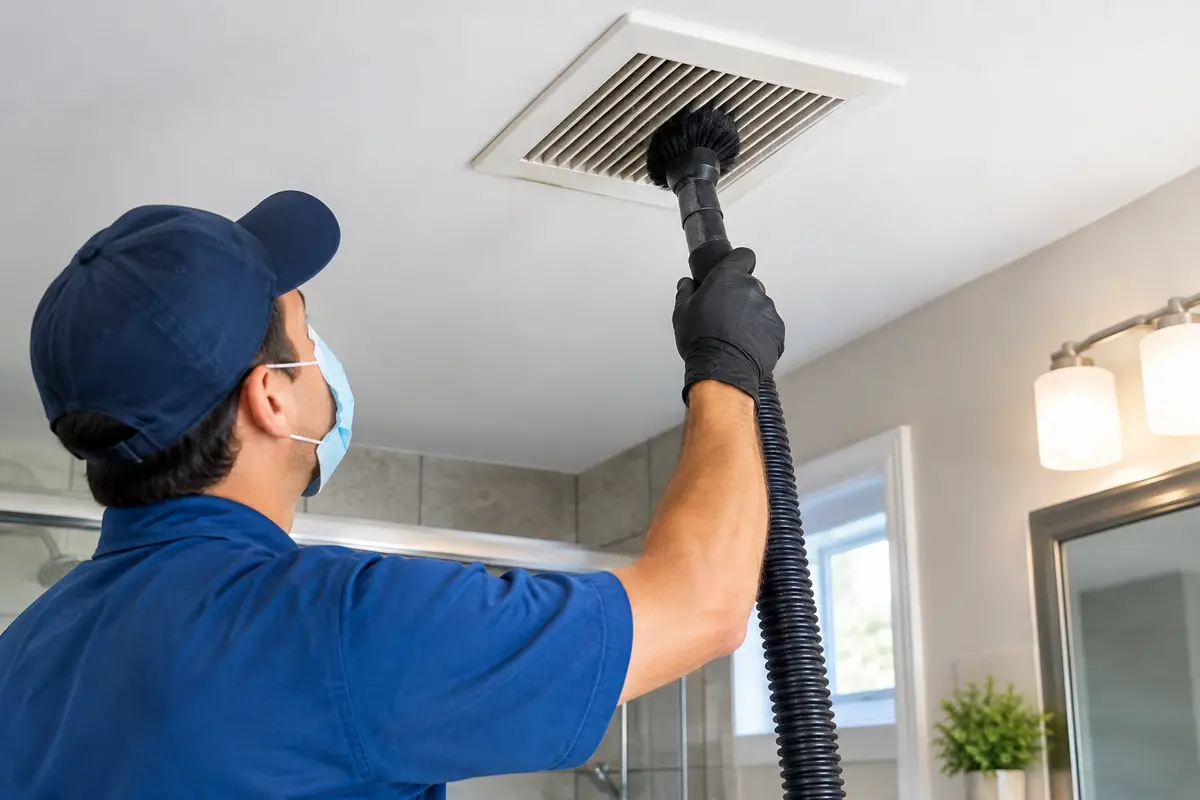
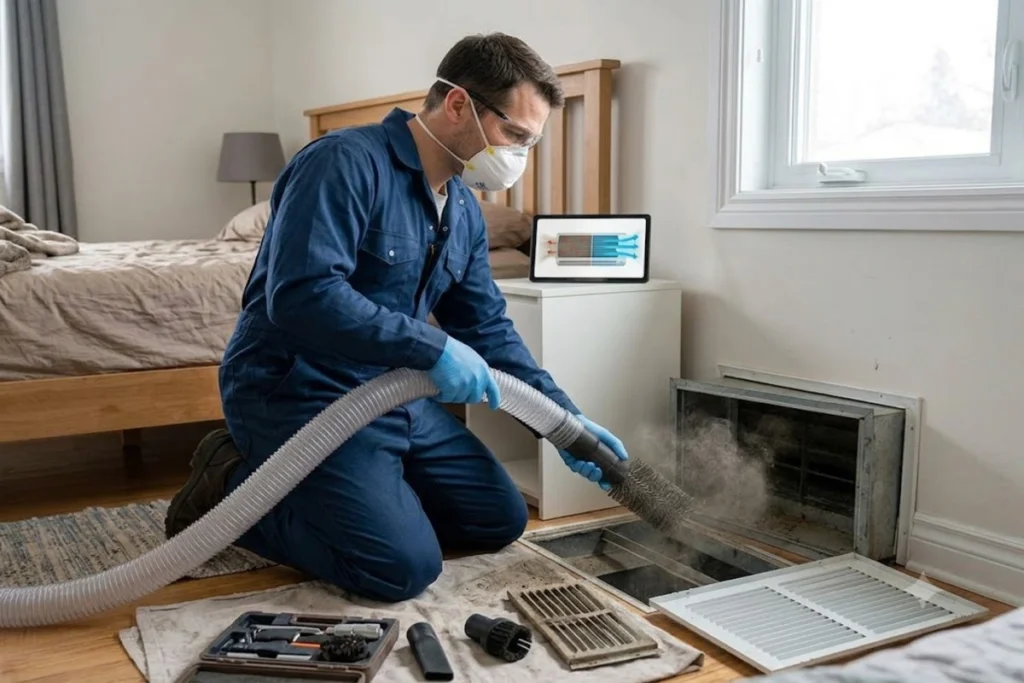
Professional cleaning starts with an inspection, not a guess. Technicians at Air Wolfe Air Duct Cleaning use HEPA-filtered vacuum equipment paired with rotary brush tools to dislodge debris from every accessible run, then extract it through negative pressure so nothing ends up back in your living space. It’s a different process from a basic filter swap, and it reaches contamination that filters were never designed to catch. A typical residential job runs a few hours, depending on the number of vents and how the ductwork is laid out.
Air Conditioning Duct Cleaning vs. Other Cooling Efficiency Fixes
Duct cleaning is one piece of a bigger cooling efficiency picture, not the whole picture. It helps to see how it stacks up against other common maintenance tasks.
| Maintenance Task | What It Fixes | Typical Frequency |
| Air conditioning duct cleaning | Restricted airflow, dust-insulated coils, uneven cooling | Every 3-5 years |
| Air filter replacement | Airflow at the intake point only | Every 1-3 months |
| Refrigerant level check | Low cooling capacity, warm air from vents | Annually |
| Condenser coil cleaning | Outdoor unit heat rejection efficiency | Annually |
| Thermostat calibration | Inaccurate temperature readings | Every 2-3 years |
Homeowners who only replace filters often assume they’ve covered their bases. A clean filter protects the ducts downstream from new debris, but it does nothing for buildup that settled inside the ductwork years earlier. Both tasks matter, and neither replaces the other.
Simple Habits That Support Cooling System Maintenance
A few small habits stretch the benefit of any professional cleaning between appointments
• Change filters on schedule, especially during peak summer months
• Keep furniture and rugs clear of supply and return vents
• Have your outdoor condenser coil rinsed off each spring
• Watch for rooms that seem to run warmer than the rest of the house
Is Air Conditioning Duct Cleaning Worth It for Cooling Efficiency?
Yes, in most cases. Homes with visible dust, years since the last cleaning, or noticeably uneven cooling generally get the most value from the investment. A newer system with clean-looking ducts and consistent airflow won’t see the same dramatic return. The honest answer depends on your specific ductwork, which is exactly why a real inspection matters more than a generic recommendation. Choosing the best air duct cleaning company in Massachusetts can also make a significant difference because experienced technicians can accurately assess your system and recommend cleaning only when it’s truly needed. You can request your free estimate before committing to anything, and a technician can tell you within minutes whether cleaning will actually move the needle for your system.
Frequently Asked Questions
- Does cleaning AC ducts really improve cooling?
Yes, in homes with meaningful buildup. A cleaning restores airflow across the evaporator coil, which allows the system to remove heat more effectively and cycle less often to hit your thermostat setting. - Why is my AC not cooling well even though it’s running constantly?
Constant running with weak cooling usually points to restricted airflow, a dirty coil, or a refrigerant issue. Airflow problems are the most common and the least expensive to diagnose, so it’s worth ruling that out first. - Can dirty air ducts actually reduce cooling capacity?
Yes. Dust inside ductwork narrows the passage air travels through, and dust on the evaporator coil itself interferes with heat transfer. Both effects reduce how much cooling your system can deliver for the same amount of energy. - Does duct cleaning lower AC bills in the summer?
It can, especially in systems that haven’t been cleaned in five or more years. The size of the savings depends on how restricted the airflow was beforehand, so results vary from one home to the next. - Should I clean my air conditioner ducts every year?
Most homes don’t need annual duct cleaning. A three-to-five-year cycle works for most Massachusetts households, with shorter intervals for homes with pets, recent renovations, or known airflow problems. - Why are some rooms warmer than others when the AC is on?
Uneven cooling usually comes down to airflow distribution. Ductwork that’s more restricted on one branch delivers less conditioned air to the rooms it serves, even though the system overall seems to be running fine. - Does duct cleaning improve airflow throughout the whole house?
It can, particularly when multiple duct runs were affected by buildup. Homeowners often notice better airflow at vents that previously felt weak, along with more even temperatures room to room. - How do I know if my ductwork is affecting my AC’s efficiency?
Weak airflow at vents, rooms that run warmer than others, rising bills without an obvious cause, and longer cooling cycles are the clearest signs. A professional inspection confirms it in under an hour. - Is professional duct cleaning better than doing it myself?
Yes, for anything beyond the vent covers you can physically reach. Professional equipment creates the negative pressure needed to pull debris out of ductwork running behind walls, which a household vacuum simply can’t generate. - Does Air Wolfe Air Duct Cleaning offer free estimates for duct cleaning?
Yes. You can contact Air Wolfe Air Duct Cleaning for a free estimate, and a technician will give you an honest read on whether cleaning will meaningfully improve your cooling efficiency before any work begins.
Weak cooling, uneven rooms, and climbing summer bills are worth a second look before another season goes by. You can schedule service with Air Wolfe Air Duct Cleaning, or call (617) 991-6651 to talk through what you’re noticing with a real technician, not a script.