Air duct cleaning after a fire may be necessary when an inspection finds smoke residue, soot, or fire-related debris inside the ventilation system. The appropriate solution depends on the affected materials and whether components can be restored. Professional air duct cleaning services should form part of a coordinated recovery plan that also addresses equipment damage and contamination elsewhere in the home. Replacing a filter or masking a smoky smell does not resolve every problem. Some components may need cleaning, while heat-damaged ducts or contaminated insulation may require replacement. This guide explains what to inspect, how cleaning fits into fire restoration, and what to ask before authorizing work.
Does Every House Fire Require Air Duct Cleaning?
Not every fire contaminates the entire duct system. A contained incident can affect a home differently from a fire that spreads smoke through several rooms.
An assessment should consider:
- Where the fire occurred.
- Whether the heating or cooling system operated during the event.
- Whether smoke entered return-air pathways.
- The condition of filters, ducts, and equipment.
- Whether firefighting water reached the system.
- Which materials were exposed to heat or residue.
Start with an air duct inspection to identify accessible contamination and damage. Ask for documented findings rather than assuming every duct needs cleaning or that cleaning alone will be sufficient.
How Smoke and Soot Can Enter Your Ductwork
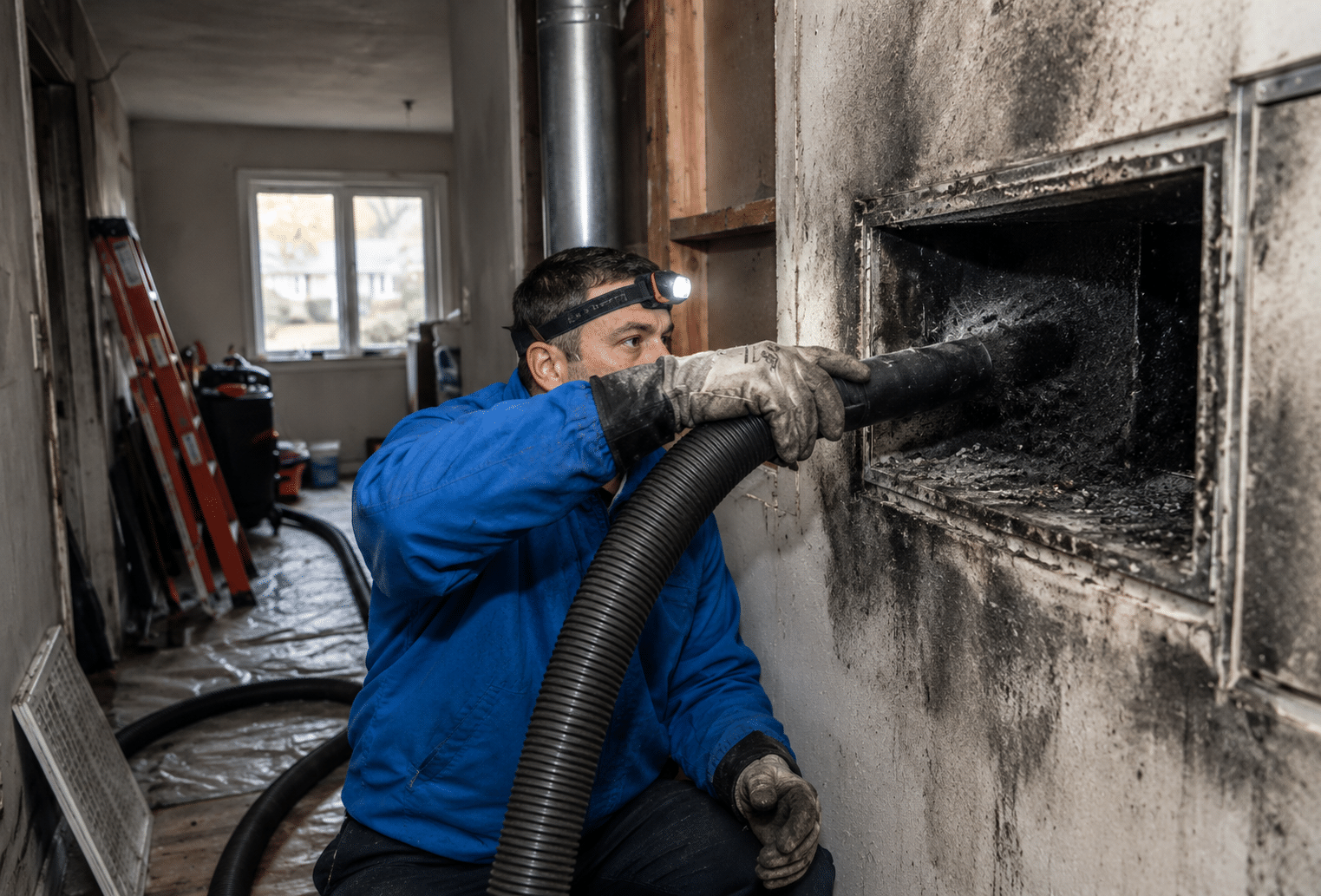
Smoke can move through open rooms, building cavities, and ventilation openings. If the system operates while smoke is present, return airflow may carry particles toward filters and equipment. Residue may settle on duct surfaces, grilles, blower components, and other parts of the air-distribution system. The extent depends on the smoke pathway, system operation, and conditions during the fire. Contamination can also exist outside the ducts. Walls, insulation, furnishings, and concealed spaces may retain residue and odors. Duct cleaning therefore needs to be coordinated with the wider restoration project.
Smoke Gases and Settled Residue Are Different
Smoke can contain gases and particles. Carbon monoxide, for example, is a colorless, odorless gas; it is not settled soot that can be vacuumed from duct walls. Removing deposited residue does not replace assessment of combustion equipment, electrical damage, or other fire-related hazards.
Signs Your Ventilation System Needs Assessment
Following a fire, these observations can help direct an inspection:
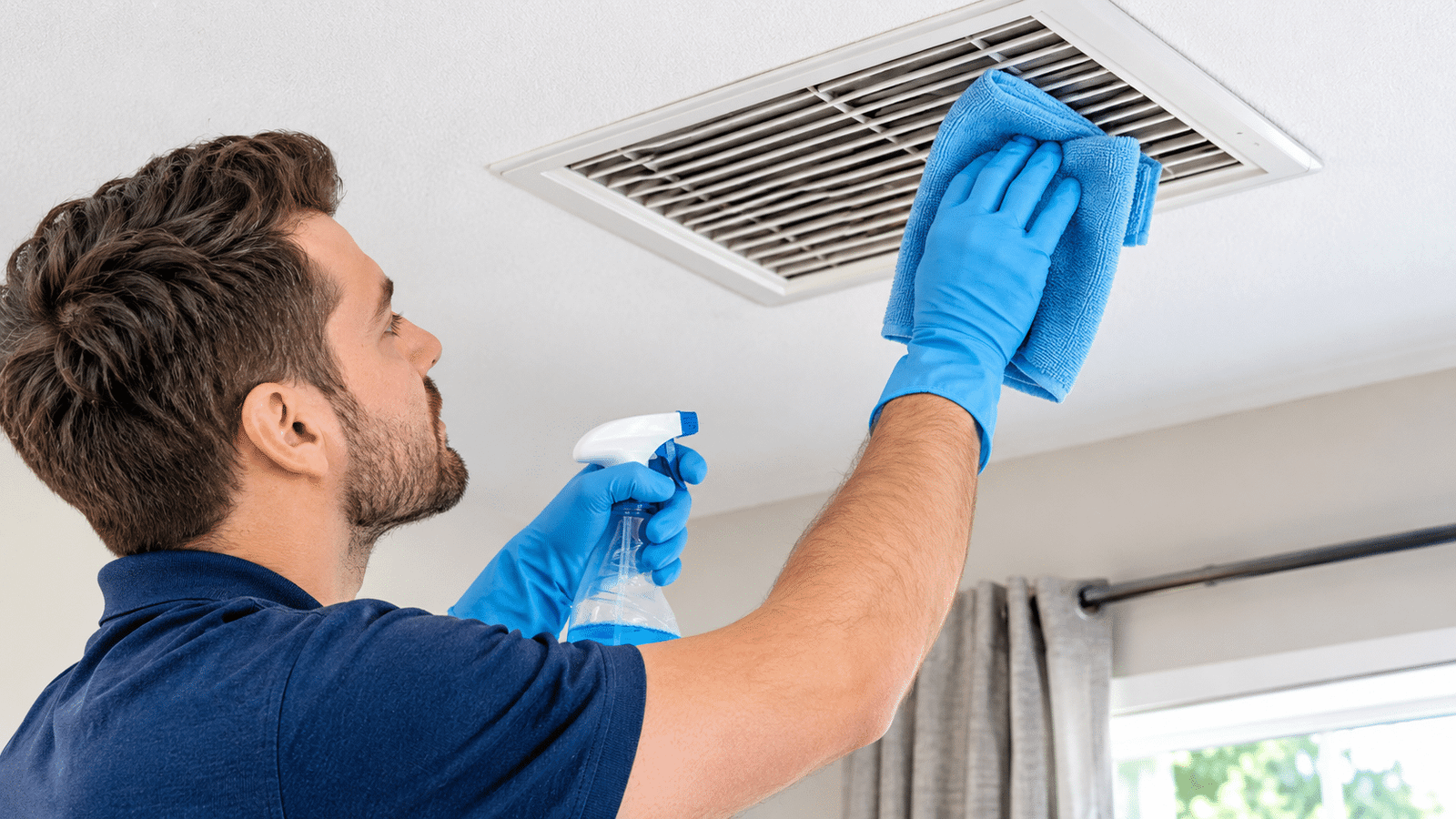
- Visible residue inside accessible registers or grilles.
- Smoke staining around return-air openings.
- A heavily smoke-affected filter.
- Persistent smoky odors near equipment or vents.
- Visible damage to duct jackets or insulation.
- Water or debris inside accessible components.
These findings justify investigation but do not establish the full extent of contamination. Our guide to signs your air ducts may need professional cleaning covers additional observations worth discussing with a contractor. Physical symptoms cannot identify ductwork as the cause of an indoor-air problem. For broader context, read about possible concerns affecting your home’s indoor air. Seek medical advice for health concerns rather than relying on a cleaning recommendation.
What to Do Before Running the System Again
Follow the fire department’s instructions about entering the property and restoring utilities. If heating or cooling equipment may have been affected, keep it off until qualified professionals assess whether it can be operated. Do not switch the system on simply to check whether the smoke smell remains. Heat, water, or electrical damage may be present beyond what is visible at a register.
Tell the attending professionals:
- Whether the system was running during the fire.
- Where smoke traveled.
- Whether water reached equipment or ducts.
- Which cleanup or demolition activities are planned.
This information helps coordinate assessment, cleaning, and repairs.
Cleaning vs. Replacement After Fire Damage
The decision depends on material condition, contamination, access, and the ability to verify the work.
|
Condition found |
Possible next step |
|
Accessible, intact metal surfaces with removable residue |
Professional cleaning |
|
Heat-damaged ducts or equipment |
Specialist assessment for repair or replacement |
|
Torn flexible duct liners |
Replacement of affected sections |
|
Wet or damaged insulation |
Material assessment and replacement where necessary |
|
Porous materials retaining odors after appropriate cleaning |
Further restoration assessment or replacement |
|
Uncertain contamination |
Additional investigation before selecting a treatment |
What About Flexible Ductwork?
Flexible ducts require careful assessment because their liners and insulation can be damaged or difficult to restore. Cleaning cannot repair a torn liner or reverse heat damage. Our guide to whether flex ducts can be cleaned explains how material condition influences the decision. After a fire, the recommendation must also account for smoke exposure and retained residue.
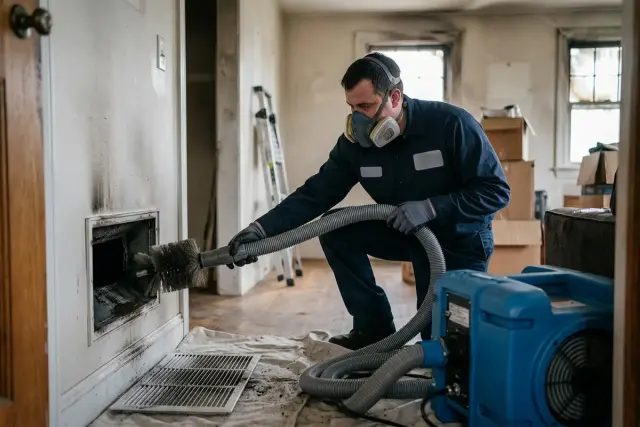
What Professional Post-Fire Duct Cleaning Should Include
Post-fire work should have a written scope identifying the affected components, cleaning methods, containment measures, and access limitations.
Inspection and Documentation
The assessment should record accessible contamination and damage. Photographs can help explain findings and support discussions with the restoration contractor or insurer. Camera inspection may help in some areas, but it cannot necessarily reveal every concealed surface or identify every hazardous substance.
Controlled Residue Removal
Cleaning methods should suit the material and its condition. Appropriate agitation and collection methods can remove deposited residue while limiting its spread into surrounding areas. Tools suitable for intact metal ducts may be inappropriate for fragile liners or damaged insulation. Ask how equipment and nearby clean areas will be protected.
Equipment Assessment
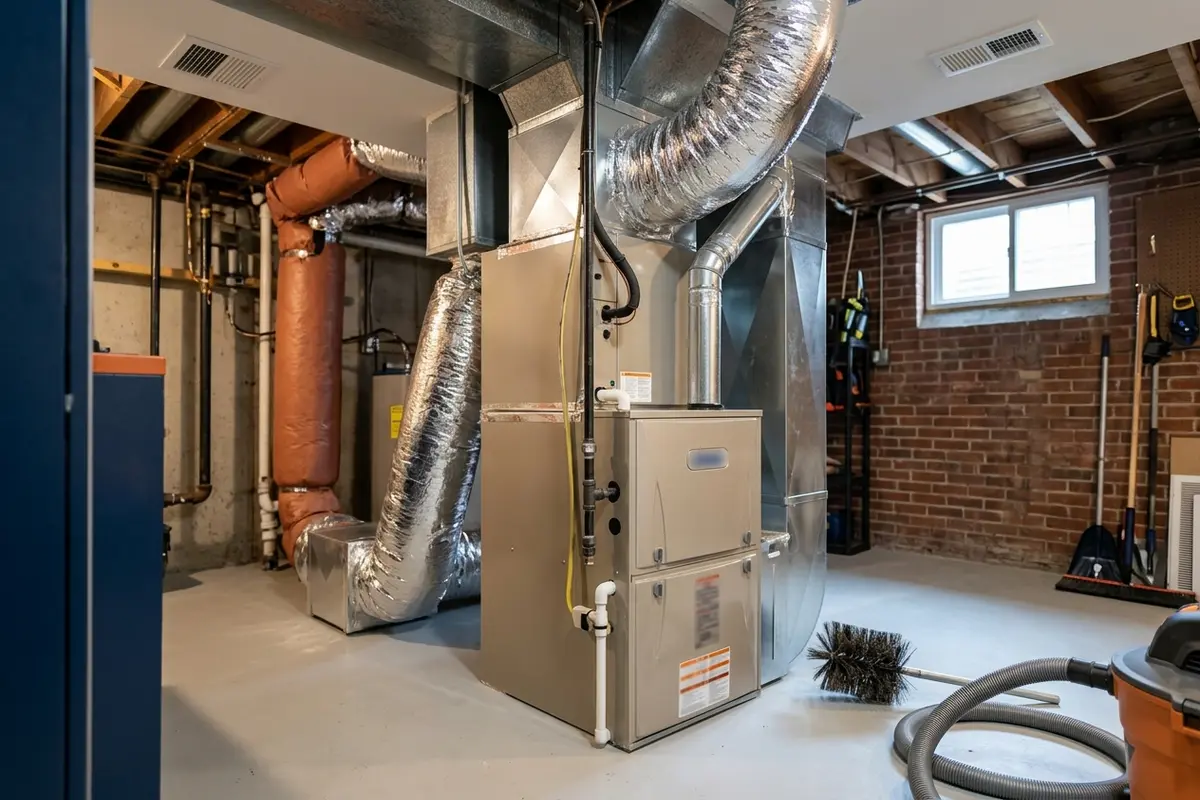
Affected filters, blower assemblies, coils, cabinets, and other components may need separate attention. Mechanical and electrical repairs should be handled by appropriately qualified professionals. Duct cleaning does not establish that a damaged furnace or air handler is safe to operate.
Verification and Remaining Work
The final review should explain what was cleaned, which areas could not be accessed, and what still requires repair or replacement. Visual cleanliness provides evidence of residue removal.
Can Duct Cleaning Remove Smoke Odors?
Cleaning may help when residue inside the system contributes to the smell. However, odors can also come from insulation, walls, contents, and concealed building materials.
If those sources remain, treating ducts alone may not resolve the problem. Deodorizing should follow source removal and assessment rather than substitute for them. The practical benefits of air duct cleaning depend on the conditions found and the work completed. Post-fire cleaning should not be sold as a guarantee that every odor or indoor-air concern will disappear.
Is Air Duct Sanitizing Always Necessary?
No blanket chemical treatment suits every post-fire system.
If an antimicrobial product is proposed, its label must specifically permit the intended HVAC application. General approval for hard surfaces does not automatically authorize use inside ducts.
Before agreeing, ask which condition the product addresses, where it will be applied, and what physical cleaning happens first. Our article on whether air duct sanitizing is necessary explains questions to consider before accepting treatment.
When Should Duct Cleaning Happen During Restoration?
Arrange assessment early, then coordinate the cleaning sequence with the restoration team. Cleaning ducts before dusty demolition or contaminated-material removal is complete can create a risk of recontamination. The plan should address protection of openings, necessary repairs, cleaning, filter decisions, and checks before normal operation resumes. If rebuilding includes drywall removal or other dusty work, our guide to air duct cleaning after renovation provides related considerations. Fire recovery requires additional assessment of smoke residue and damaged materials. There is no single timetable for every fire loss. Ask for a project-specific estimate rather than applying the usual air duct cleaning appointment duration to a restoration job.
Costs, Insurance, and Written Estimates
Post-fire duct work may require a different scope from routine dust removal. Costs can depend on access, system count, residue severity, duct materials, containment, and replacement needs.
Request an itemized estimate separating:
- Inspection and documentation.
- Cleaning of specified components.
- Removal of affected materials.
- Repairs or replacement.
- Proposed odor treatments.
- Verification and follow-up work.
Insurance coverage depends on the policy, cause of loss, and insurer’s assessment. Ask what documentation and approvals are required. Keep photographs, findings, estimates, and invoices without assuming reimbursement is guaranteed.
Frequently Asked Questions
Can I clean soot from air ducts myself?
Avoid disturbing suspected fire residue inside the system. Household tools may spread contamination or damage materials. Arrange professional assessment to determine suitable cleanup methods and precautions.
Is changing the air filter enough after smoke damage?
A replacement filter cannot remove residue already deposited on ducts, equipment, or building materials. It also cannot correct heat or electrical damage. Filter replacement should be part of the wider assessment.
Do smoke-damaged ducts always need replacement?
No. Some intact, accessible surfaces may be restorable. Replacement depends on damage, material type, retained odors, access, and whether appropriate cleaning can be completed.
How long does smoke odor remain in ductwork?
There is no universal duration. It depends on the source, affected materials, and restoration completed. Persistent odors require investigation rather than repeated masking treatments.
Does homeowners insurance cover post-fire duct cleaning?
It may be included in an approved fire-restoration claim, but coverage is policy-specific. Confirm the scope and documentation requirements with your insurer before authorizing non-emergency work.
Is the system safe once the ducts look clean?
Visual cleanliness does not establish mechanical safety or rule out every contaminant. Fire-affected equipment may require additional inspection, repairs, and checks before reuse.
Contact us today for a free quote