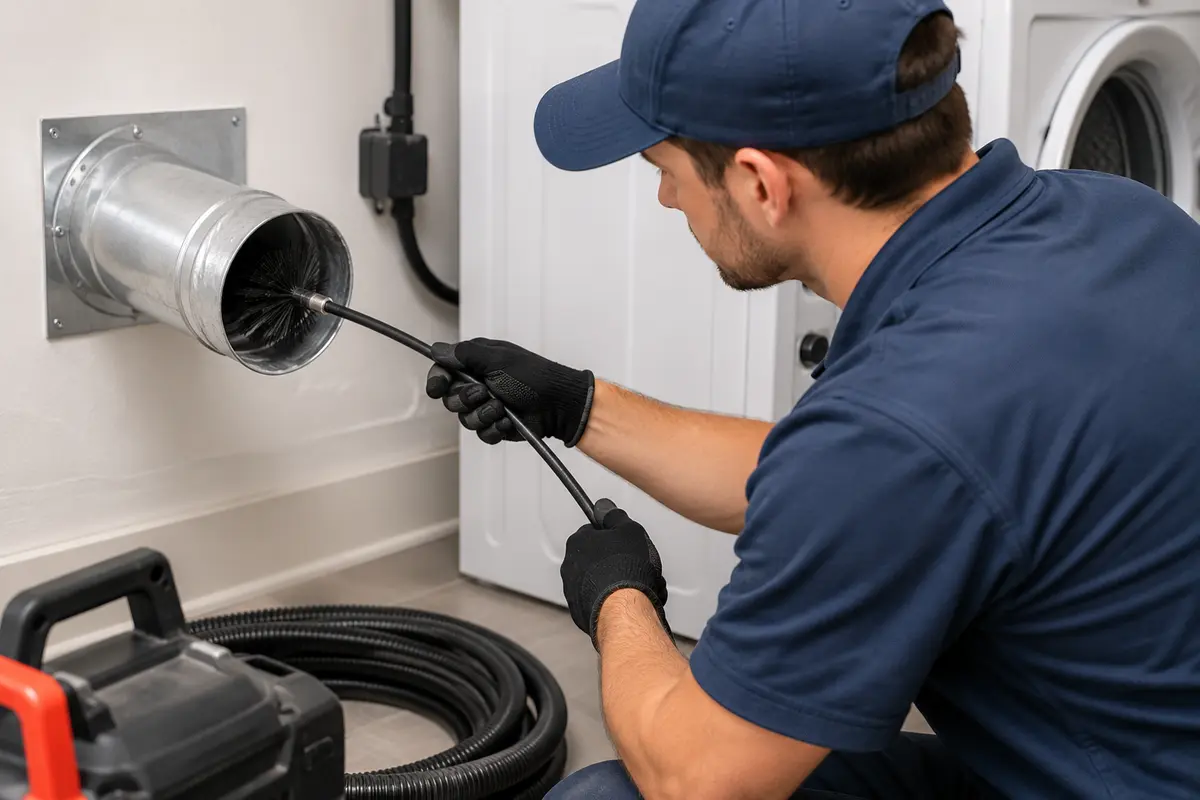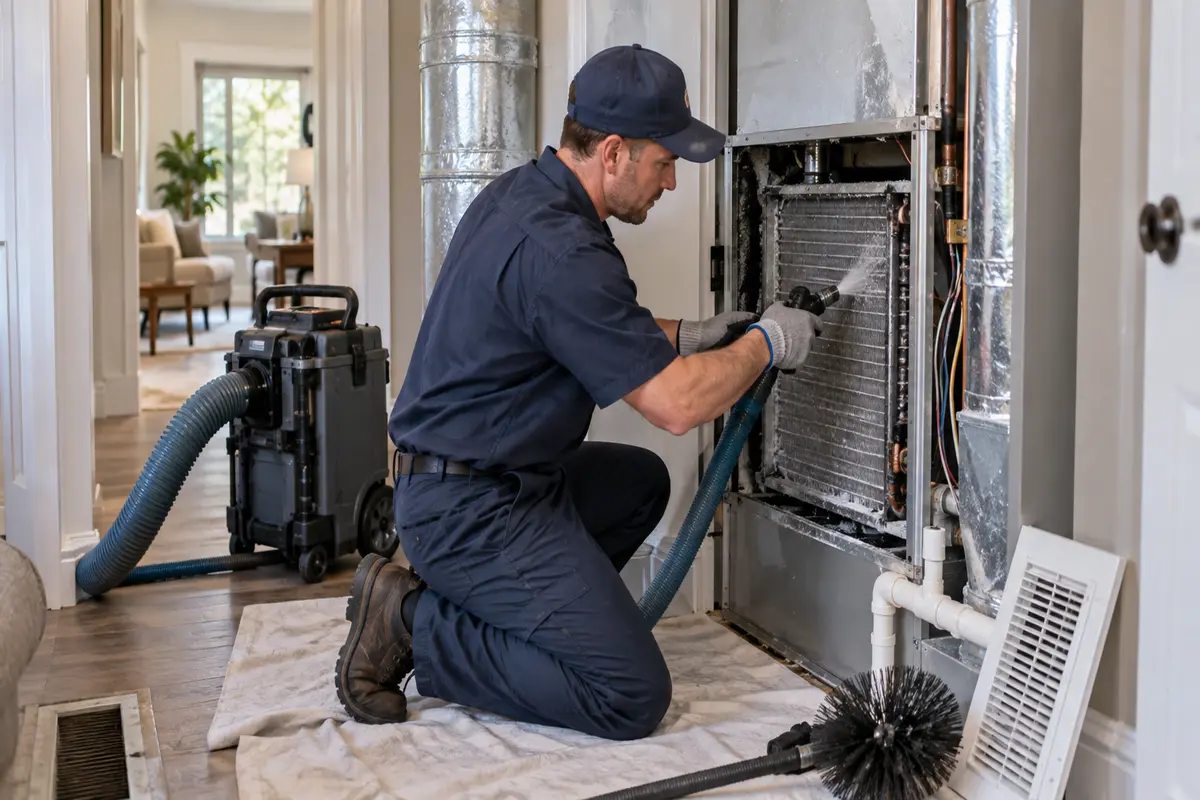
Most homeowners booking an air duct inspection have no idea what they’re actually paying for until the technician shows up, and that confusion is understandable; “inspection” can mean anything from a five-minute flashlight check to a full, pressure-tested leak assessment. Air Wolfe Air Duct Cleaning walks every customer through which type of inspection fits their situation before recommending anything, and breaks down what each one involves, what a technician looks for, and what should happen after the inspection.
A professional air duct inspection checks your ductwork for damage, disconnections, leaks, contamination, and airflow problems using several methods, depending on how detailed an assessment you need. The three main types are a visual inspection, a camera or video inspection, and a leakage or pressure test, and each one answers a different question about your system’s condition. A good inspection should always come before any cleaning is recommended, not after; you want to know what’s actually wrong before paying to fix it.
The Three Types of Air Duct Inspection
Not every inspection answers the same question, and knowing the difference helps you avoid paying for more than you need or, worse, less than the problem actually requires.
Visual Air Duct Inspection
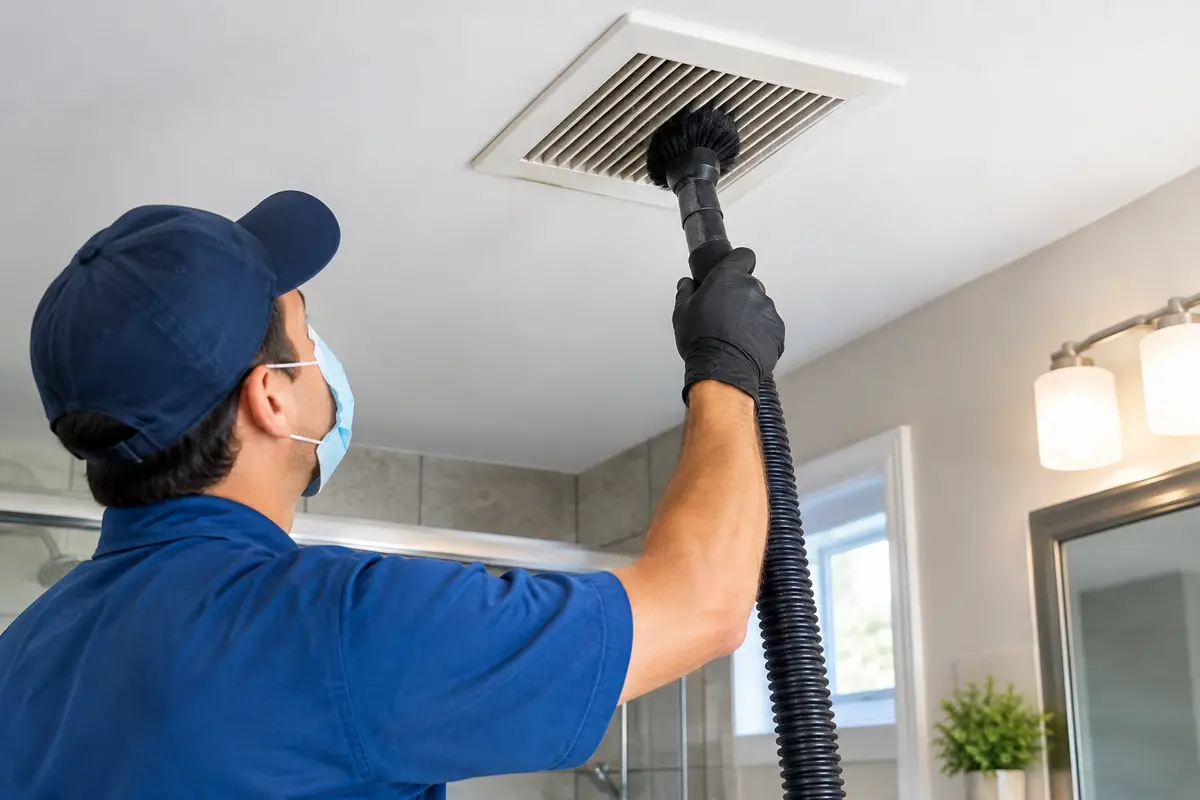
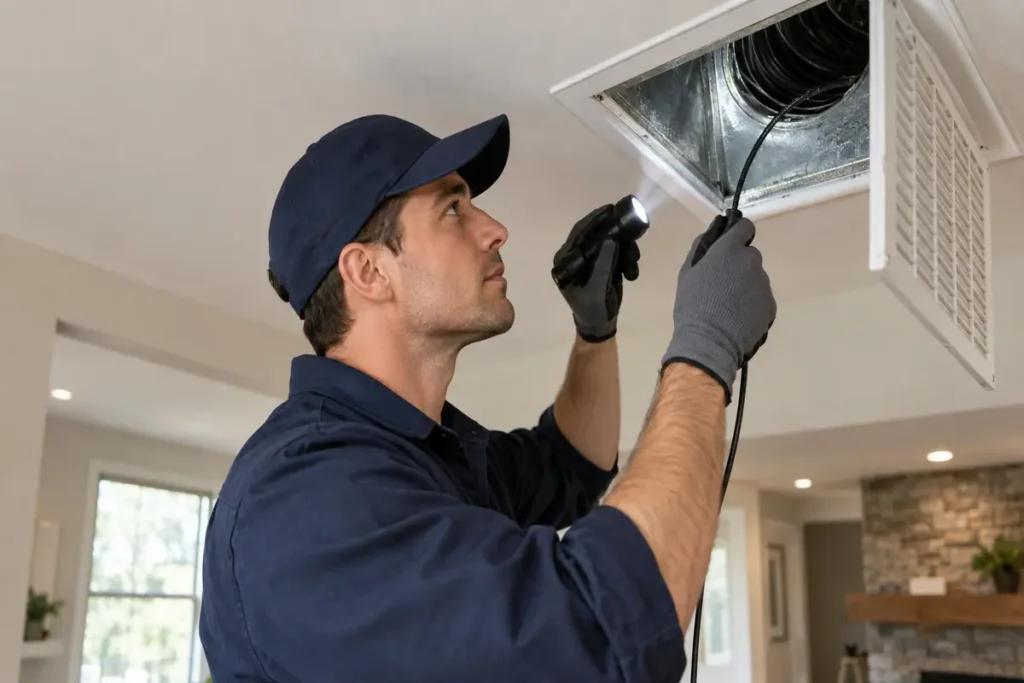
A technician opens accessible vent covers and access panels and examines the ductwork with a flashlight, checking for visible dust and debris buildup, dark staining that suggests mold or moisture, obvious disconnections or crushed sections, and pest activity such as droppings or nesting material. This is the most affordable option and works well when the concern is something you can already partially see or smell, like dust blowing from the vents or a musty odour.
A visual check has real limits, though. It only covers the sections a technician can physically reach, which means long duct runs behind finished walls or deep in a crawl space often go unchecked unless something more invasive is used.
Camera or Video Air Duct Inspection
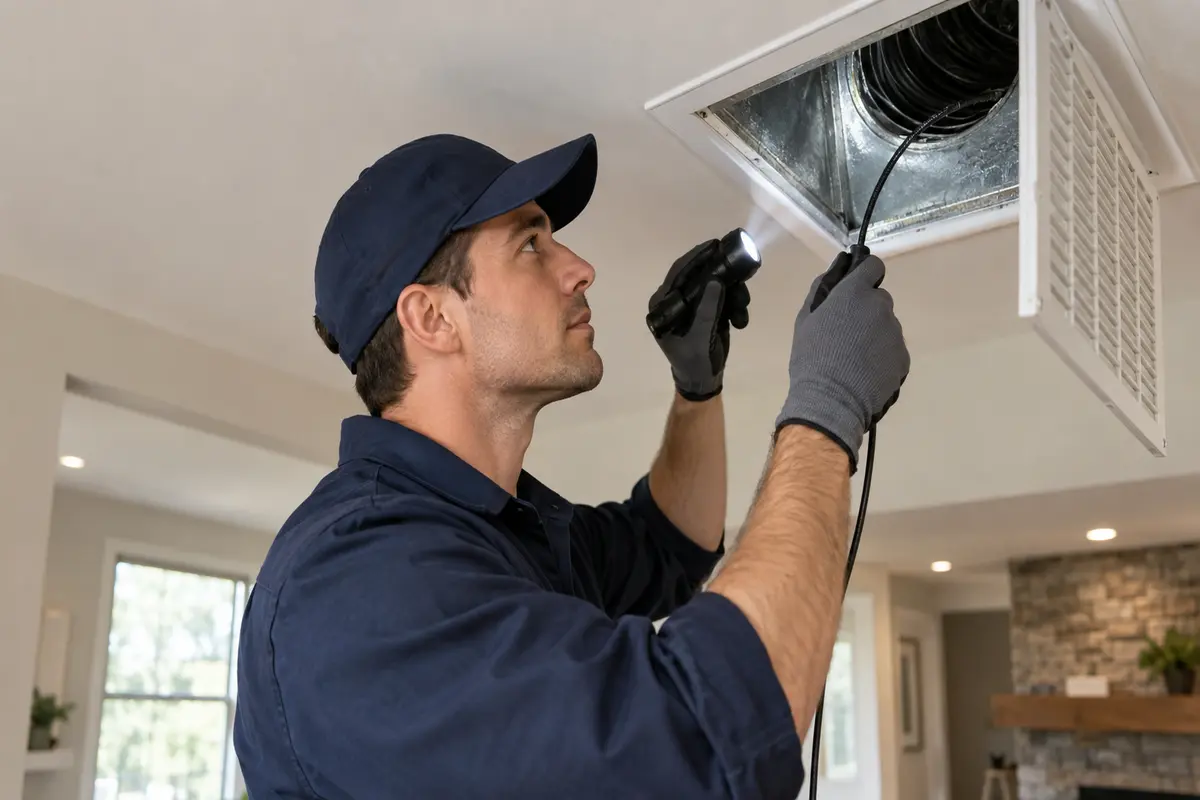
For duct sections that aren’t accessible by eye, a technician feeds a small camera through the ductwork to examine the interior condition further along the run. This catches problems a visual check misses entirely, such as cracked seams, disconnected sections hidden behind drywall, or heavy contamination well past the first bend in the duct.
Duct Leakage or Pressure Test
This is the most technical of the three and measures how much conditioned air escapes the system before it reaches your vents. A technician pressurises the duct system and uses calibrated equipment to measure airflow loss, which pinpoints leaks at joints, boots, and connections that neither a visual nor a camera check can quantify. This test matters most when the complaint is comfort or energy bills rather than visible dust or odour, since a duct system can look perfectly clean and still leak a significant share of conditioned air into an attic or crawl space.
What a Technician Actually Checks During the Visit
Beyond picking the right type of test, here’s what should actually get examined during a thorough inspection, regardless of which method is used:
- Connections and joints throughout accessible sections of ductwork, checking for gaps, loose fittings, or disconnected runs
- Insulation condition on ducts running through unconditioned spaces like attics and crawl spaces
- Signs of moisture, staining, or mold growth on interior or exterior duct surfaces
- Evidence of pest activity, including droppings, nesting material, or chew marks
- Whether vent registers open, close, and seal properly
- Overall airflow at supply and return vents throughout the home
A thorough inspection produces a specific list of findings, not a vague “everything looks fine” or “you need cleaning” verdict. If a technician can’t point to what they actually saw, the inspection didn’t accomplish much.
When Each Type of Air Duct Inspection Makes Sense
A visual inspection is usually enough when you already have a specific, visible symptom, like dust visibly blowing from vents or accessible ductwork that looks obviously damaged. It’s also a good starting point before deciding whether cleaning is needed, since it’s the fastest way to confirm whether there’s a problem worth addressing.
A camera inspection makes more sense when the concern involves duct sections you can’t reach, or when a visual check doesn’t reveal an obvious cause for a real symptom, like a persistent odour with no visible source in the accessible sections.
A leakage or pressure test is worth the added cost when the complaint is about comfort or energy bills rather than dust or smell. Uneven temperatures between rooms, an HVAC system that runs constantly without keeping up, or a noticeable jump in utility costs are all signs that air may be escaping the ductwork itself rather than a cleanliness issue.
Real estate transactions are one of the more common reasons for a full air duct inspection in Greater Boston. Buyers evaluating an older home and sellers wanting documentation before listing both benefit from knowing the ductwork’s actual condition before deciding on air duct cleaning as part of move-in preparation.
What Air Duct Inspections Typically Cost
Pricing varies significantly based on which type of inspection you need and how large or complex the ductwork is. Industry cost data generally puts a basic visual inspection at the lower end of the range, with camera inspections costing more because of the specialised equipment involved, and pressure or leakage testing typically the most expensive of the three because of the calibrated tools and additional time required. Home size, number of stories, and ductwork accessibility all affect the final price. Because these ranges vary by provider and home, the most reliable way to know the actual cost is a direct quote based on your specific system, not a generic number.
What Happens After the Air Duct Inspection
A proper inspection should end with a clear explanation of what was found, not a sales pitch. If nothing significant turned up, that’s a legitimate outcome, and a trustworthy provider will say so rather than manufacturing a reason to recommend cleaning anyway. If the inspection finds contamination, damage, or leaks, the findings should point to a specific next step, whether that’s duct cleaning, a repair, or, in some cases, monitoring the situation going forward.
Homeowners in Worcester County and across Greater Boston searching for a duct inspection are often trying to answer a specific question, whether that’s a musty smell, a real estate deadline, or rising energy bills, and the inspection should directly answer that question rather than becoming a generic upsell opportunity. If you’re in the Worcester, MA area and dealing with an older home’s ductwork, a visual inspection is typically the right place to start before deciding whether anything more involved is needed.
The EPA’s guidance on air duct cleaning notes that ducts should be inspected for actual contamination or damage before cleaning is performed, rather than cleaning on a fixed schedule regardless of condition, which is exactly why the inspection step matters as much as the cleaning itself.
Get a Free Air Duct Inspection From Air Wolfe Air Duct Cleaning
Air Wolfe Air Duct Cleaning offers a free air duct inspection for homeowners across Needham and the Greater Boston area, so you know your ductwork’s condition before deciding whether cleaning, repair, or nothing at all is the right next step. There’s no obligation attached to the visit, and no pressure to book additional work if the inspection doesn’t turn up a real problem. If you’re dealing with a musty smell, uneven airflow, or you’re due for a check before the next heating or cooling season, reach out to schedule your free inspection and get a clear answer instead of a guess.

Frequently Asked Questions
- How long does a professional air duct inspection take?
A basic visual inspection typically takes 30 to 60 minutes depending on home size and how many access points need to be checked. Camera inspections and pressure tests take longer because they require additional setup and equipment. - Can I inspect my own air ducts before calling a professional?
You can do a basic version yourself by removing a vent cover and looking inside with a flashlight for visible dust, staining, or damage. This won’t catch problems in sections you can’t reach or measure actual air leakage, but it’s a reasonable first check before deciding whether a professional visit is worth it. - Does an air duct inspection always lead to a cleaning recommendation?
No. A legitimate inspection can conclude that the ductwork is in good condition and doesn’t need cleaning. If a provider recommends cleaning regardless of what the inspection actually found, that’s worth questioning. - What’s the difference between an air duct inspection and an HVAC inspection?
An air duct inspection focuses specifically on the ductwork itself, including its structural condition, cleanliness, and air leakage. An HVAC inspection is broader and typically also covers the furnace, air conditioner, thermostat, and other mechanical components beyond the duct system. - Do I need a duct inspection before buying a home?
It’s worth considering, especially for older homes where ductwork condition isn’t always visible during a standard home inspection. A dedicated duct inspection can identify leaks, damage, or contamination that would otherwise go unnoticed until after you’ve already moved in.