Discovering water around your dryer or inside its exhaust duct can be frustrating, especially during the colder months. Many homeowners experience this problem when warm, moisture-filled air travels through cold sections of a dryer vent system. When the humid air cools, condensation can form inside the ductwork and eventually collect as water. However, condensation is not the only possible cause. A clogged dryer vent, damaged exterior vent cover, disconnected duct, or poorly supported exhaust pipe can also contribute to moisture problems.
Understanding why there is water in your dryer vent during winter is important for protecting your home, maintaining appliance performance, and reducing potential fire hazards. In this guide, we explain the common causes, warning signs, and practical ways to prevent dryer vent moisture. If you are concerned about lint buildup or restricted airflow, professional dryer vent cleaning can help identify and address problems affecting your exhaust system.
Why Does Water Accumulate in a Dryer Vent During Winter?
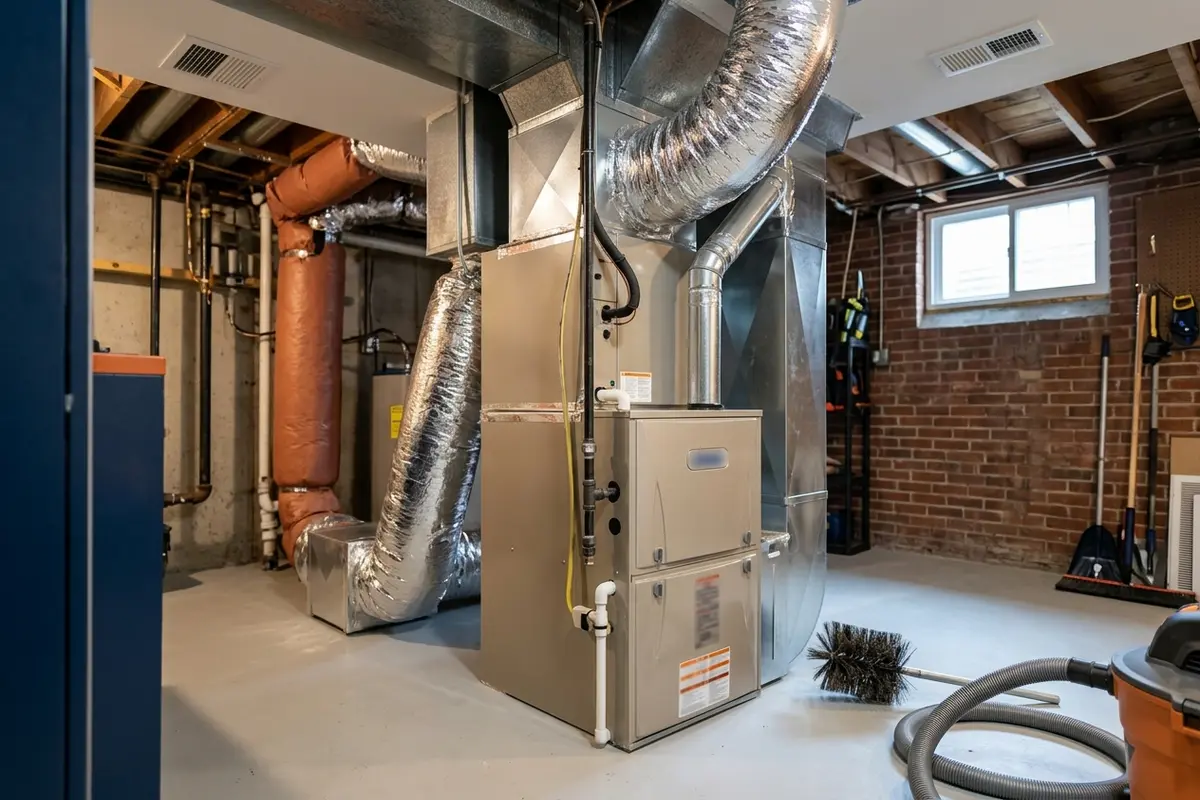
Water in a dryer vent often develops because of temperature differences between warm exhaust air and cold outdoor conditions. During a drying cycle, your appliance releases warm air containing moisture removed from wet clothing. This humid air travels through the exhaust duct before leaving your home. If parts of the ductwork pass through an unheated attic, garage, crawlspace, or another cold area, the air can cool before reaching the exterior termination.
When the temperature drops sufficiently, moisture in the exhaust air can condense on the cooler interior surfaces of the duct. Over time, water droplets may collect, drip through duct connections, or accumulate in low sections of the exhaust system. Several other conditions can make the problem worse.
1. Condensation Inside Cold Dryer Ductwork
Condensation is one of the most common explanations for winter moisture in dryer vents. During normal operation, your dryer sends warm, humid air through its exhaust system. When this air encounters cold metal ductwork, it loses heat. Moisture can then change from vapor into liquid water on the interior duct surfaces.
This problem is more likely when:
- Dryer ductwork passes through an unheated attic.
- Exhaust pipes run through cold garages or crawlspaces.
- Long duct routes allow exhaust air to cool before reaching outdoors.
- Sections of ductwork have inadequate insulation where insulation is appropriate.
- The exhaust system contains low spots where moisture can collect.
Persistent condensation should not be ignored. Repeated moisture accumulation can damage nearby building materials and contribute to corrosion or lint buildup.
2. Restricted Airflow and Lint Buildup
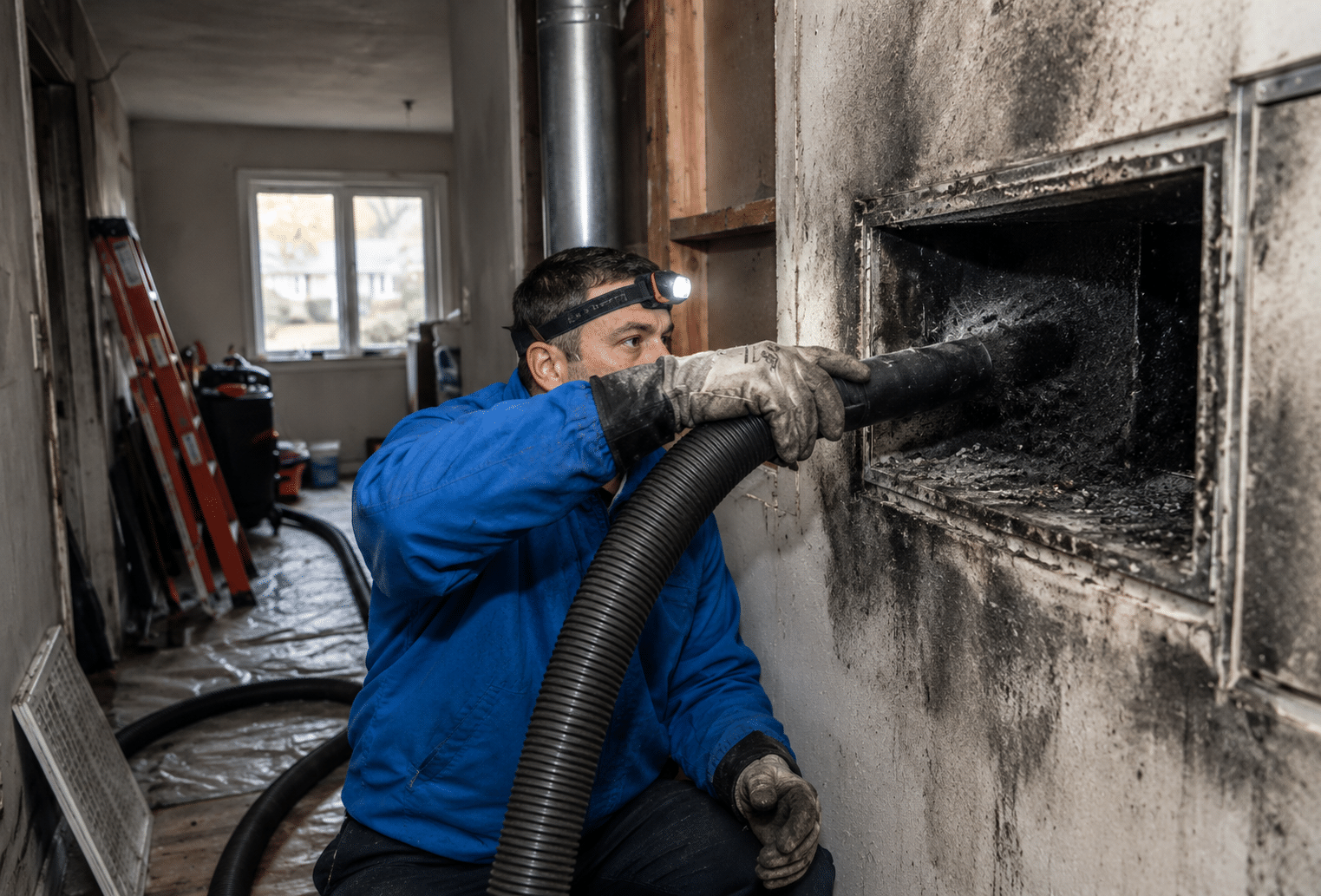
Lint accumulation is another important cause of dryer vent problems. Every drying cycle releases small fibers from clothing. Although the lint screen catches much of this material, some lint can travel into the exhaust duct. Over time, debris may accumulate along the interior walls, around elbows, or near the exterior vent opening. A restricted dryer vent makes it harder for warm, humid exhaust air to escape. Reduced airflow can contribute to longer drying times, overheating, and moisture-related problems.
Watch for these symptoms:
- Clothes remain damp after a complete drying cycle.
- Your dryer feels unusually hot during operation.
- The laundry room becomes warm or humid.
- The exterior vent releases little air.
- Lint collects around the outside vent opening.
Regular dryer vent cleaning helps remove accumulated lint and restore proper airflow when buildup is responsible for the restriction. Proper ventilation maintenance is also important when upgrading your home’s heating system. Before installing a new furnace, learn about duct cleaning requirements when installing a new furnace to understand how clean ductwork can support your HVAC system’s performance.
3. Rain or Snow Entering Through the Exterior Vent
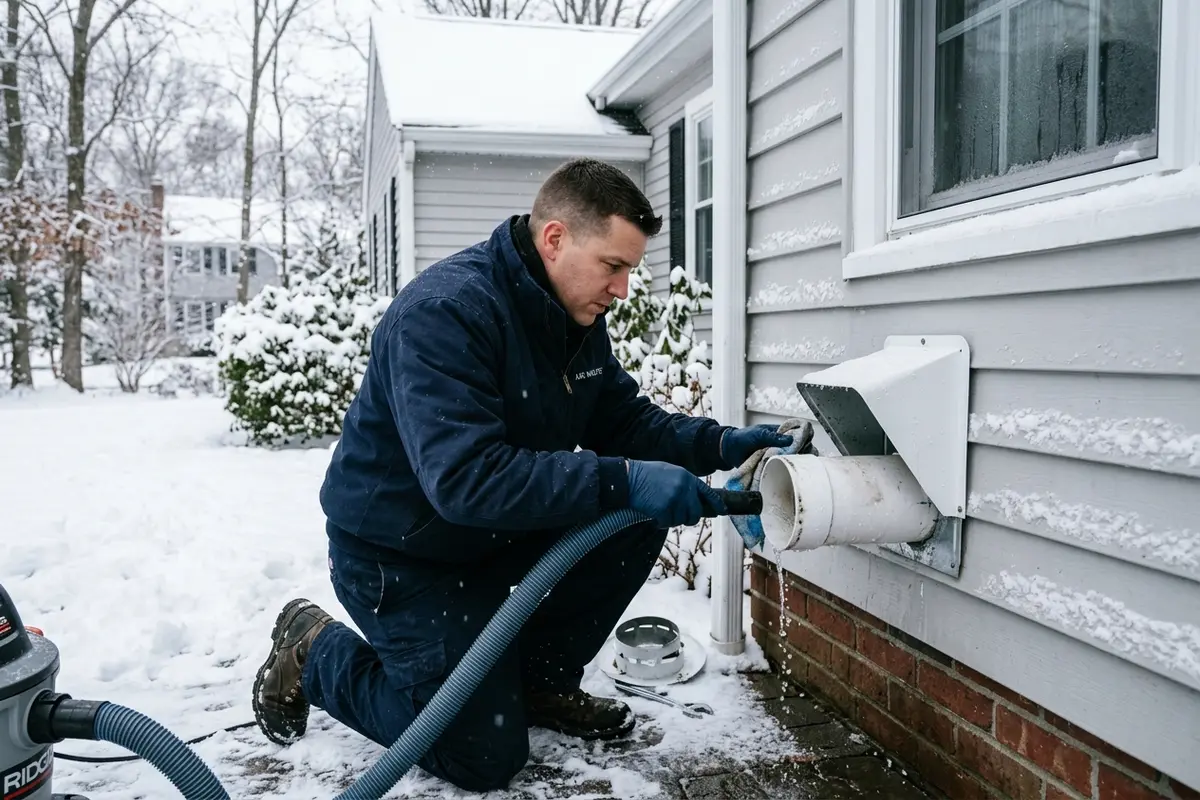
Sometimes water in a dryer vent has nothing to do with condensation. Rain, melting snow, or wind-driven moisture can enter through a damaged or improperly installed exterior vent cover. A properly installed exterior termination helps protect the exhaust opening from outdoor elements while allowing dryer air to escape.
Problems may occur when:
- The exterior vent hood is cracked or damaged.
- The backdraft damper is missing or stuck.
- The vent opening is poorly positioned.
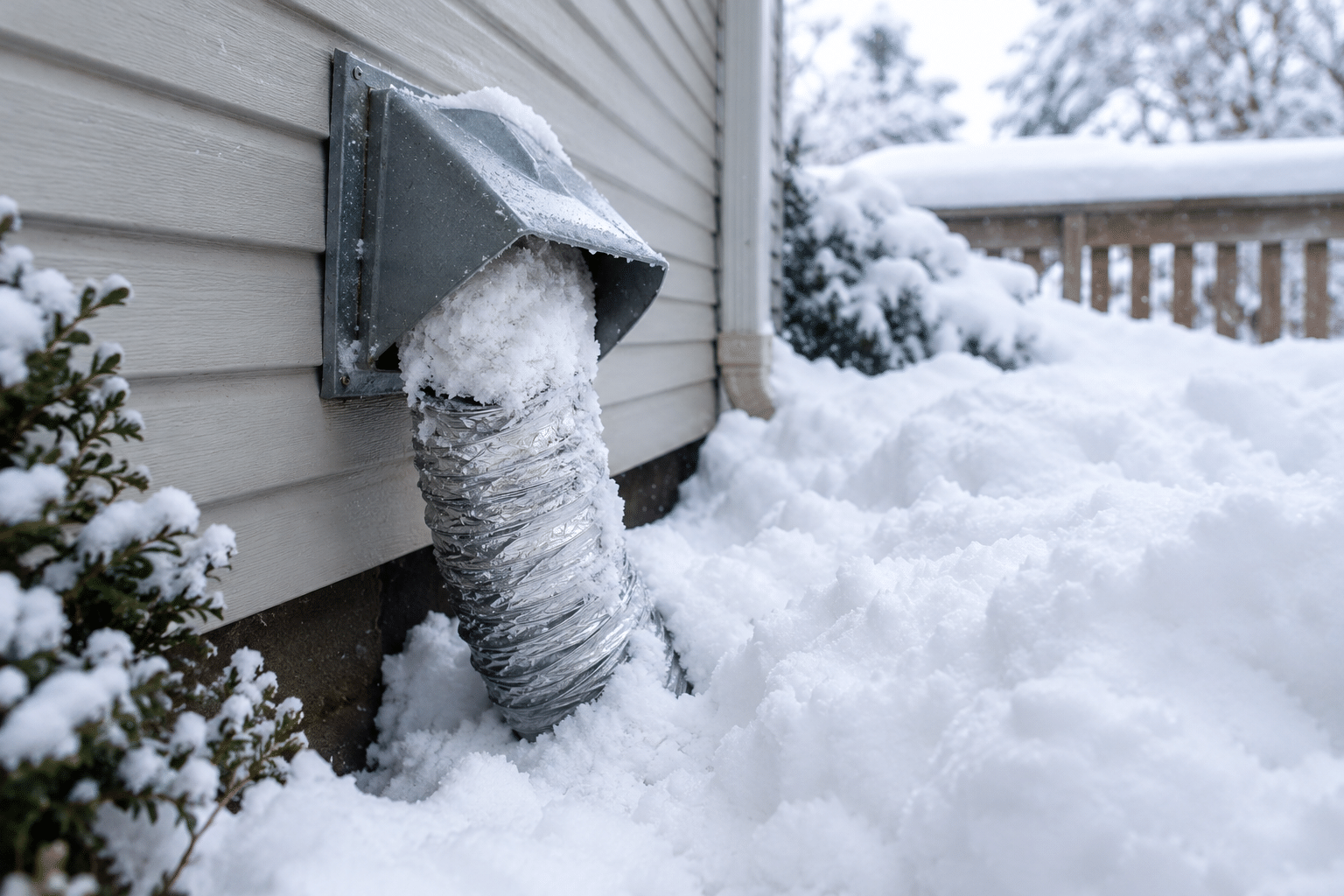
- Snow or ice blocks the exterior termination.
- Water enters through damaged connections.
If moisture appears after heavy rain or snowfall, inspect the exterior vent cover for visible damage. A qualified technician can determine whether the termination needs repair or replacement.
4. Sagging or Poorly Supported Dryer Ductwork
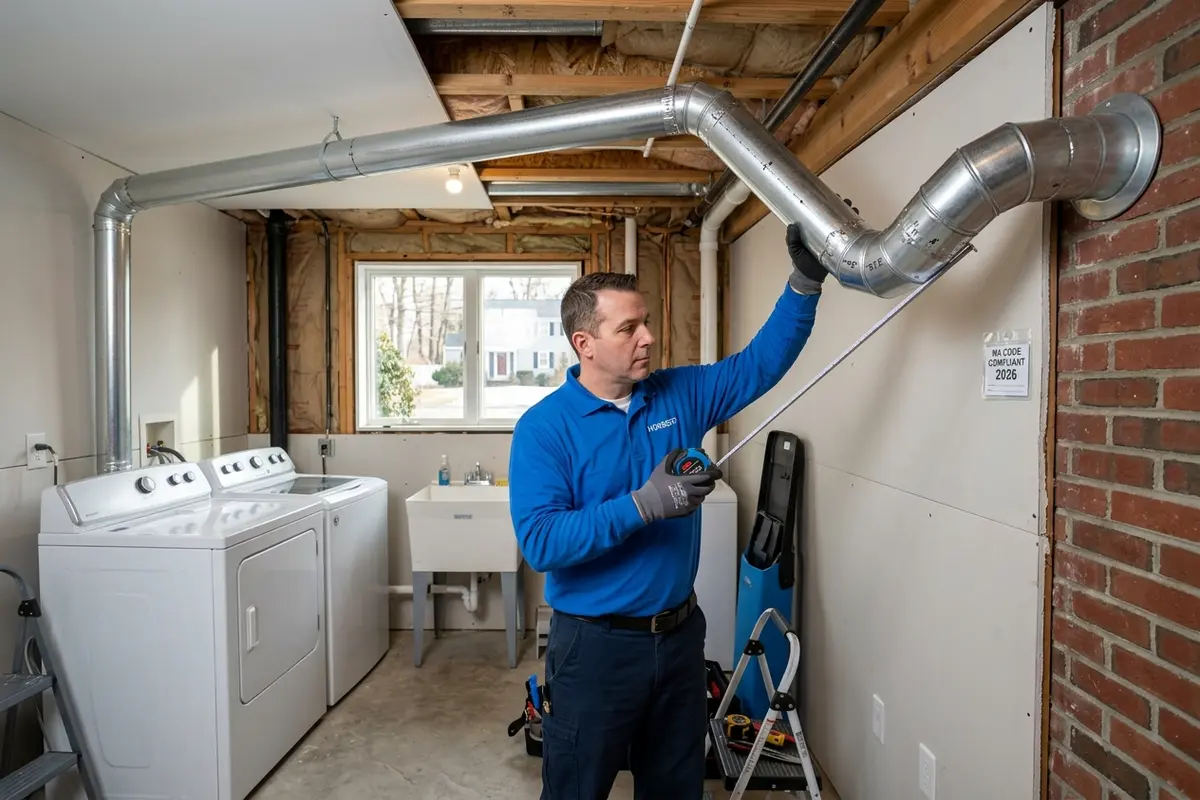
Dryer exhaust ducts should be routed and supported properly. When ductwork sags, bends excessively, or develops low sections, moisture can collect instead of moving through the exhaust system. These low spots can also trap lint and restrict airflow. This issue is particularly important in longer vent installations that travel through attics, basements, or other concealed spaces. Proper duct routing, secure connections, and suitable support help reduce the risk of moisture accumulation.
How to Identify Where the Water in Your Dryer Vent Is Coming From
Finding water around your dryer does not automatically mean that condensation is responsible. Identifying when and where the moisture appears can help narrow down the cause.
Here are some common clues:
Water appears after using the dryer: Condensation or a leaking duct connection may be responsible.
Water appears after heavy rain: Inspect the exterior vent cover and surrounding wall or roof penetration for possible water intrusion.
Water collects in a low section of ductwork: Poor duct support or improper routing may be allowing moisture to accumulate.
The laundry room becomes unusually humid: A disconnected or damaged exhaust duct may be releasing moist air indoors.
The dryer takes longer to dry clothes: Restricted airflow from lint buildup or another obstruction may be contributing to the problem.
If water reaches electrical components or the dryer outlet, stop using the appliance and arrange a qualified inspection. Do not attempt to operate the dryer with a visibly damaged or disconnected exhaust system.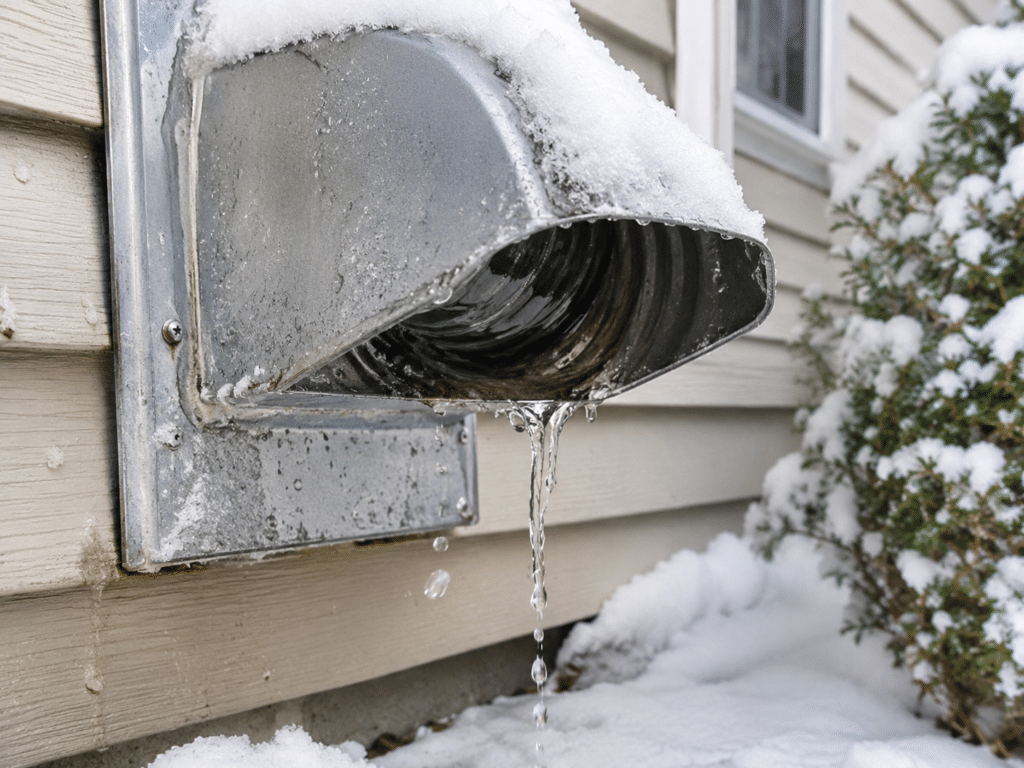
Warning Signs of Moisture in Your Dryer Vent
Moisture problems do not always appear as visible puddles. Sometimes the first signs involve changes in dryer performance or unusual conditions around the laundry area.
Pay attention to these warning signs:
- Water dripping from dryer vent connections.
- Dampness or puddles behind the dryer.
- Clothes requiring multiple cycles to dry.
- A musty smell around the laundry room.
- Visible condensation on accessible duct surfaces.
- Excessive heat around the dryer or exhaust connection.
- Lint accumulating around the exterior vent opening.
- An exterior vent flap that remains stuck or obstructed.
These symptoms can indicate moisture accumulation, restricted airflow, or a damaged exhaust system. For additional information, read our guide on 7 warning signs your dryer vent needs cleaning.
What Are the Risks of Ignoring Water in Your Dryer Vent?
Ignoring persistent dryer vent moisture can lead to more serious problems over time. Although condensation may initially appear minor, continued exposure to moisture can affect both your appliance and surrounding building materials.
1. Mold and Mildew Growth
Persistent moisture creates conditions that can support mold and mildew growth.
If water leaks into nearby drywall, flooring, insulation, or other building materials, those surfaces may remain damp for extended periods.
This can lead to musty odors, material deterioration, and indoor air quality concerns.
Addressing the moisture source early is important for preventing additional damage.
2. Increased Dryer Fire Risk
Lint is highly combustible. When it accumulates inside an exhaust duct, it can restrict airflow and create a potential fire hazard. Moisture does not automatically cause a dryer fire, but a wet, restricted, or poorly maintained vent system deserves attention. The U.S. Fire Administration identifies clothes dryers as a potential source of residential fires and recommends proper maintenance and removal of lint. Regular inspections and professional laundry dryer vent cleaning can help reduce dangerous lint accumulation.
3. Longer Drying Times and Higher Energy Costs
A restricted exhaust system can make your dryer less efficient. When moist air cannot escape properly, clothes may take longer to dry. Your appliance may need additional cycles to finish the same laundry load. This increases energy consumption and puts additional operating demand on the dryer. Maintaining clear exhaust airflow helps your appliance operate more efficiently.
4. Damage to Floors, Walls, and Nearby Materials
Water escaping from duct connections or accumulating in concealed spaces can damage nearby surfaces. Depending on the location and amount of moisture, you may experience:
- Damaged flooring.
- Peeling paint.
- Stained drywall.
- Corroded metal connections.
- Damp insulation.
- Persistent musty odors.
Finding and correcting the source of moisture is more effective than simply drying the visible water.
How to Prevent Water in Dryer Vents During Winter
Preventing dryer vent condensation requires proper installation, good airflow, and routine maintenance. The following steps can help homeowners reduce moisture-related problems during colder weather.
1. Insulate Dryer Ductwork Where Appropriate
Dryer exhaust pipes that pass through unheated spaces may benefit from suitable insulation. Insulation can help reduce heat loss from the exhaust duct and lower the likelihood of condensation forming on cold duct surfaces.
Pay particular attention to duct sections passing through:
- Unheated attics.
- Cold garages.
- Crawlspaces.
- Other unconditioned areas.
Use appropriate materials and follow applicable building requirements and dryer manufacturer instructions. Insulation alone will not solve a clogged, disconnected, leaking, or incorrectly routed exhaust system.
2. Keep the Dryer Vent Clean
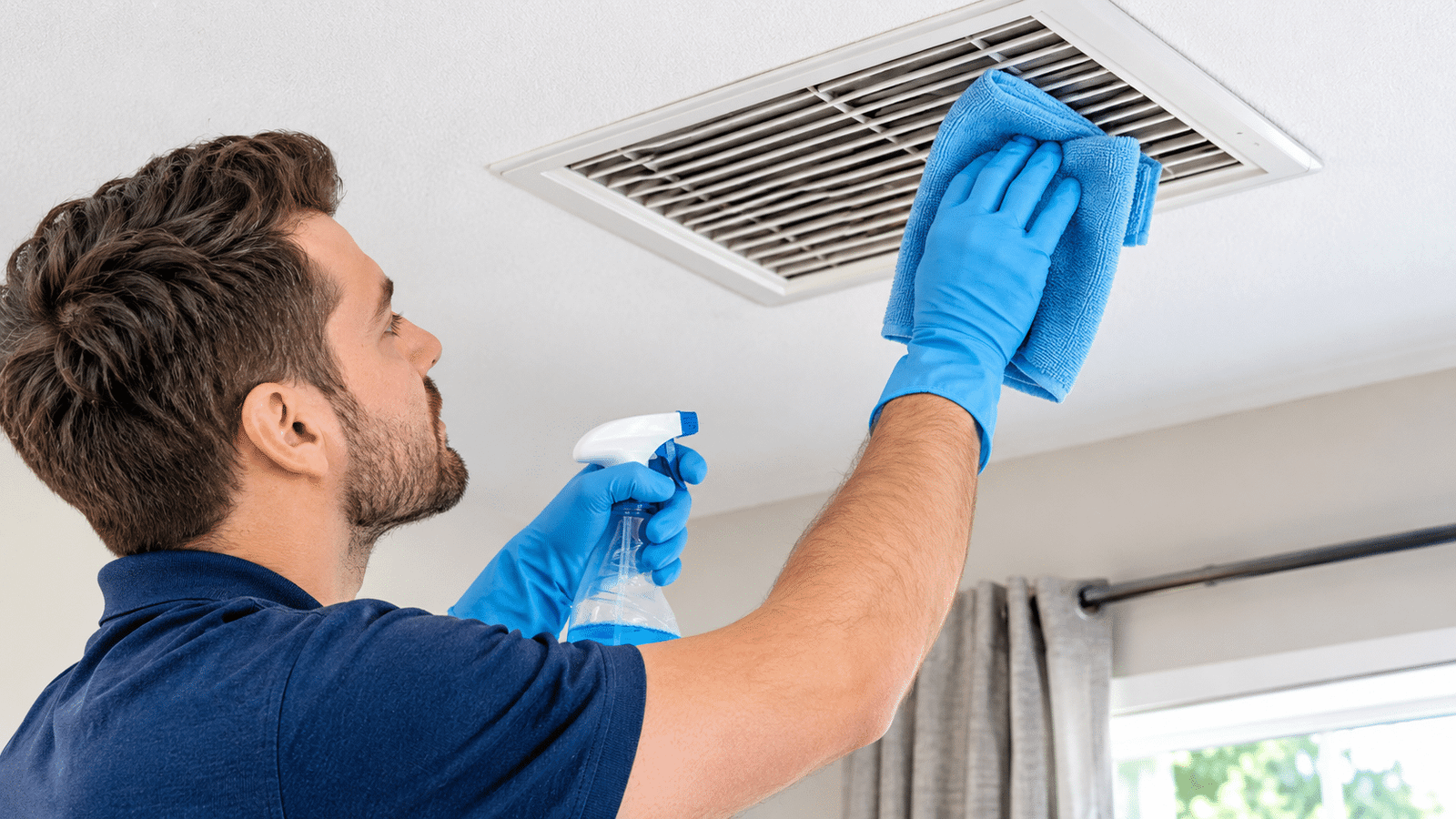
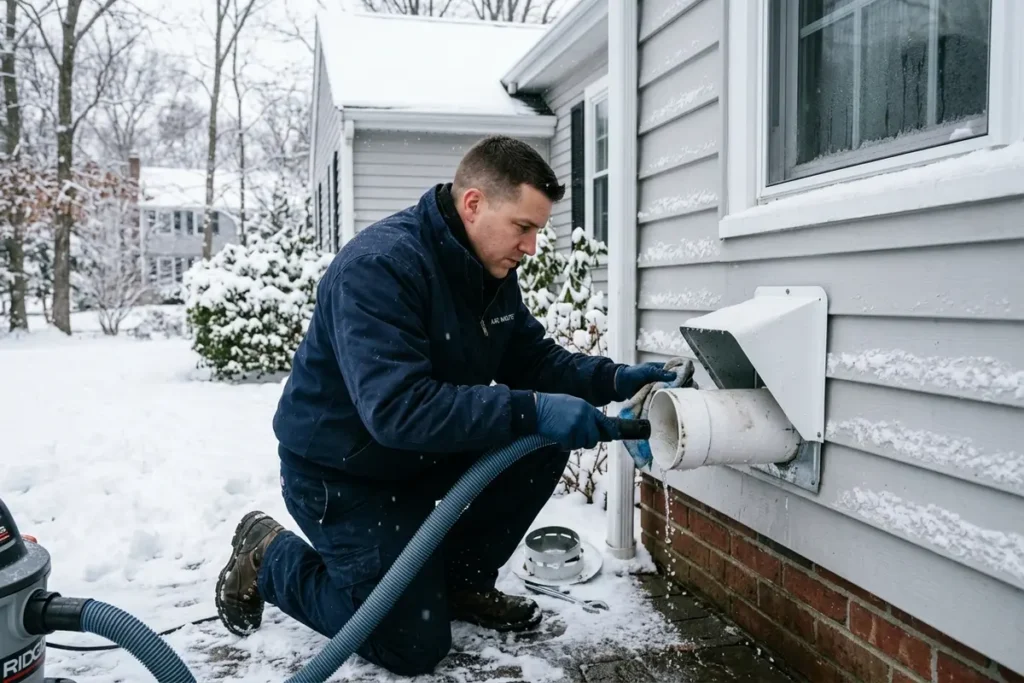
Lint buildup is one of the most important dryer vent maintenance concerns. Clean the lint screen before or after each load, following your appliance manufacturer’s instructions. The exhaust duct should also be inspected and cleaned when necessary. Cleaning frequency depends on dryer usage, duct configuration, and the amount of lint accumulating in the system. Professional cleaning can help remove lint from areas that are difficult to reach with ordinary household tools. Learn more about our professional dryer vent cleaning services.
3. Inspect the Exterior Dryer Vent Cover
Your exterior vent cover should allow exhaust air to escape while helping prevent outdoor elements and pests from entering. Check the exterior termination periodically for:
- Visible damage.
- Stuck or broken dampers.
- Lint accumulation.
- Snow or ice obstruction.
- Debris around the opening.
Do not install a fine mesh screen over a dryer exhaust termination. Screens can collect lint and restrict airflow. If the exterior cover is damaged or obstructed, arrange appropriate maintenance or replacement.
4. Check for Sagging or Damaged Ductwork
Inspect accessible sections of the exhaust duct for disconnected joints, crushed areas, excessive bends, and sagging. Rigid or appropriately listed smooth metal ductwork is generally preferred for permanent dryer exhaust installations. Avoid using thin plastic or foil ducts as permanent concealed exhaust connections. Follow the dryer manufacturer’s specifications and applicable building requirements. A properly routed duct system helps exhaust moist air outside more effectively.
5. Maintain a Short and Direct Exhaust Route
Long and complicated dryer vent routes can make airflow management more difficult. Whenever possible, keep the exhaust route short, direct, and properly supported. Avoid unnecessary bends and sharp turns that may increase airflow resistance and create additional places for lint to accumulate. If your existing exhaust system has a complicated route, a professional inspection can help identify opportunities for improvement.
When Should You Call a Professional Dryer Vent Cleaning Company?
Some dryer vent problems are difficult to identify without inspecting the exhaust system. If water continues appearing despite basic maintenance, professional assistance can help identify the underlying cause.
A professional inspection may include:
- Checking accessible exhaust duct sections.
- Looking for lint accumulation and airflow restrictions.
- Examining visible duct connections.
- Inspecting the exterior termination.
- Identifying damaged or disconnected ductwork.
- Checking for sagging or poorly supported sections.
- Recommending appropriate cleaning or repairs.
If the problem involves a roof penetration, plumbing leak, or damaged building materials, additional repair work from the appropriate qualified professional may be necessary.
Professional Dryer Vent Cleaning in Massachusetts
Air Wolfe Air Duct Cleaning helps homeowners maintain cleaner and more efficient ventilation systems. We understand that dryer vent problems can become particularly frustrating during colder Massachusetts weather. Our dryer vent cleaning services help address lint accumulation and airflow restrictions that can affect dryer performance. Whether you live in Needham, Needham Heights, Wellesley, Newton, or a nearby service area, proper dryer vent maintenance is an important part of protecting your home. If you notice persistent moisture, unusual dryer performance, or signs of a blocked exhaust system, contact Air Wolfe to discuss your dryer vent cleaning needs.
Frequently Asked Questions
1. Is It Normal to Have Water in a Dryer Vent?
No. Visible water inside a dryer exhaust system is not something homeowners should ignore. It may indicate condensation, water intrusion, poor duct routing, or restricted airflow. Identifying the source is important before the problem causes further damage.
2. Why Is My Dryer Vent Dripping Water During Winter?
Winter condensation is a common possible cause. Warm, moisture-filled exhaust air can cool when it travels through cold sections of ductwork. This temperature change can cause moisture to condense on the interior surfaces of the pipe.
3. Can a Clogged Dryer Vent Cause Condensation?
A clogged dryer vent can restrict airflow and interfere with the removal of warm, humid exhaust air. This may contribute to moisture problems, although condensation can also occur in an otherwise clean duct that passes through cold spaces.
4. Why Is My Dryer Vent Wet Even When the Dryer Is Off?
Possible causes include residual condensation, rain entering through a damaged exterior vent cover, leaking duct connections, or another nearby source of water. If moisture appears when the dryer has not been operating, inspect the exterior termination and surrounding area.
5. Should Dryer Vent Ducts Be Insulated in Cold Climates?
Insulation may be beneficial for dryer exhaust sections passing through unheated spaces. However, the correct materials and installation method must follow the appliance manufacturer’s instructions and applicable building requirements.
6. Can Snow and Ice Block a Dryer Vent?
Yes. Snow accumulation or ice can obstruct an exterior dryer vent termination and interfere with exhaust airflow. Check that the opening remains clear during winter weather and arrange repairs if the damper is damaged or stuck.
7. How Often Should I Have My Dryer Vent Cleaned?
Cleaning frequency depends on household laundry usage, vent length, duct configuration, and lint accumulation. Inspect the system regularly and arrange cleaning when buildup or restricted airflow is identified. Follow the appliance manufacturer’s maintenance recommendations.
8. Who Provides Professional Dryer Vent Cleaning in Massachusetts?
Air Wolfe Air Duct Cleaning provides professional dryer vent cleaning services for homeowners in its Massachusetts service areas. Contact our team to discuss your dryer vent maintenance needs and schedule an inspection.
Protect Your Home from Winter Dryer Vent Problems
Water in your dryer vent can be a sign of condensation, lint buildup, damaged ductwork, or outdoor water entering through an improperly protected exhaust opening. Taking care of these problems early can help protect your floors, walls, appliances, and indoor environment. Regular dryer vent maintenance also helps maintain proper airflow and reduce the risks associated with accumulated lint. Don’t let hidden moisture or restricted airflow create bigger problems in your home.