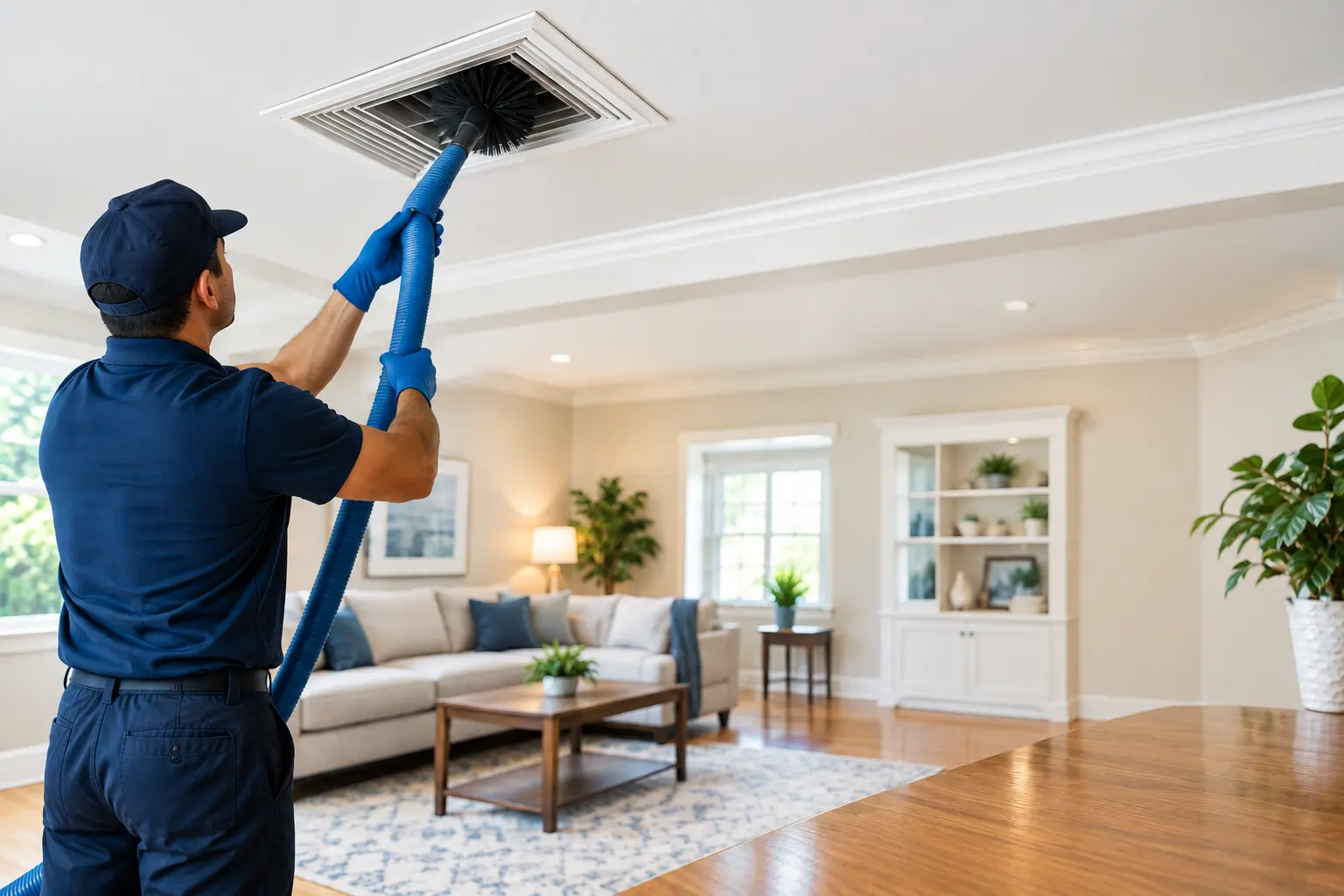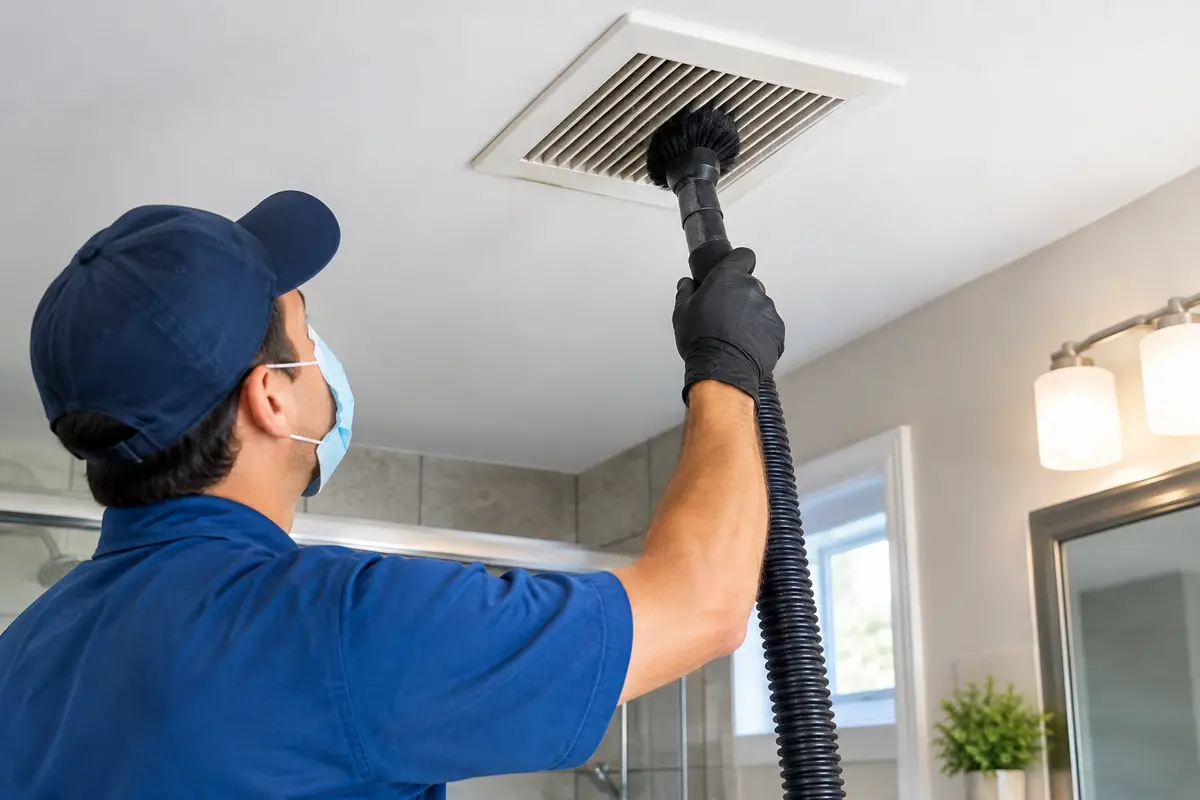
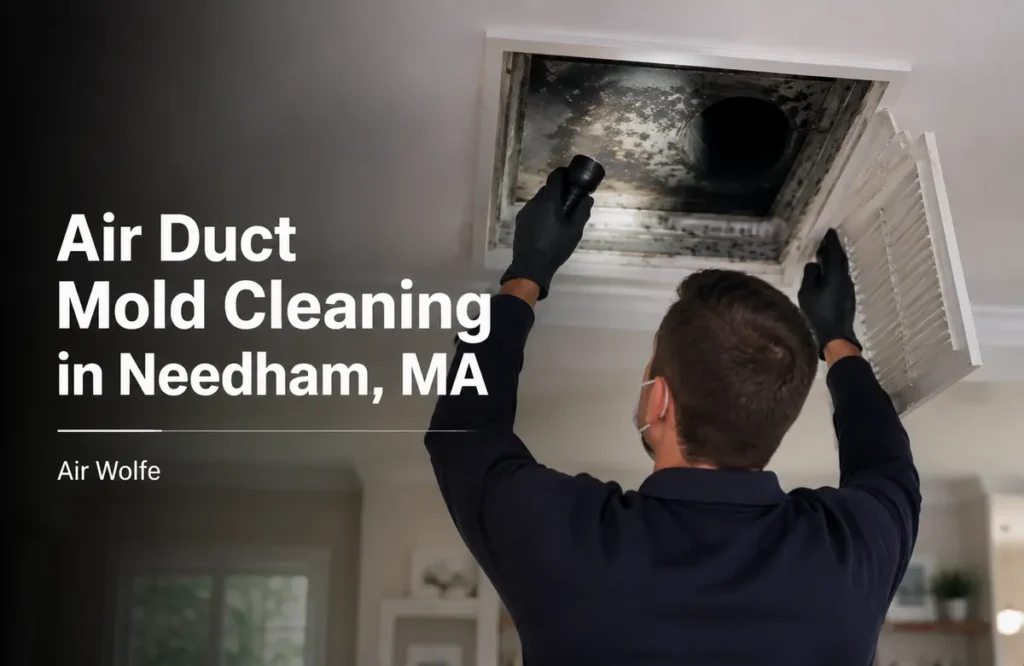
There must be a musty smell the moment the AC clicks on. Allergies flaring indoors, of all places. Dust is creeping back onto the vents days after you wiped them clean. Ring a bell? More often than not, the real culprit is mold — tucked deep inside your HVAC system, somewhere you will never spot it. And this is the part that should worry you. Mold does not sit still. It rides the airflow, drifting quietly from the ducts into every room you live in. At Air Wolfe, we take care of air duct cleaning for families all over Needham and Greater Boston,
We have watched a small patch turn into a whole-house headache more times than we can count. Ignore it and it only digs in deeper.
This guide walks through everything worth knowing about air duct mold cleaning in Needham, MA — what causes it, the signs to watch for, the health toll, and how the pros actually clear it out.
What Is Air Duct Mold Cleaning?
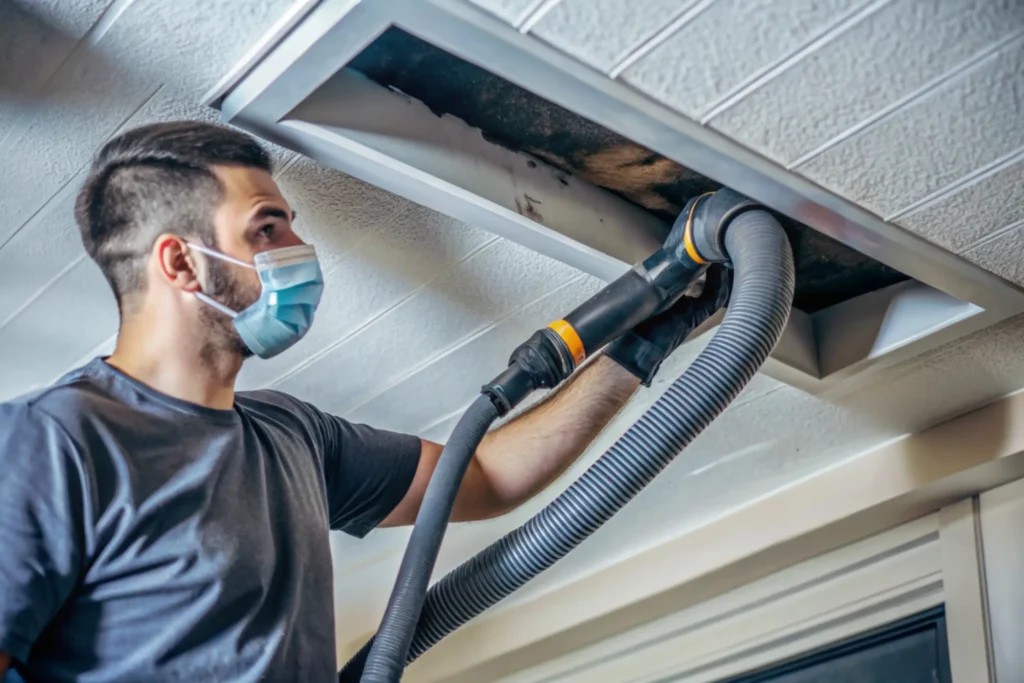
Air duct mold cleaning means pulling mold and mold spores out of the inside of your HVAC ductwork. Not the dust. The mold itself. And yes, that distinction actually matters.
Think of regular duct cleaning as housekeeping — it clears dust, dander, and loose debris. A surface vent wipe? That just handles the grille you can see from the room. Mold cleaning is a different beast. It hunts down the contamination growing inside the system, kills it, and treats the surfaces so the stuff does not just creep back.
Why do HVAC systems become mold havens, though? Two things have to line up, airflow and moisture. Your ducts shuttle damp, conditioned air around the clock. Let that moisture settle on a dark interior surface and mold has found its dream home. The very system keeping you comfortable ends up sheltering the problem.
That is exactly why mold cleaning stands on its own as a service. A regular vacuum does not stand a chance. You need containment, proper equipment, and a treatment designed to hit mold where it lives.
Put it this way. Dust cleaning makes your air fresher. Mold cleaning makes it safe again. Two different jobs entirely — and mixing them up is how plenty of homeowners wind up paying for the work twice.
Why Mold Develops Inside Air Duct Systems
Mold wants one thing more than anything: moisture. And HVAC systems hand it over freely. The dampness shows up from a handful of sources.
Cooling cycles are the big ones. Every time the system runs, condensation forms, and warm humid air hitting cool duct surfaces leaves water behind. When ductwork snakes through an attic or crawl space, those temperature swings only make the problem worse, pooling moisture along the interior walls. A dirty filter does not help either — it clogs up the airflow and humidity gets trapped inside, handing mold the stagnant, damp conditions it craves.
Then there are the leaks. A dripping AC coil or a backed-up condensate drain sends water straight into the ducts, and mold feeds on it fast. Bad insulation plays its part too. Poorly insulated ducts sweat, poorly ventilated spaces hold humidity, and both carve out the damp little pockets where mold settles in.
Massachusetts tilts the odds further. Our humid summers keep indoor moisture high for months on end, and homes shut tight against the cold trap all that dampness inside. For a lot of Needham homes, mold is not some freak accident — it is a seasonal risk worth keeping an eye on.
Warning Signs of Mold Contamination in Air Ducts
Mold likes to hide. But it leaves a trail. Catch the clues early and you spare yourself a far nastier problem later on.
Start with your nose. That damp, earthy, musty odor every time the system runs is the classic giveaway — and if it lingers with no traceable source, the ducts move to the top of the suspect list. Your eyes help too. Spots of black, green, or white growth creeping around the vent covers usually mean contamination is spreading out from inside the system.
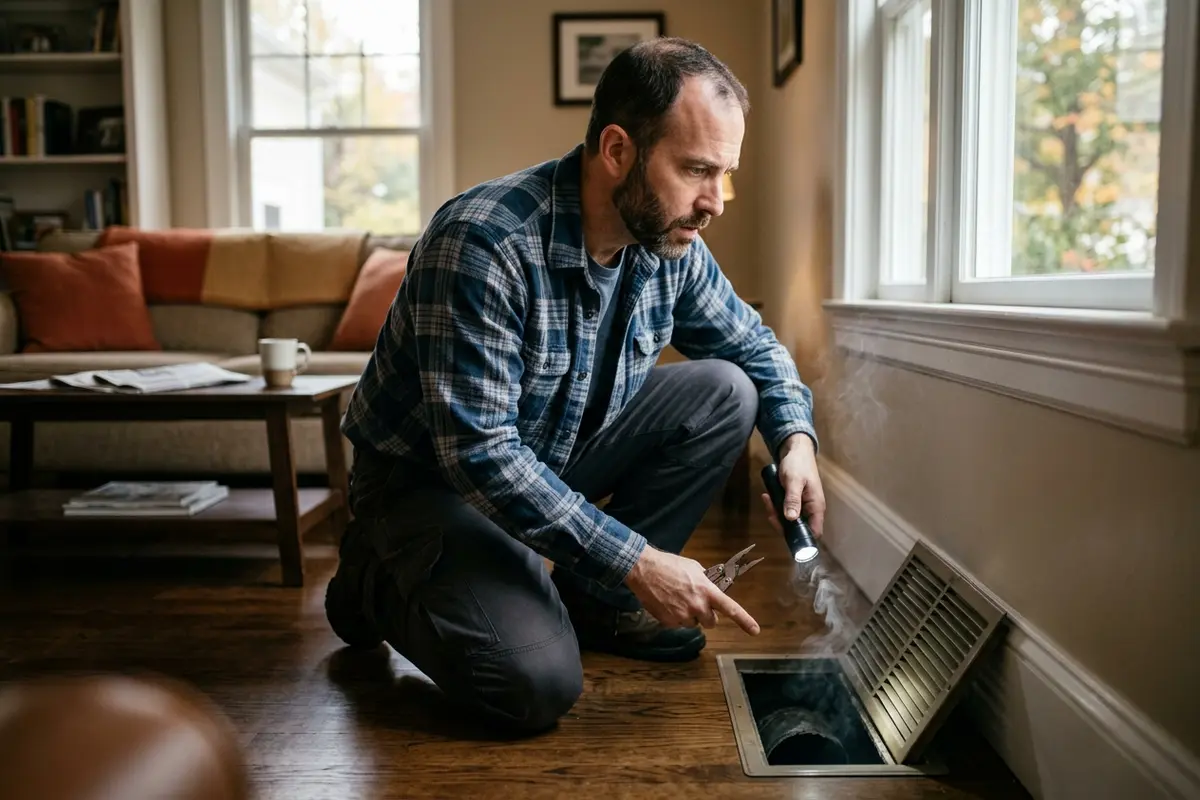
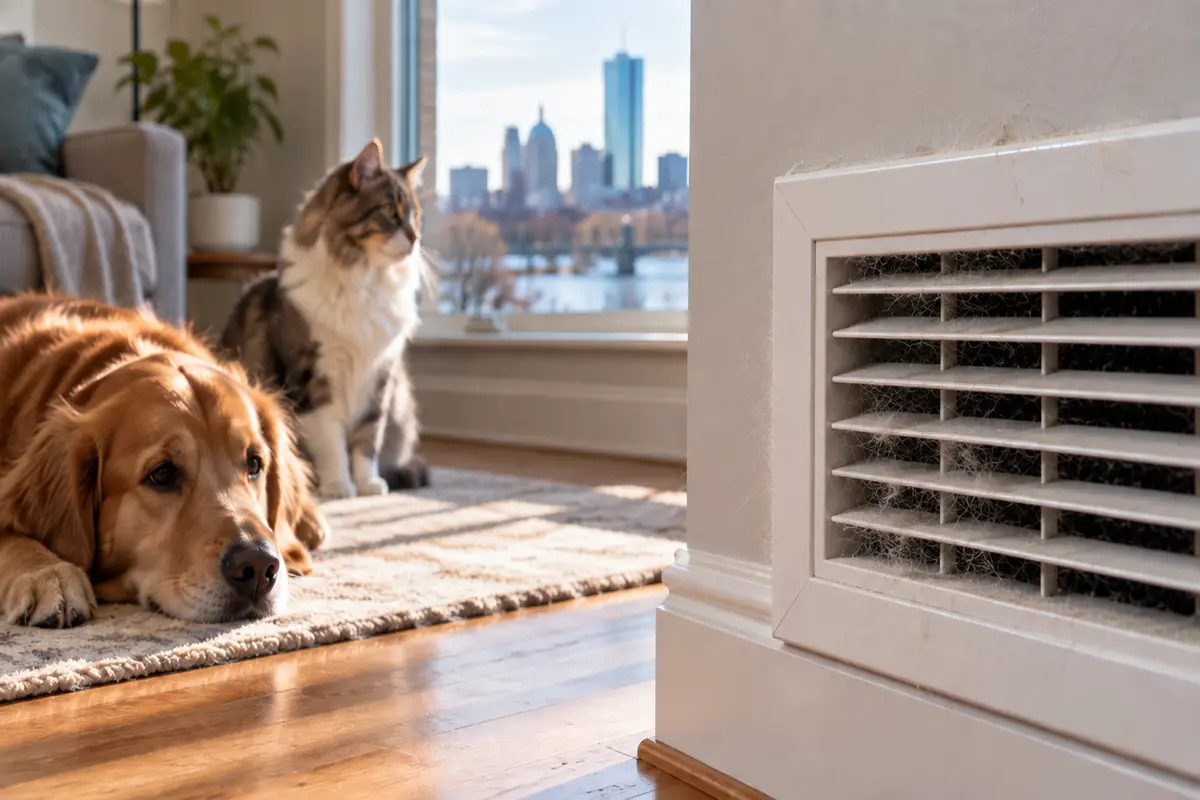
Watch the dust, as well. Wipe down a vent and find it coated again within days? Spores and debris are recirculating, plain and simple. Airflow tells a story too — heavy growth inside the ducts can choke it, leaving one room stuffy while another feels perfectly fine. And if you shine a light into the ductwork and spot dark streaks or fuzzy patches clinging to the interior, that is about as clear a red flag as you will get.
If these signs appear, your duct system may already be contaminated. Move on it sooner rather than later — early is cheaper, and easier, every single time.
Health Impact of Mold in HVAC Systems
Here is why this goes well past comfort. Mold in your ducts means mold in the air you breathe, hour after hour, and the body keeps a running tab.
The airways take the first hit. Coughing that hangs around, a throat that stays scratchy, congestion that never fully lifts. Asthma sufferers have it rougher because airborne mold is a documented trigger, so attacks land more often and prove harder to settle. Allergy symptoms run the same way, with one telltale sign worth noticing: when the sneezing and watery eyes fade the minute someone steps out the front door, something inside the house is usually behind it.
Plenty of people miss the quieter stuff. A vague fog, low energy, and headaches that show up for no reason anyone can name. Steady exposure can do all of that. And whoever in the household is already most fragile tends to feel it first, which means young children, older adults, and anyone running on a weakened immune system.
The EPA has long flagged that household air sometimes carries more pollution than what is drifting around outdoors. Mold in the ducts only deepens that, since each cycle of the blower drives it further through the house. We covered the wider picture in our piece on whether your home’s air is making your family sick.
Professional Air Duct Mold Cleaning Process
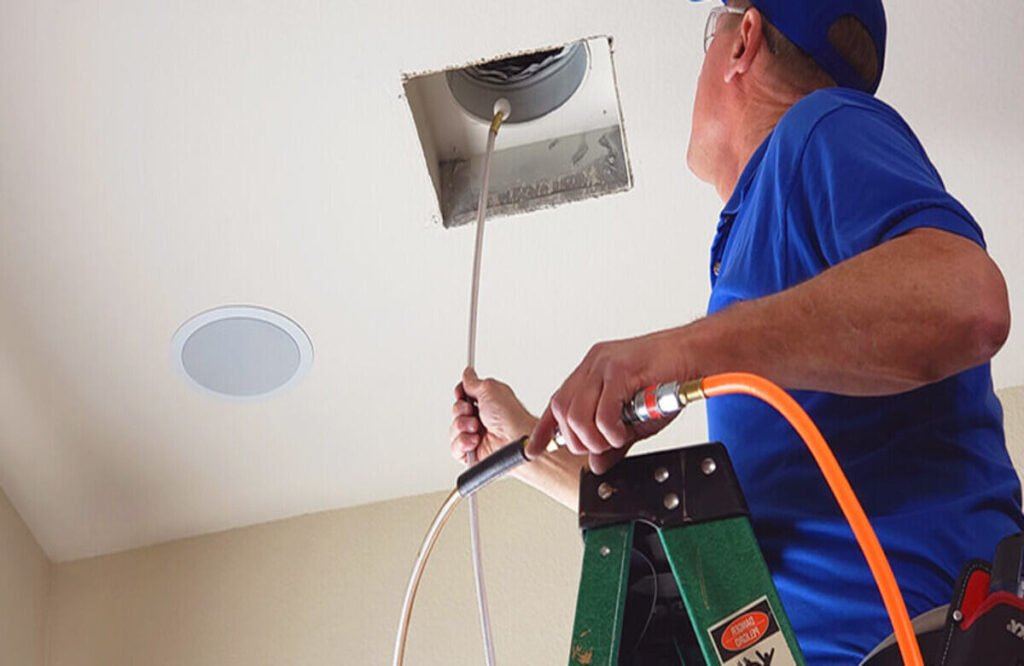
Clearing duct mold is not a quick vacuum and out the door. It takes a deliberate, step-by-step approach to remove the mold and keep it from staging a comeback. Here is precisely how our trained techs work through it.
Step 1: System Inspection
First, we locate it. A duct camera travels inside the system to map out the contamination and confirm it is mold, not just packed dust. We do not guess. The scope gets nailed down before a single tool comes out.
Step 2: Containment Setup
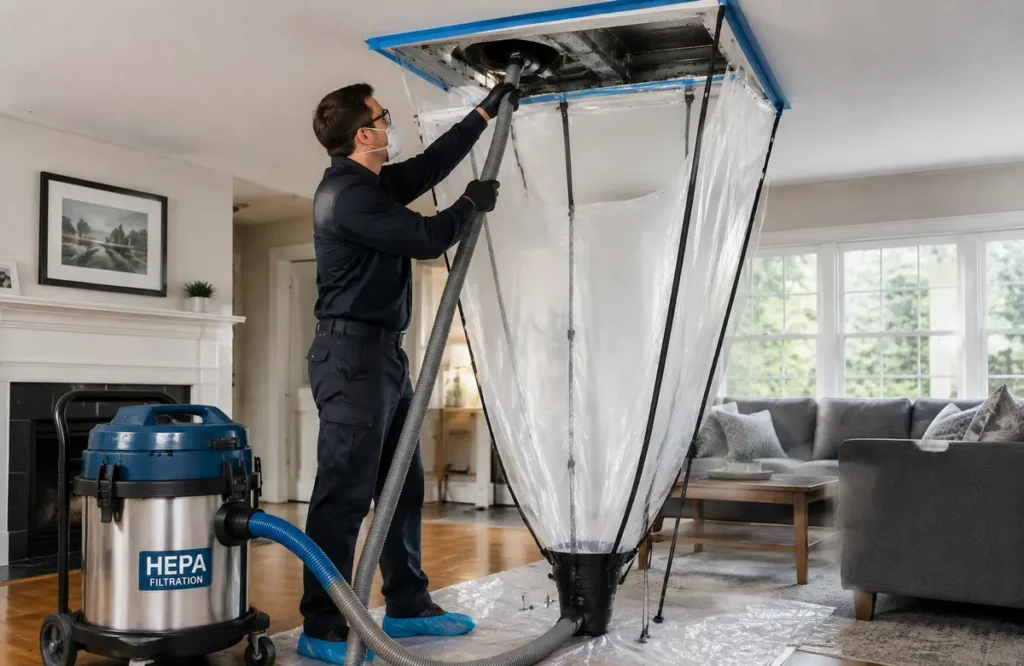
Before any cleaning begins, the work area gets sealed off. Containment stops spores from scattering into the rest of your home while we work. It protects your living space — and it is exactly the step amateurs love to skip.
Step 3: HEPA Vacuum Extraction
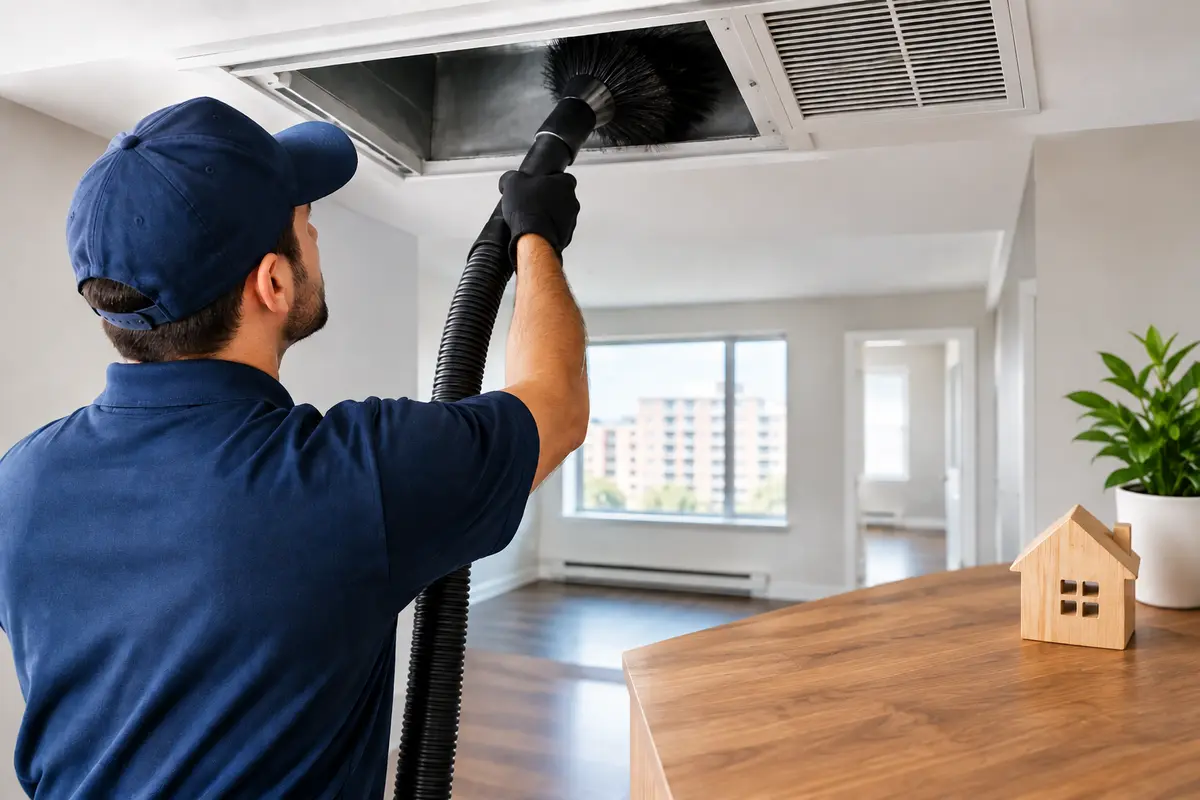
Then the extraction. An industrial HEPA vacuum draws the mold and debris straight out of the ductwork, and the HEPA filtration traps those fine spores instead of spitting them back into your air. This is a muscle that a household vacuum simply does not have.
Reach counts here too. Our gear works the entire duct run — supply lines, returns, the corners no DIY tool ever touches — so the contamination comes out in full, not just near the vents.
Step 4: Antimicrobial Treatment
Bulk gone, we move to treatment. An EPA-approved antimicrobial solution goes in to kill whatever lingers, reaching the mold at its root deep in the system rather than the surface you can actually see.
The product is picked to be hard on mold yet safe for your home once everything is running again. It coats the interior so any stray spores never get their second chance.
Step 5: Deep Duct Sanitization
Next, sanitization. We disinfect the interior duct surfaces to wipe out lingering spores and leave the system genuinely clean — not just clean-looking. This is the step that keeps mold from bouncing right back.
Step 6: Final Air Quality Verification
Finally, we check our work. A last pass confirms airflow is back to normal and the system is clean before we call it finished. You see the result, top to bottom, no mystery left over.
Every stage runs through trained HVAC technicians following strict safety procedures — because mold removal done sloppily spreads the problem instead of solving it. Our full air duct cleaning services page covers what each visit includes.
Air Duct Mold Cleaning vs Standard Air Duct Cleaning
Folks blur these two together constantly, and the gap between them is wider than the names suggest. One is upkeep. The other is treatment for an actual problem. Here is the side-by-side.
| Standard Cleaning | Mold Cleaning |
| Dust removal only | Mold elimination + sanitization |
| Preventive maintenance | Contamination treatment |
| Basic vacuum | HEPA + chemical treatment |
| No containment needed | Sealed containment required |
Boil it down and it is straightforward. Standard cleaning keeps a healthy system healthy. Mold cleaning rescues a system that has already gone wrong. The first is routine — something you book every few years and forget about. The second is corrective, the kind of work you call in the day contamination shows its face.
Trying to fix a mold problem with a standard cleaning? That is mopping the floor while the leak keeps dripping. Treat the real issue or watch it come straight back.
Air Duct Mold Cleaning Cost in Needham, MA
Let us get to the numbers. Air duct mold cleaning usually costs between $400 and $1,500, depending on how severe the contamination is and how big the job ends up being.
It runs higher than a standard cleaning, and for solid reasons — containment, specialized treatment, and the extra labor to handle mold safely all factor in. You are paying to fix something, not just freshen the air.
A few things nudge the figure around. Bigger homes carry more ductwork and more vents to treat, so square footage pushes it up. Ducts crammed into tight crawl spaces or attics demand more labor to reach and clean without spreading spores. The amount of mold matters most of all — a small, contained patch is a world away from contamination running through the whole system. And the nastier the case, the more containment, stronger treatment, and on-site time it takes.
One thing to keep in mind: the final cost requires an inspection. Mold severity just cannot be priced honestly over the phone. For a wider look at general duct pricing, check our guide on air duct cleaning cost in Needham, MA.
Can You Remove Mold From Air Ducts Yourself?
Up to a point, sure. It turns risky fast, though, so here is the honest version.
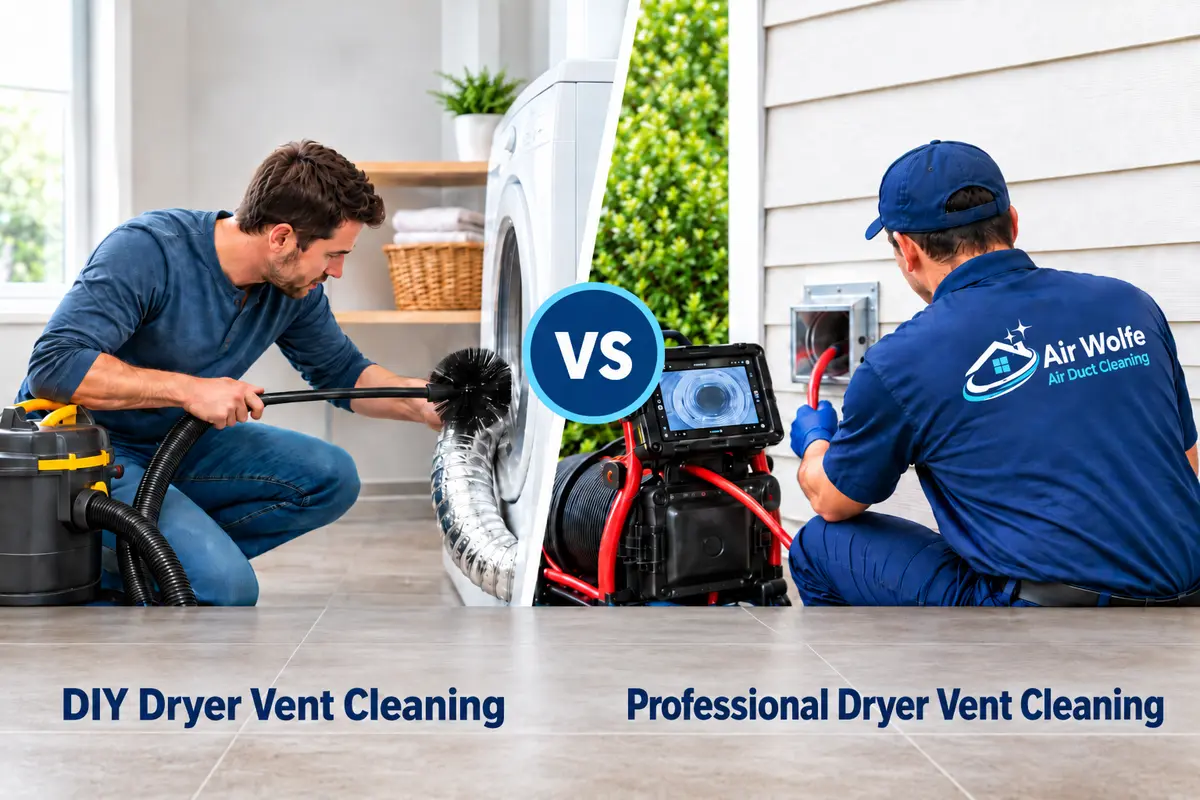
DIY slams into a wall fast. You simply cannot reach the full duct system with the stuff in your closet — most of the network sits well past where any household tool gets. And here is the kicker: disturb mold without containment and you can launch spores all through the house, blowing a minor issue up into a major one.
There is one form of mold cleaning you can safely do on your own, and it is limited to the surface. You can wipe down the vent covers and grilles within reach, and that is as far as it goes.
Once mold appears inside the ducts themselves, the situation changes. The same goes for a musty smell that keeps returning or allergy symptoms that never settle down. At that point the job needs professional handling. The combination of proper equipment, sealed containment, and an EPA-approved treatment is what makes professional cleaning both safer and far more thorough than anything you could manage yourself. Cutting corners on mold tends to cost more later, not less.
How to Prevent Mold Growth in Air Ducts
Stop mold before it ever starts and you skip the whole ordeal. It mostly comes down to moisture, and a handful of plain habits do the heavy lifting.
Watch your indoor humidity. Somewhere in the 30 to 50 percent band, mold starves of the dampness it lives on, and a dehumidifier or a right-sized AC will usually hold you there without fuss. Filters matter as well. Change them when you are supposed to, because clean ones keep air moving and snag the moisture-heavy debris that would otherwise bed down inside the system.
Leaks are the thing people let slide, and they should not. A dripping coil or a clogged condensate drain feeds mold in a hurry, so a wet spot today is a fix-it-today problem. Lean on regular HVAC servicing to catch the small stuff early. Then there is airflow. Basements, attics, crawl spaces — give those a way to breathe and humidity stops collecting in the exact spots your ducts run through.
Handle the water and the mold mostly handles itself. And it is always cheaper to prevent than to treat.
Why Choose Professional Air Duct Mold Cleaning Services
Mold is not the kind of thing you want to half-fix. What professional service delivers, DIY just cannot touch.
Get it wrong and you have not merely wasted an afternoon — you can scatter spores across the entire house and walk away worse off than you started. That alone is why this work belongs with people trained for it.
Certified HVAC technicians know how to lift mold out safely, without spreading it from room to room. They bring industrial HEPA vacuums and filtration that capture the fine spores household gear just blows back into the air. Proper containment keeps the contamination boxed into the work area the whole time. Camera inspection finds the full reach of the problem, so nothing gets missed and left to quietly regrow. And local Needham experience means we understand how this region’s humidity and older housing stock breed duct mold in the first place — and we treat for exactly that.
Final Thoughts
Mold in your air ducts is not just an odor you put up with.
It quietly drags down your air quality, taxes your HVAC system, and chips away at your family’s health — a little more with every cycle the system runs.
The upside? It is fixable. Professional mold cleaning strips out the contamination, sanitizes the system, and helps hold it off down the road — in a way no DIY scrub ever matches.
Do not give it room to spread. Clean air at home really does start in the ductwork.
Contact Air Wolfe for expert air duct mold cleaning in Needham, MA, today. For free estimate call (617) 991-6651 Now. Cleaner air, guaranteed.
Frequently Asked Questions
How dangerous is mold in air ducts?
It can be a genuine health hazard. Duct mold pushes spores into every room, setting off respiratory irritation, allergies, and asthma attacks. Kids, older adults, and anyone with a weakened immune system feel it worst. And the longer it sits untreated, the heavier the exposure gets.
How often should mold cleaning be done?
Mold cleaning is corrective rather than routine, so you do it when contamination shows up — not on a set calendar. Had mold before? An annual inspection catches a return early. The real key to keeping it gone is fixing whatever moisture problem caused it.
How long does the cleaning process take?
Most residential mold jobs wrap in a few hours, though heavy contamination or a large system runs longer. Inspection, containment, extraction, treatment, verification — each one takes real time when it is done properly. A technician gives you an accurate estimate after looking the system over.
Can HVAC systems spread mold?
Yes — and that is exactly where the danger lies. Once mold settles into the ductwork, the system circulates spores into every room each time it cycles on. A contaminated HVAC setup turns one small patch into a whole-home problem in no time.
What kills mold permanently in ducts?
No single treatment promises permanence on its own. EPA-approved antimicrobial solutions wipe out existing mold, but lasting results hinge on removing the moisture feeding it. Professional cleaning paired with humidity control and leak repair is what actually keeps mold gone for good.