If you’ve been quoted both duct sealing and duct cleaning and aren’t sure which one actually solves your problem, you’re not alone. The two get lumped together constantly, and they have almost nothing in common. At Air Wolfe Air Duct Cleaning, based in Needham, we hear this confusion from homeowners across Needham, Newton, and Boston all the time, usually right after someone’s gotten two very different quotes for what sounded like the same service. Here’s the real difference between duct sealing vs duct cleaning, how to tell which one your home actually needs, and whether it’s worth doing both.
Duct Sealing vs. Duct Cleaning: What Each Service Actually Involves
These two services solve completely different problems, even though they both involve your ductwork.
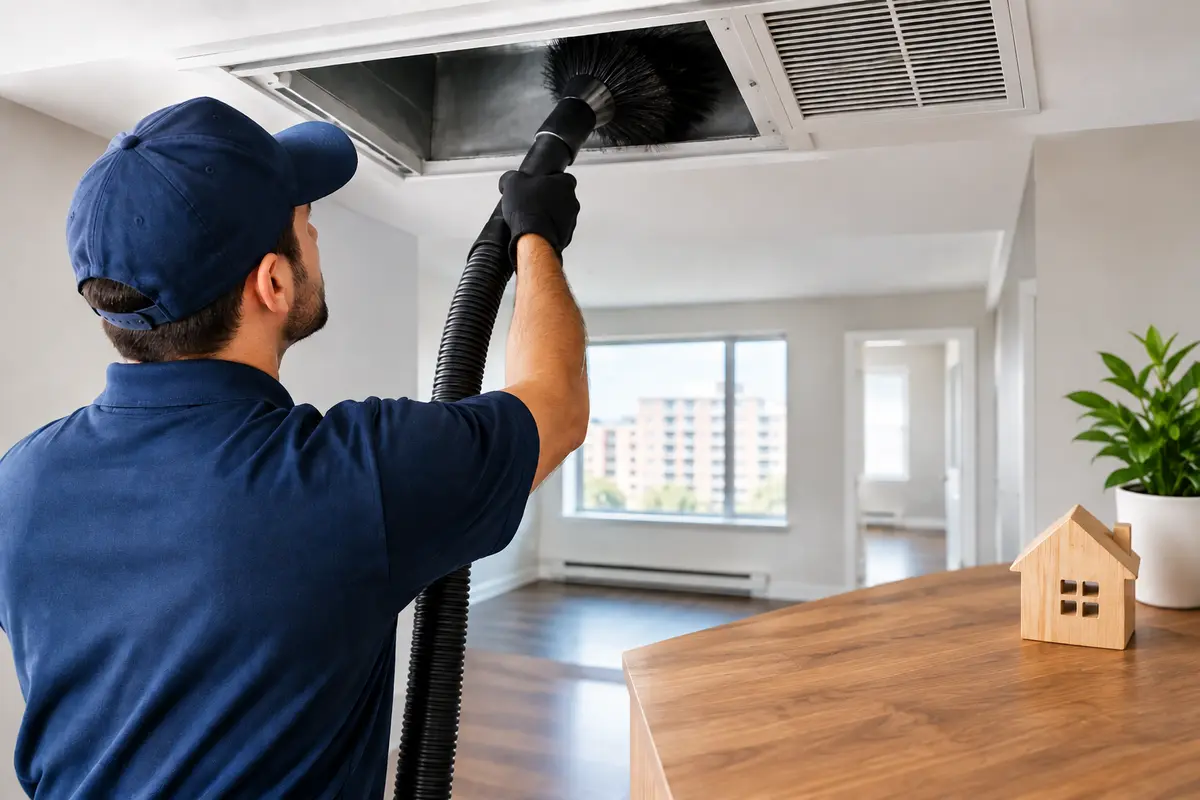
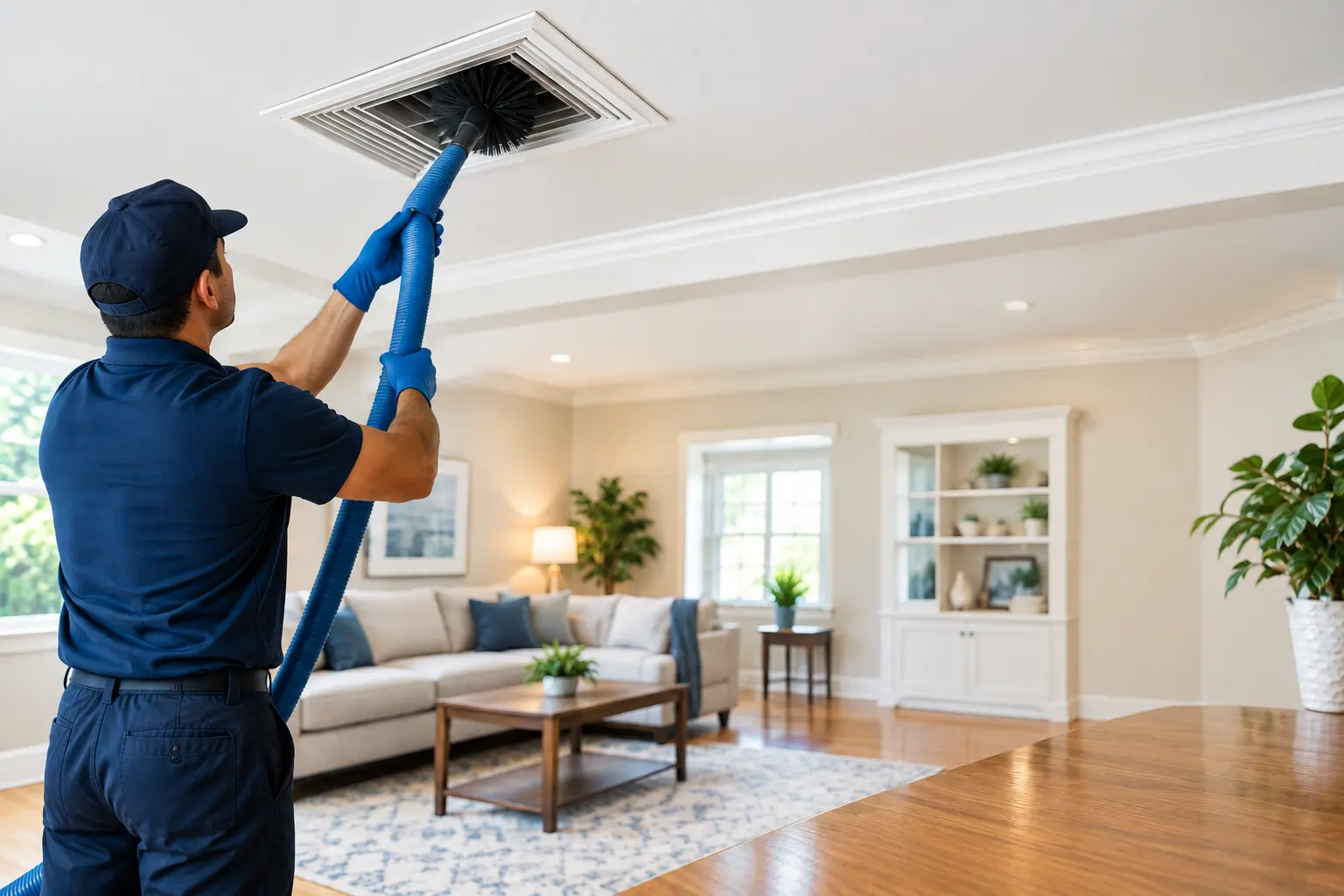
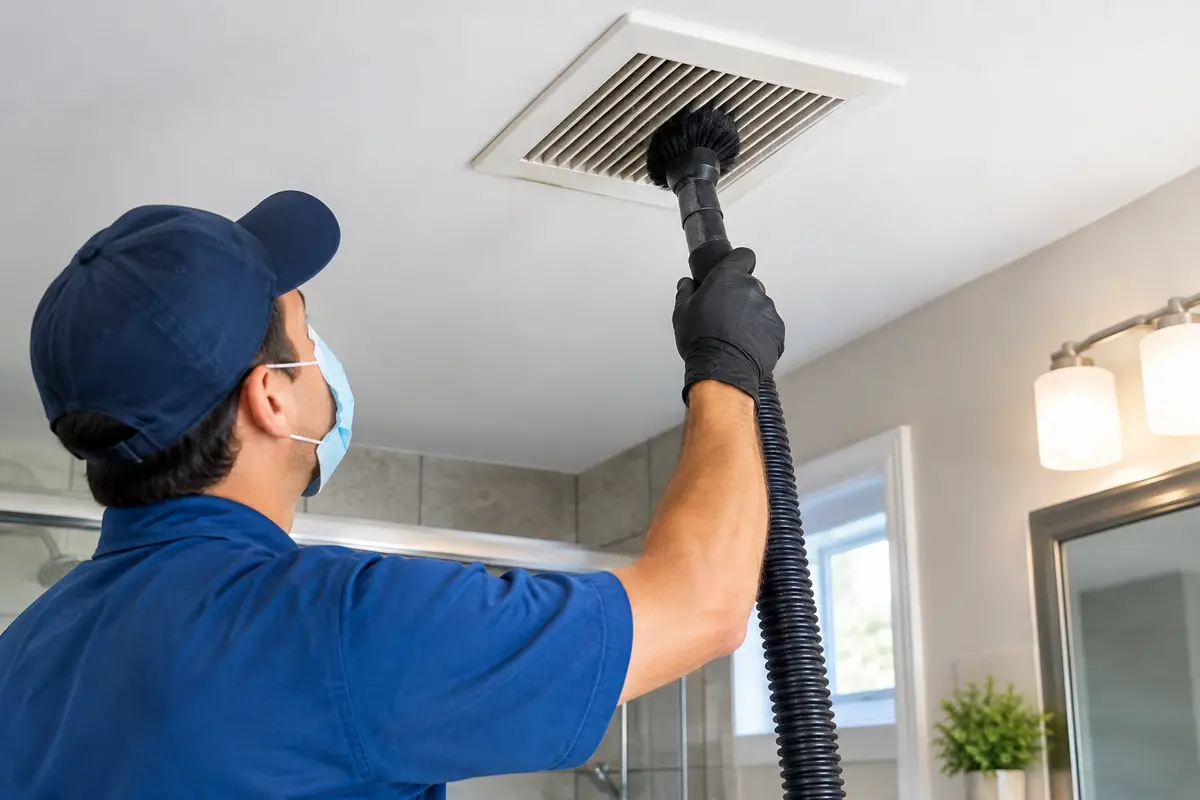
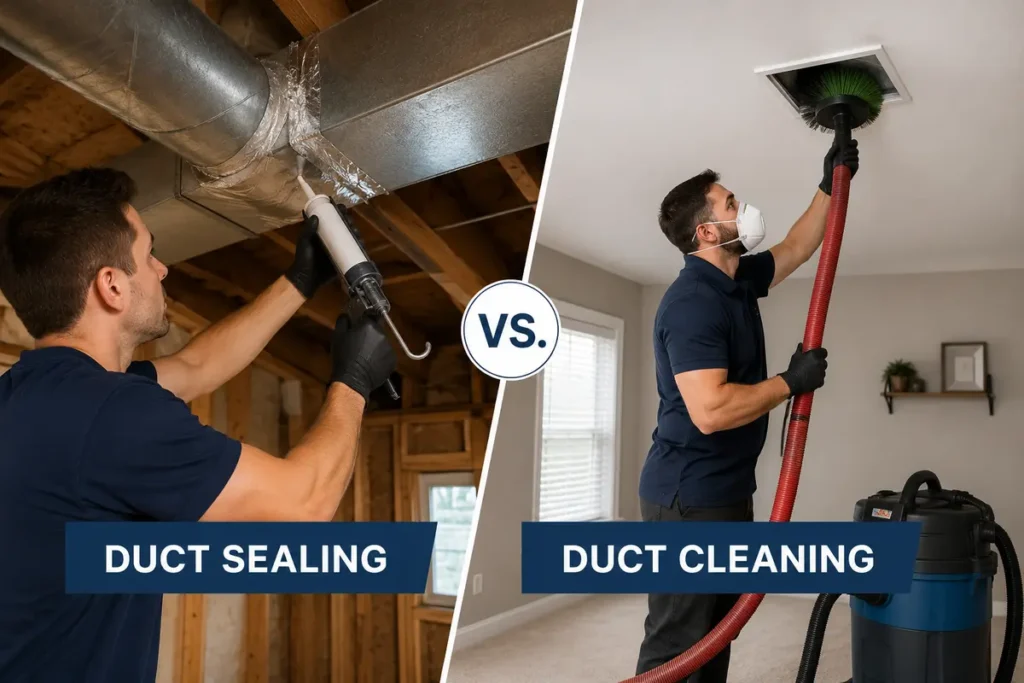
Duct cleaning physically removes what’s already built up inside your ducts: dust, pet dander, debris, mold spores, and lint, using HEPA-filtered vacuum equipment and agitation tools. It’s about what’s inside the duct.
If you’re also concerned about microbial buildup, it’s important to understand the difference between cleaning and air duct sanitizing.
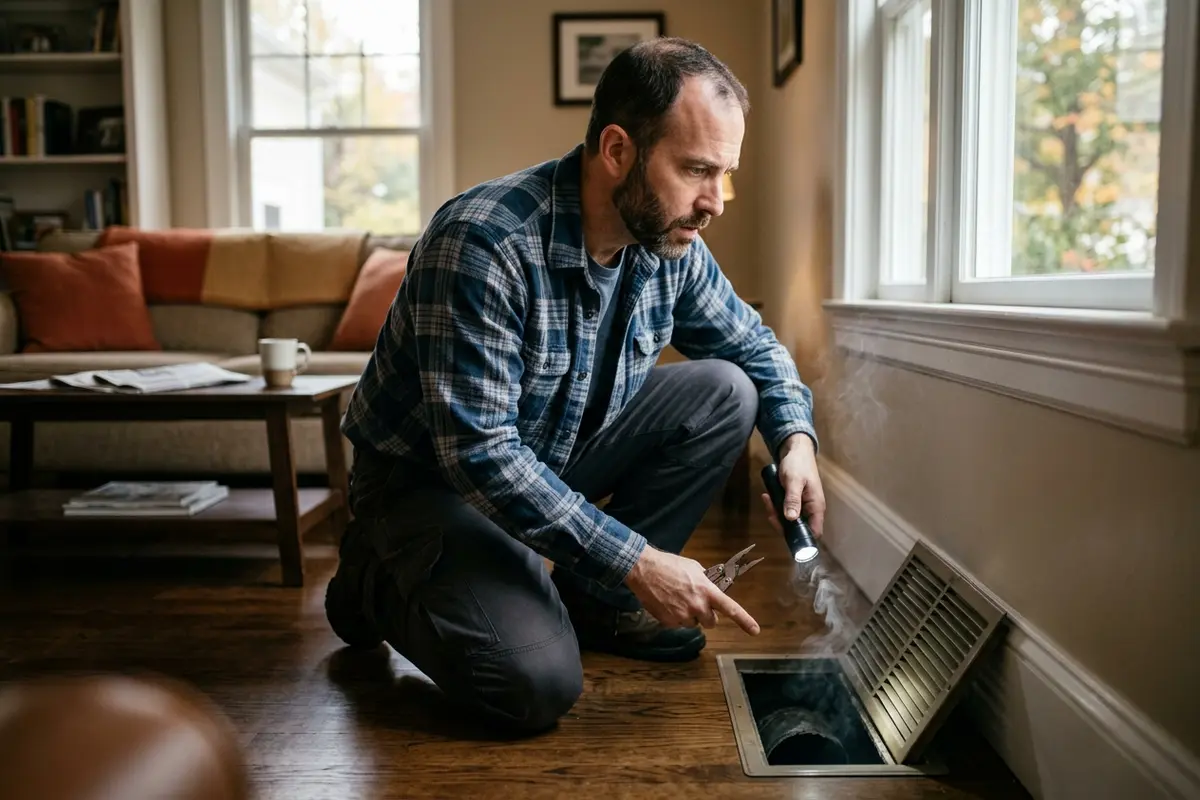
Duct sealing closes gaps, holes, and disconnected joints in the ductwork itself, using mastic sealant, metal tape, or an aerosolized sealant method (commonly known as Aeroseal) that coats the interior of leaky sections from the inside. It’s about the integrity of the duct structure, not what’s inside it.
Here’s the number that makes this distinction matter: the Department of Energy estimates that the average home loses 20 to 30 percent of its conditioned air through duct leaks before it ever reaches a vent. Cleaning does nothing to fix that loss; a spotless, leak-riddled duct still wastes the same amount of heated or cooled air. Sealing does nothing to remove existing dust and debris; a perfectly sealed, dirty duct still circulates the same allergens it always did.
Duct Sealing vs. Duct Cleaning: Matching Symptoms to the Right Service
These symptom sets rarely overlap, which makes self-diagnosis fairly reliable before you ever call anyone. (If you’re still deciding whether cleaning is worth it at all, our guide on when duct cleaning is actually worth the cost walks through that decision in more depth.)
Signs pointing to duct cleaning:
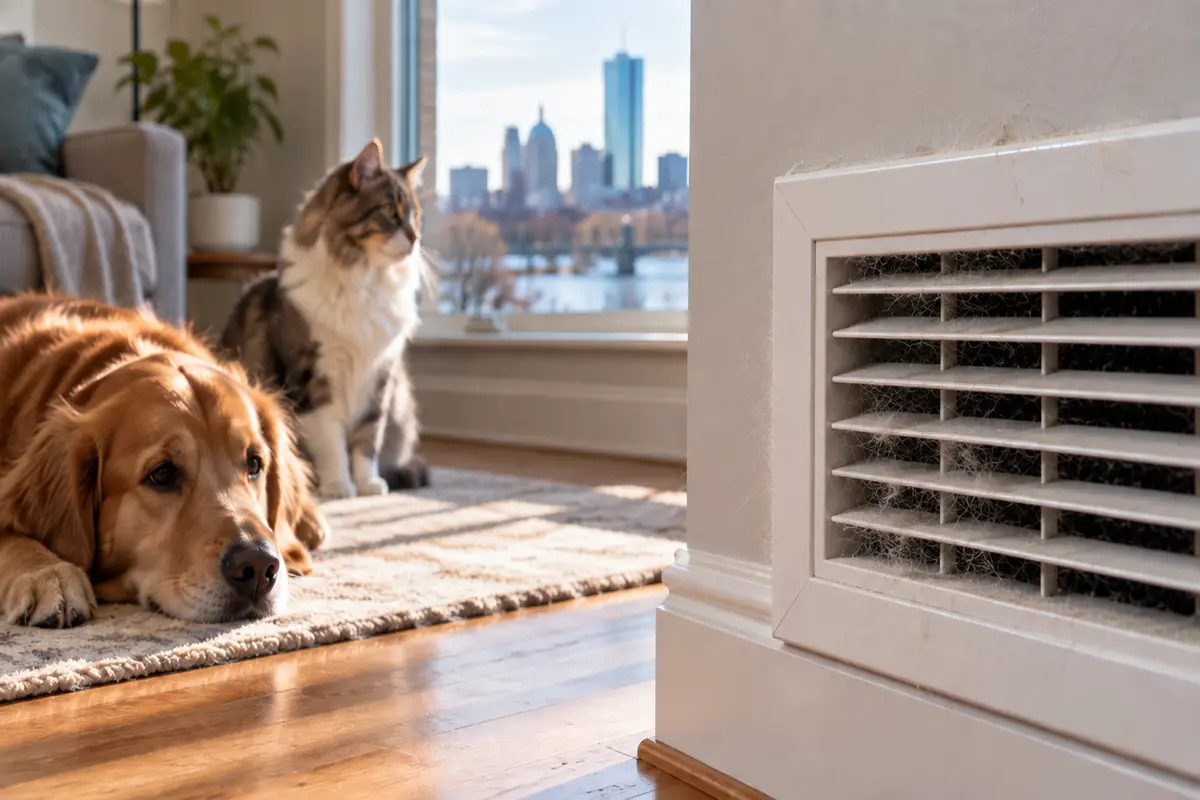
- Visible dust around vents or blowing out when the system runs
- Musty or stale odors when the HVAC kicks on
- Worsening allergy symptoms tied to when the system runs.
- Recent renovation dust or pest activity in the ductwork
Signs pointing to duct sealing:
- Noticeably higher heating or cooling bills without an obvious cause
- Some rooms consistently warmer or colder than others
- Visible gaps, disconnected sections, or crushed ducting in accessible areas like a basement or attic
- A whistling or hissing sound near ductwork when the system is running
If you’re seeing signs from both lists, that’s common, and it’s a sign your home may benefit from both services, not a sign you’re misdiagnosing the problem.
Duct Sealing vs. Duct Cleaning: Real Cost Comparison
Duct cleaning typically runs $400 to $1,000 for a standard home, or roughly $0.15 to $0.40 per square foot, depending on home size and contamination level.
Duct sealing has a wider range depending on method. Traditional sealing with mastic and metal tape, applied to accessible joints, typically runs $300 to $700. Aeroseal, which coats leaks from inside the ductwork including sections that aren’t physically accessible, runs considerably higher, often $1,500 to $2,500, but can last up to 40 years and reaches leaks a traditional method simply can’t.
Sealing tends to have a clearer, more direct return on investment: fixing a 20 to 30 percent air loss shows up on your utility bill in a way that cleaning, while valuable for air quality, generally doesn’t.
Do You Need Duct Sealing vs. Duct Cleaning, or Both?
For a lot of homes, yes, and there’s a sensible order to it. If your ductwork has both significant dust buildup and active leaks, cleaning first makes the most sense: it clears out debris that could interfere with sealant adhesion and gives a technician a clean surface to properly assess where the leaks actually are. Sealing afterward then locks in that clean airflow instead of letting conditioned air escape before it ever circulates.
This combination matters more than the national averages suggest if you’re in an older New England home. A lot of housing stock across Needham, Newton, and the surrounding towns has ductwork that was retrofitted into a home built well before central air was standard, and retrofit ductwork is exactly where sealing issues tend to concentrate: joints added later, connections made through existing framing, sections that were never fully sealed to begin with. Combined with a full New England heating season, an unsealed leak in a retrofit system wastes conditioned air for months at a stretch, not just during a few peak weeks.
FAQs
- Does duct cleaning improve energy efficiency the same way sealing does?
No. Cleaning can modestly improve airflow if ducts were significantly restricted, but it doesn’t address air loss from leaks the way sealing does. The Department of Energy’s 20 to 30 percent conditioned-air-loss estimate is tied specifically to duct leakage, not dust buildup. - Should I seal my ducts before or after cleaning them?
If a home needs both, cleaning first is generally recommended. It removes debris that could interfere with sealant adhesion and gives a clearer picture of where leaks actually are. - Is Aeroseal worth the higher cost compared to traditional duct sealing?
For leaks in sections of ductwork that aren’t physically accessible, such as within walls or under a slab, Aeroseal can reach what traditional mastic and tape methods can’t, and its longer lifespan (up to 40 years) can offset the higher upfront cost over time. - Can I DIY either duct sealing or duct cleaning?
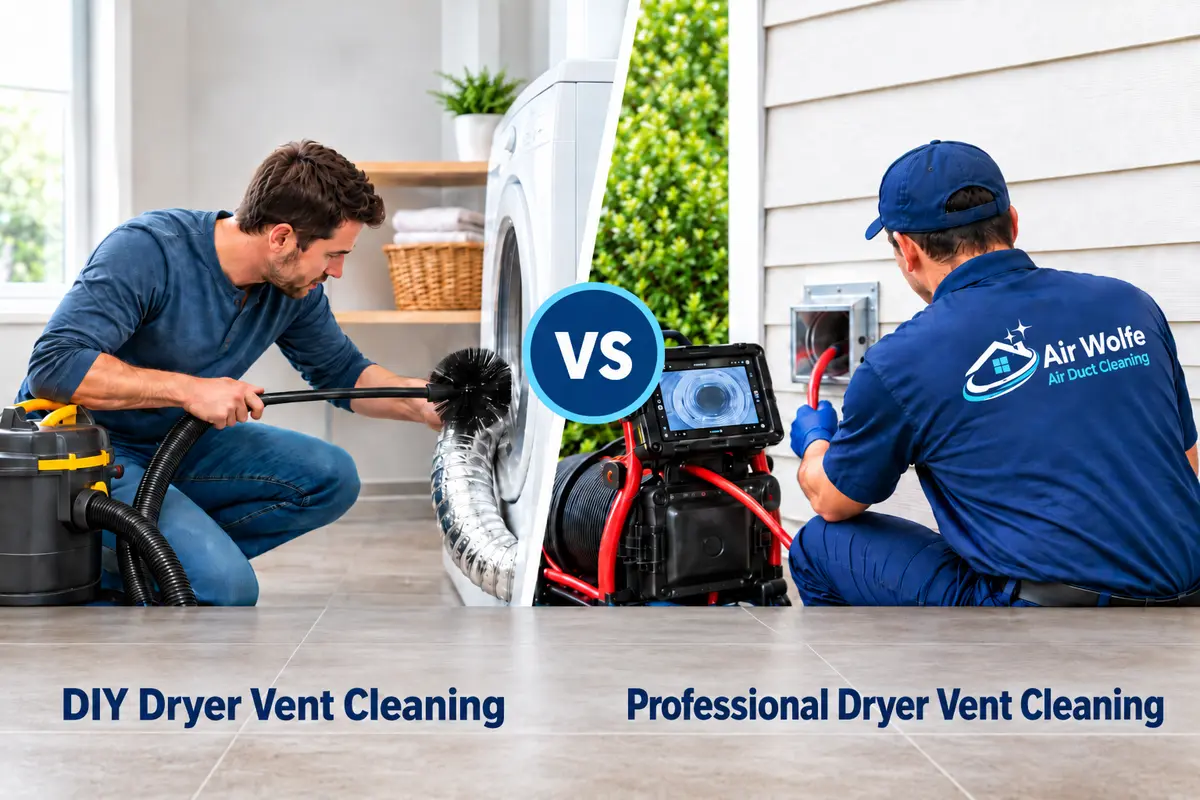
Both are possible in limited form, but with real limitations. DIY cleaning kits typically can’t reach a full duct run, and DIY sealing (tape or mastic) only addresses accessible joints, missing leaks hidden in walls or hard-to-reach sections that a professional assessment would catch. - How do I know which one my home actually needs?
Match your symptoms to the two lists above. High energy bills and uneven room temperatures point to sealing. Visible dust, odors, and allergy symptoms point to cleaning. A professional inspection can confirm which, or both, apply to your specific system.
Start With an Honest Inspection
Air Wolfe Air Duct & Dryer Vent Cleaning serves Needham, Newton, Boston, and the rest of Greater Boston with thorough duct cleaning and honest guidance on what your system actually needs. If our inspection turns up signs your ductwork also has sealing issues, we’ll tell you directly and point you to a qualified sealing specialist rather than guess. Call (617) 991-6651 or email Info@airwolfeairductcleaning.com to schedule an inspection.