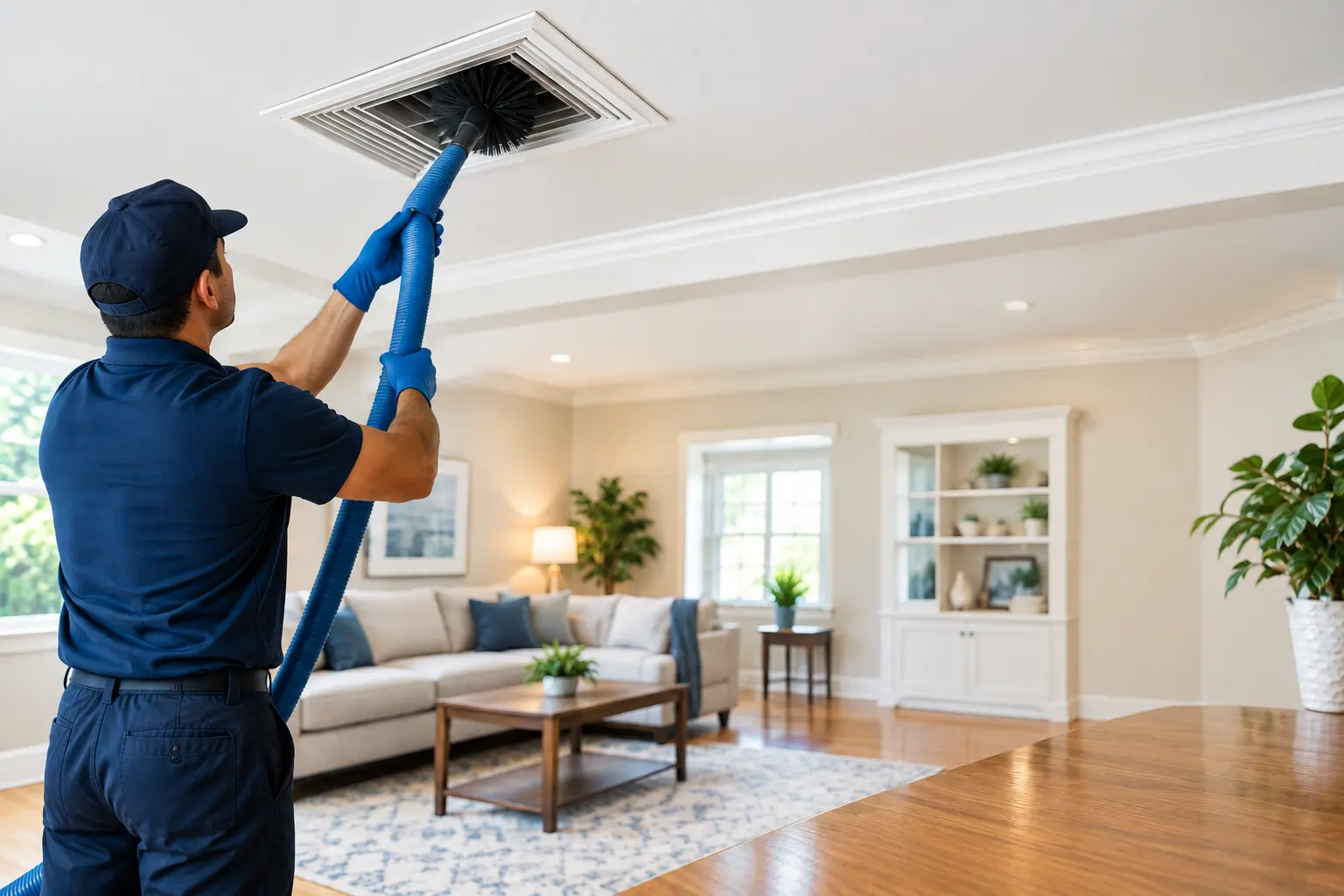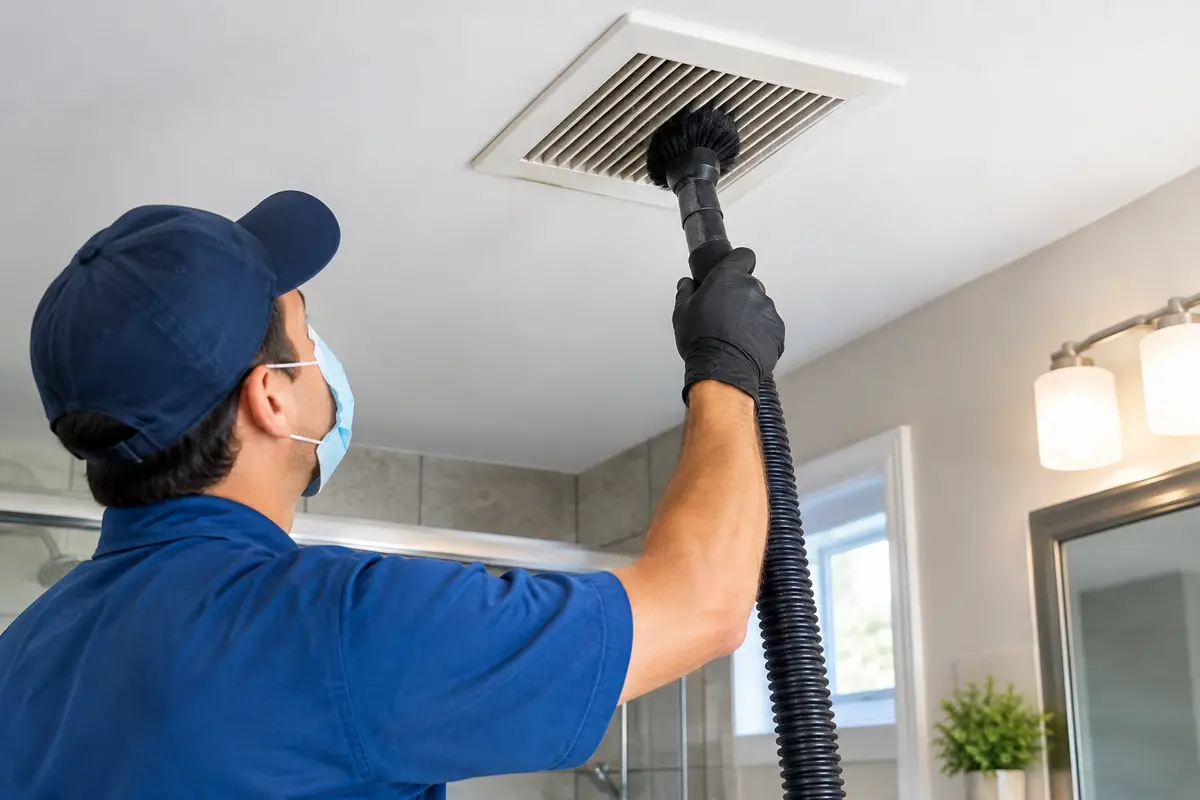
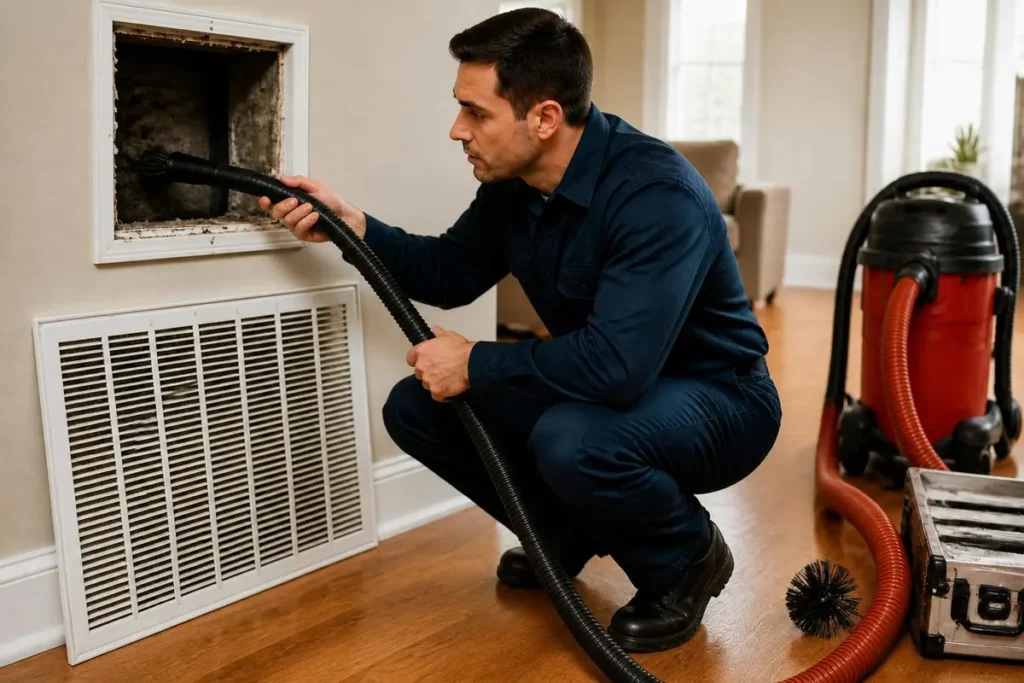
Air duct cleaning itself isn’t a scam, but the industry has a real fraud problem, and Needham-area homeowners see it constantly in the form of flyers and Facebook ads promising a “$49 whole-house special.” At Air Wolfe Air Duct Cleaning, we work across Needham, Newton, and Boston, and we’d rather you know exactly how these scams operate than have you avoid a legitimate, useful service out of fear. Here’s how the scam pattern actually works, the specific red flags to watch for, and how to verify a company before you let anyone into your home.
How the Air Duct Cleaning Scam Pattern Actually Works
The industry itself has a name for the most common scheme: “blow-and-go.” It works like this. A company advertises an unrealistically cheap air duct cleaning service: $49, $79, $99 to get a technician in your door. Once inside, they run a quick, superficial pass with a shop vac rather than real source-removal equipment, then claim to discover a serious problem: mold, “excessive contamination,” pests, or a hazardous condition that supposedly requires immediate treatment at a much higher price. The National Air Duct Cleaners Association (NADCA) has documented this pattern extensively, and it’s built entirely around urgency and a low-ball hook, not around actually cleaning your ducts.
The tell is the sequence: low advertised price, followed by an unverified health scare, followed by a much larger bill. Legitimate companies don’t diagnose mold or contamination without inspecting first and showing you evidence.
Red Flags That Signal an Air Duct Cleaning Scam
Watch for these signs before you ever let a technician start work:
- A price that’s dramatically below market rate. Real air duct cleaning for a typical home runs $300–$700. A $49 or $99 “whole-house” offer is a lead-generation hook, not a real price.
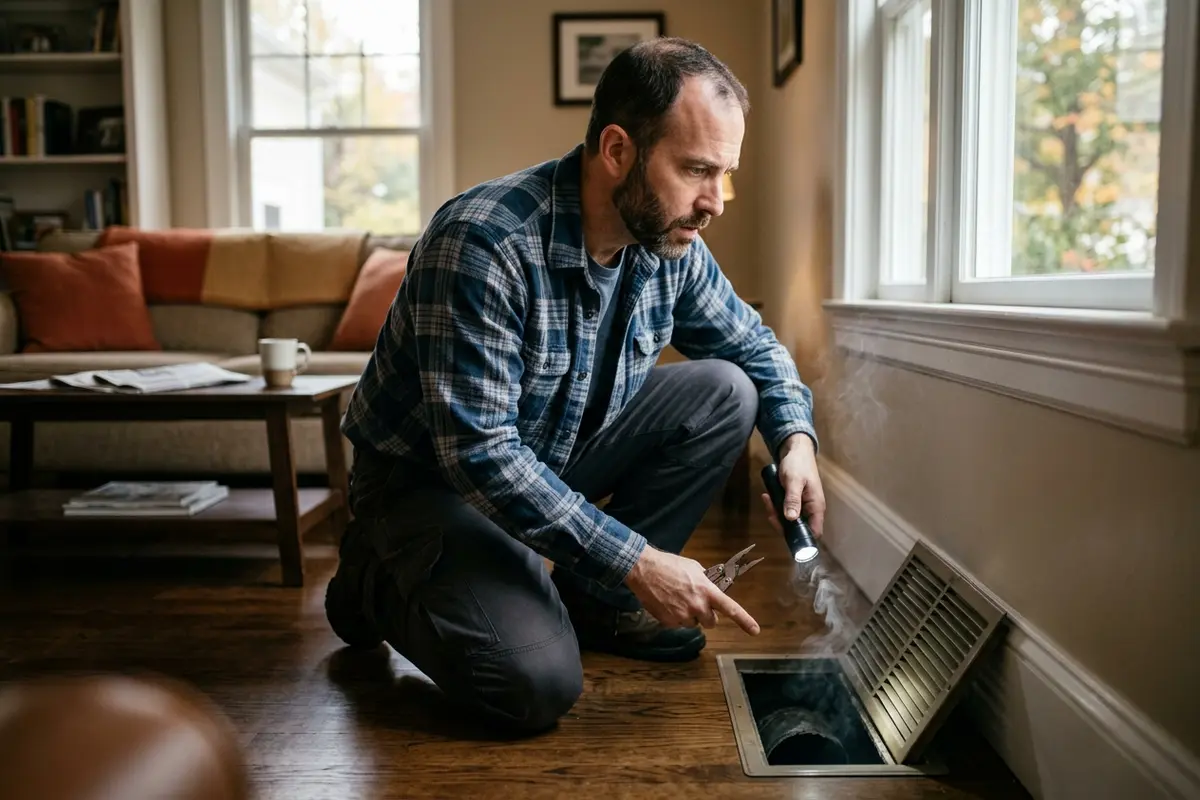
- Claims of mold or contamination before any inspection. A legitimate technician shows you what they found, often with photos or a camera inspection, rather than just telling you.
- High-pressure, same-day upsells. Scam operators create urgency (“this needs to be treated today”) to prevent you from getting a second opinion.
- No written estimate before work begins. A real company gives you an itemized, written scope before any tools come out.
- Unmarked vehicles or no company branding. Legitimate operators show up in marked vehicles with company identification.
- No verifiable business address or a company that only exists on social media. A real business has a physical presence you can check.
- Suspiciously uniform 5-star reviews posted in clusters. NADCA and consumer watchdogs have flagged this as a common tactic on Facebook Marketplace and Nextdoor ads; genuine reviews vary in tone, length, and posting date.
How to Verify a Company Isn’t Running an Air Duct Cleaning Scam
This is the step almost everyone skips, and it takes less than five minutes.
Search the NADCA member directory yourself. Go to nadca.com and search by company name or your zip code. If a company claims NADCA membership but doesn’t appear in the directory, that claim is false; membership isn’t self-reported; it’s maintained directly by NADCA.
Ask for the technician’s ASCS certificate number. NADCA membership requires at least one Air System Cleaning Specialist (ASCS)-certified technician on staff, verified through a proctored exam. A company that can’t produce a certificate number when asked is a red flag.
Check how long they’ve been a member. A membership that’s active for 10+ years is a stronger signal than one that joined recently; some companies join briefly just to use the logo in marketing.
Understand that Massachusetts doesn’t license this specific trade. Massachusetts requires a state license for ductwork installation and refrigeration work, but pure duct cleaning isn’t a separately licensed trade here. That actually makes third-party verification, NADCA membership, insurance, and reviews more important in Massachusetts than in states where a state license already screens out unqualified operators. Knowing the benefits of cleaning air ducts can also help homeowners understand what legitimate duct cleaning should actually accomplish, rather than relying on vague claims from a contractor.
What a Legitimate Air Duct Cleaning Estimate Looks Like (Not a Scam)
Before any work starts, a real written estimate should specify the air duct cleaning cost in Needham, MA, along with exactly what you’re getting:
- The exact scope: supply ducts, return ducts, registers, coils, and air handler, not a vague “whole system” line item
- One flat, all-in price, not a low base price with per-vent or per-register add-ons discovered later
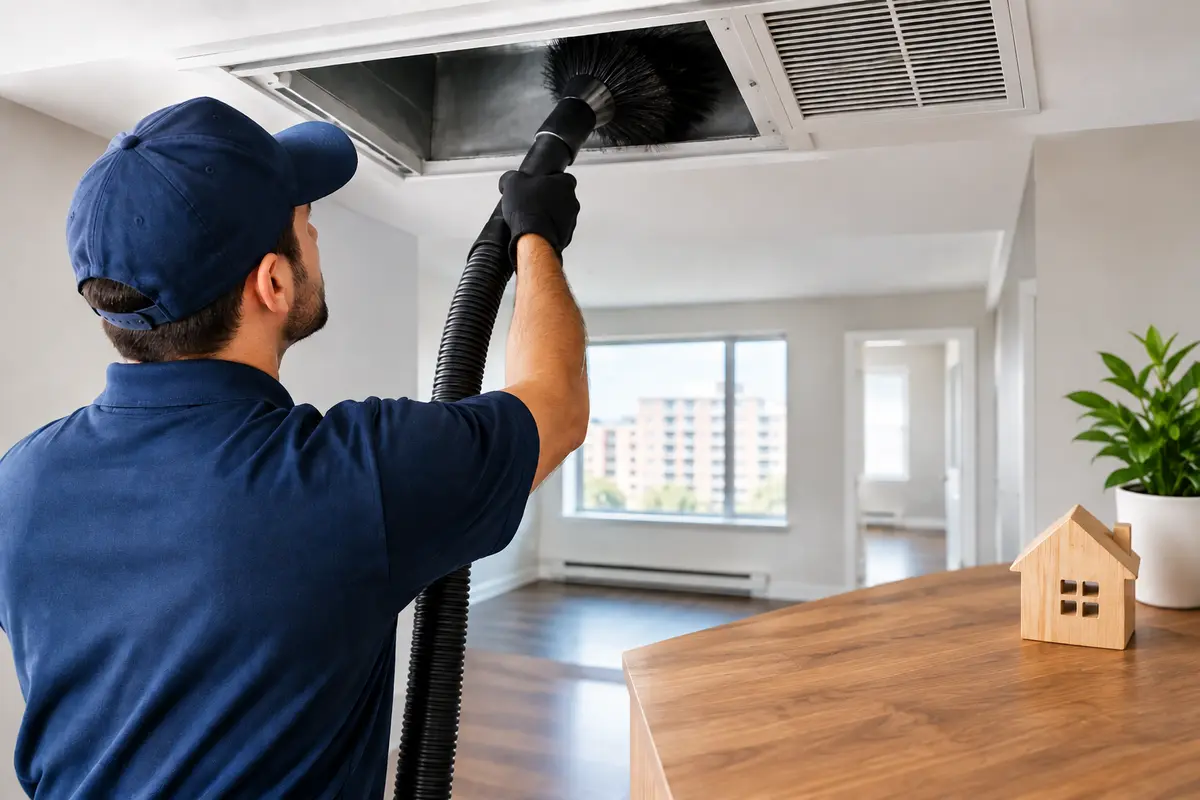
- The cleaning method being used (source-removal with negative pressure, not just a surface vacuum)
- Proof of insurance, provided on request without hesitation
If a company won’t put the scope in writing before starting, that’s reason enough to walk away, regardless of how professional the sales pitch sounds.
What to Do If You Fell for an Air Duct Cleaning Scam
If you’ve already paid for a service that turned out to be a bait-and-switch:
- Dispute the charge with your card issuer if you paid by credit card; this is often the fastest path to getting money back.
- File a complaint with the Better Business Bureau. Many businesses respond within two weeks to avoid a public rating drop.
- Report it to the Massachusetts Attorney General’s consumer protection division, which handles unfair and deceptive business practice complaints in-state.
- Report it to the FTC at ReportFraud.ftc.gov. The FTC won’t resolve your individual case, but reports are shared with law enforcement and help build cases against repeat offenders.
Keep every text, email, and photo from the interaction; that documentation matters at every step above. If you’re also unsure how often should air ducts be cleaned, knowing the recommended cleaning frequency can help you distinguish legitimate maintenance advice from unnecessary services or pressure tactics.
FAQs
- Is air duct cleaning always a scam?
No. Legitimate, NADCA-certified companies provide a real, valuable service. The scam risk comes from a specific subset of “blow-and-go” operators using bait pricing, not from the service itself. - How do I know if a company is really NADCA certified?
Search the company name directly in NADCA’s member directory at nadca.com. Membership isn’t self-reported, so this is the only way to confirm it independently. - Why do scam companies claim to find mold?
It’s a common upsell tactic; an unverified health scare creates urgency and justifies a much higher price than the advertised rate. A legitimate technician documents any findings with photos or testing before recommending treatment. - Does Massachusetts require a license for duct cleaning companies?
No. Massachusetts licenses ductwork installation and refrigeration work separately, but doesn’t have a specific state license for duct cleaning itself, which makes checking NADCA membership and insurance more important here than in states that do license the trade. - What should I do if I already paid for a scam cleaning?
Dispute the charge with your card issuer, file a BBB complaint, report it to the Massachusetts Attorney General’s consumer protection division, and report it to the FTC at ReportFraud.ftc.gov.
Vet Us the Same Way — We’ll Pass
Air Wolfe Air Duct Cleaning serves Needham, Newton, Boston, and the rest of Greater Boston with NADCA-aligned methods, flat-rate written pricing, and inspections you can verify before we start any work. Call (617) 991-6651 or email Info@airwolfeairductcleaning.com.