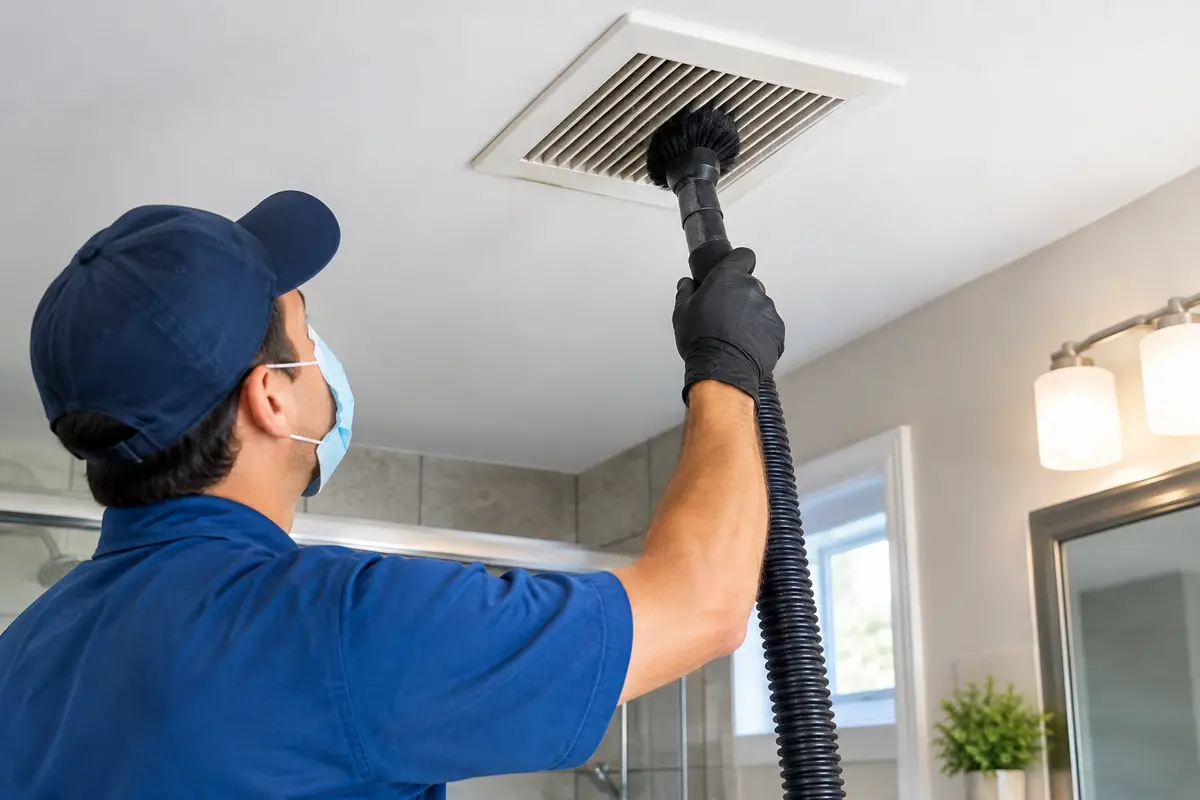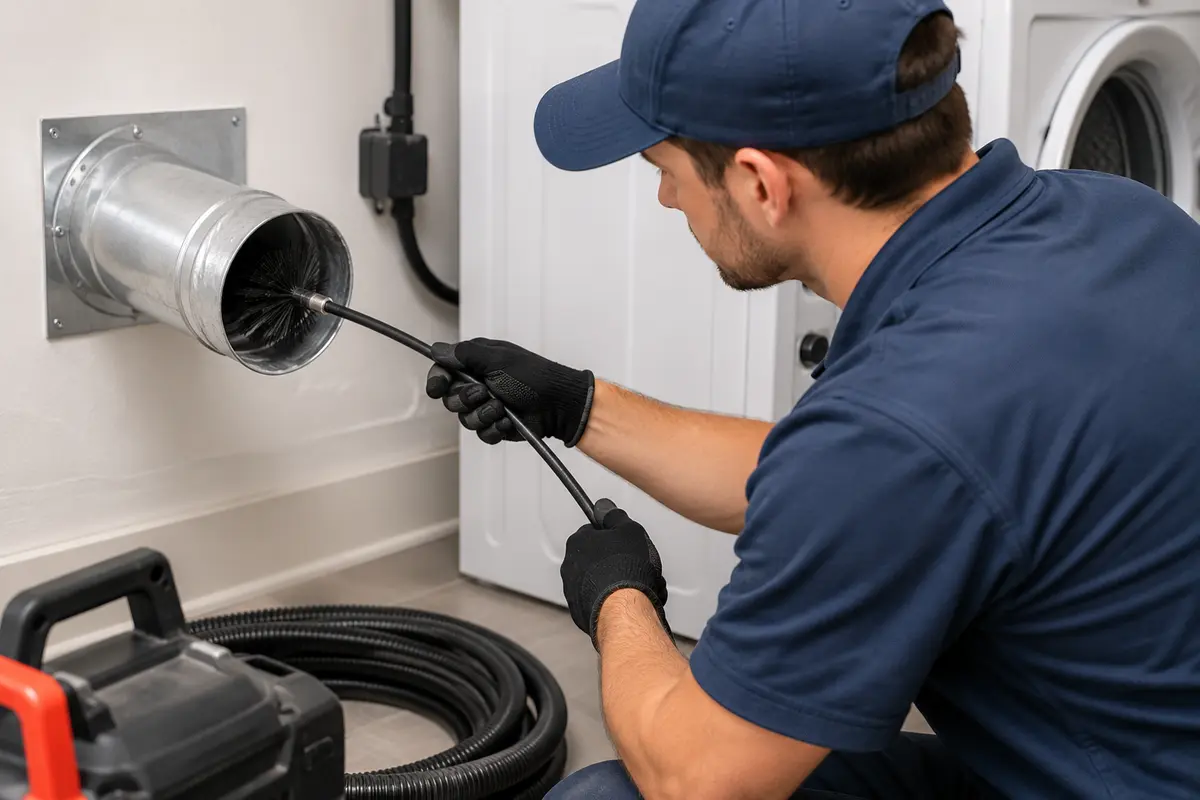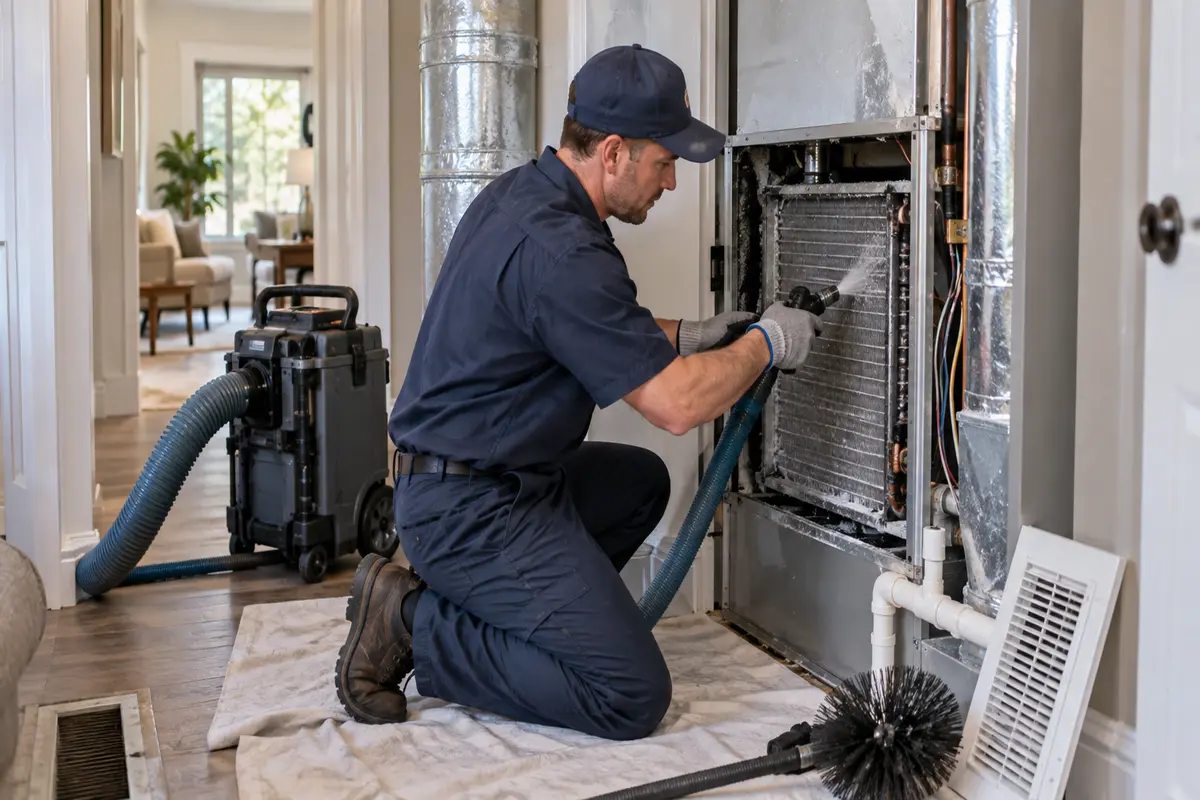
Most homeowners think of laundry dryer vent cleaning as a minor chore, somewhere below cleaning the gutters on the priority list. At Air Wolfe Air Duct Cleaning, based in Needham, we’d challenge that ranking. We see the consequences of a neglected vent throughout Needham, Newton, and Boston, and they extend well beyond slow drying times. Here’s what laundry dryer vent cleaning actually involves, and the full list of reasons it matters more than most homeowners realize.
What Laundry Dryer Vent Cleaning Actually Involves
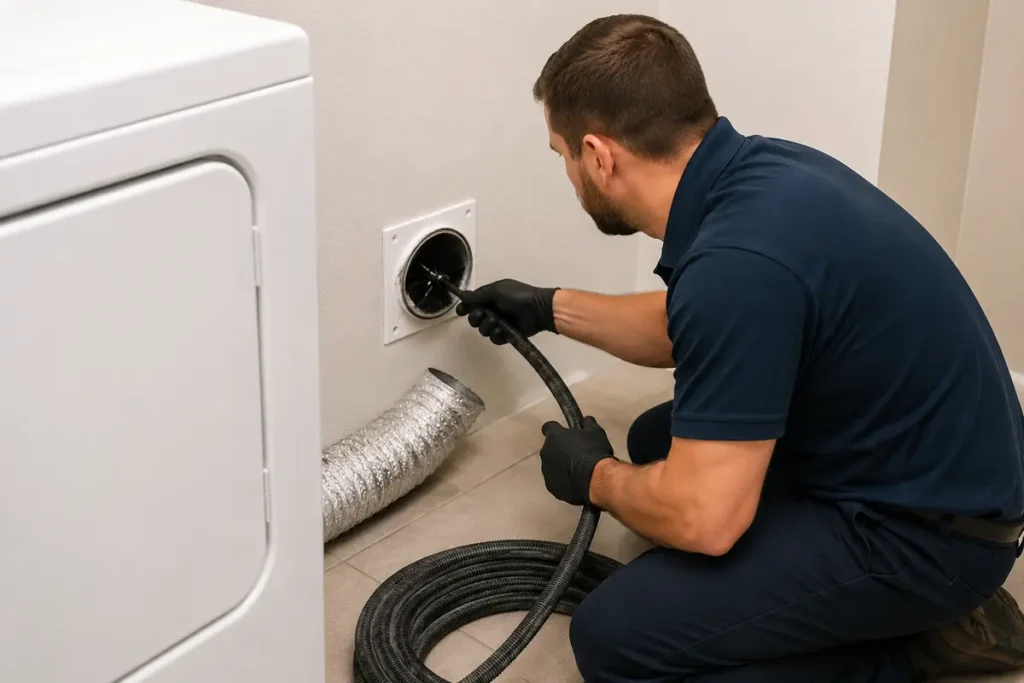
At its core, laundry dryer vent cleaning removes lint, debris, and any blockages from the entire exhaust pathway, not just the lint trap, but the full duct run from the back of the dryer to the exterior termination point. A thorough job clears the connector hose, the wall or floor duct, and the exterior vent cap, then confirms airflow is fully restored.
That’s the short version. If you’re planning to do this yourself, our full step-by-step guide covers the tools and process in detail. If you’re comparing quotes for a professional visit, our guide to what a professional service actually includes breaks down what should be on the invoice. This article focuses on the bigger question underneath both of those: why any of it matters in the first place.
Why Laundry Dryer Vent Cleaning Matters for Fire Safety
Lint is highly flammable, and it accumulates fastest in the sections of ductwork a homeowner never sees, behind the dryer, inside wall cavities, and at the exterior cap. Clothes dryers account for a meaningful share of home fires every year, and a failure to clean the appliance and its venting is consistently one of the leading contributing factors identified by fire safety authorities. A clogged dryer vent can cause a fire, especially when restricted airflow allows heat and lint to build up inside the system. This isn’t a rare or theoretical risk; it’s one of the most common, most preventable fire causes tied to a single piece of household equipment.
The warning signs are usually there before a fire happens: a burning smell during a cycle, a dryer that runs unusually hot, or an exterior vent flap that barely moves when the dryer is running. Laundry dryer vent cleaning addresses the root cause before any of those signs become something worse.
The Energy and Appliance Costs of Skipping Laundry Dryer Vent Cleaning
A restricted vent forces your dryer to run longer and work harder to finish the same load, which shows up in two places: your utility bill and your appliance’s lifespan. Extended run times mean higher gas or electric costs on every single cycle, and the accumulated strain on the motor and heating element shortens the appliance’s usable life well before it should need replacement.
Households running multiple loads a day feel this compounding effect the most. A blocked vent doesn’t just cost you time waiting on a second drying cycle; it costs money on every load, every week, for as long as the blockage goes unaddressed.
The Insurance Angle Most Homeowners Don’t Connect to Laundry Dryer Vent Cleaning
Here’s a consequence of skipping laundry dryer vent cleaning that rarely comes up: homeowners insurance is generally structured to cover sudden, unforeseen damage, not damage that traces back to a lack of routine maintenance. If a dryer fire investigation finds that a vent hadn’t been cleaned in years and lint accumulation was a contributing factor, that finding can complicate or jeopardize an insurance claim, since neglect-related damage is a common and well-documented basis for reduced or denied coverage. This isn’t guaranteed in every case, and policy language varies, but it’s a real enough risk that it’s worth asking your insurance agent directly whether routine appliance maintenance factors into your policy’s coverage terms, and worth having a documented, dated service record if you ever need to show one.
Laundry Dryer Vent Cleaning and Indoor Air Quality
A blocked vent doesn’t just trap lint; it traps moisture. Every drying cycle pushes a significant amount of water vapor out through the vent, and when that pathway is restricted, moisture can back up into the wall cavity or laundry area, creating conditions for mold growth over time. The EPA’s guidance on mold, moisture, and home ventilation recommends venting clothes dryers to the outside because controlling moisture is essential for preventing mold growth.
For gas dryers, there’s an added safety dimension: a blocked or poorly functioning vent can allow combustion byproducts, including carbon monoxide, to back up into the home instead of venting outside. This is one of the more serious reasons gas dryer owners shouldn’t treat vent cleaning as optional, and it’s worth having a technician confirm proper venting anytime a gas dryer’s exhaust performance seems off.
FAQs
- How often should laundry dryer vent cleaning be done?
Most homes should plan on once a year. Larger households, homes with pets, or anyone running multiple loads daily should consider every six to nine months. - Does laundry dryer vent cleaning really reduce fire risk?
Yes. Lint buildup is one of the most commonly identified contributing factors in home clothes dryer fires, and removing it addresses the root cause directly. - Can a dirty dryer vent actually raise my energy bill?
Yes. A restricted vent forces the dryer to run longer per load, which increases gas or electric usage on every cycle until the blockage is cleared. - Is laundry dryer vent cleaning something insurance requires?
Not explicitly, but neglect-related damage is a common basis for reduced or denied homeowners insurance claims. Keeping a dated service record is a reasonable precaution, and it’s worth confirming your policy’s specific terms with your insurance agent. - Is gas dryer vent cleaning more urgent than electric?
It carries an additional safety consideration. A blocked gas dryer vent can allow combustion byproducts, including carbon monoxide, to back up into the home, which isn’t a risk electric dryers carry in the same way.
Ready to Take Care of the Part Most Homeowners Overlook?
Air Wolfe Air Duct Cleaning serves Needham, Newton, Boston, and the rest of Greater Boston with full-length laundry dryer vent cleaning and a dated service record for your files. Call (617) 991-6651 or email Info@airwolfeairductcleaning.com to schedule service.