
That damp, sock-drawer smell the moment your AC kicks on almost always means moisture has settled somewhere it shouldn’t: on the evaporator coil, in the condensate drain line, or inside the ductwork. Air Wolfe Air Duct Cleaning gets calls about this constantly, especially in early summer when a system that’s been sitting idle all spring finally gets pushed into regular use. Here’s how to find where a musty smell when the AC turns on is actually coming from, what you can check yourself, and when it’s time to call someone.
What Causes a Musty Smell When AC Turns On?
A musty AC smell is caused by mold, mildew, or bacteria growing on a damp surface somewhere inside your cooling system. Air conditioners naturally produce condensation as they remove humidity from the air. When that moisture doesn’t drain away properly, it becomes the perfect environment for mold to take hold. From there, when the blower kicks on, it pushes air across that contaminated surface and carries the mildew smell straight into your living room.
Three common places this starts are:
Dirty Evaporator Coil and Musty AC Smell
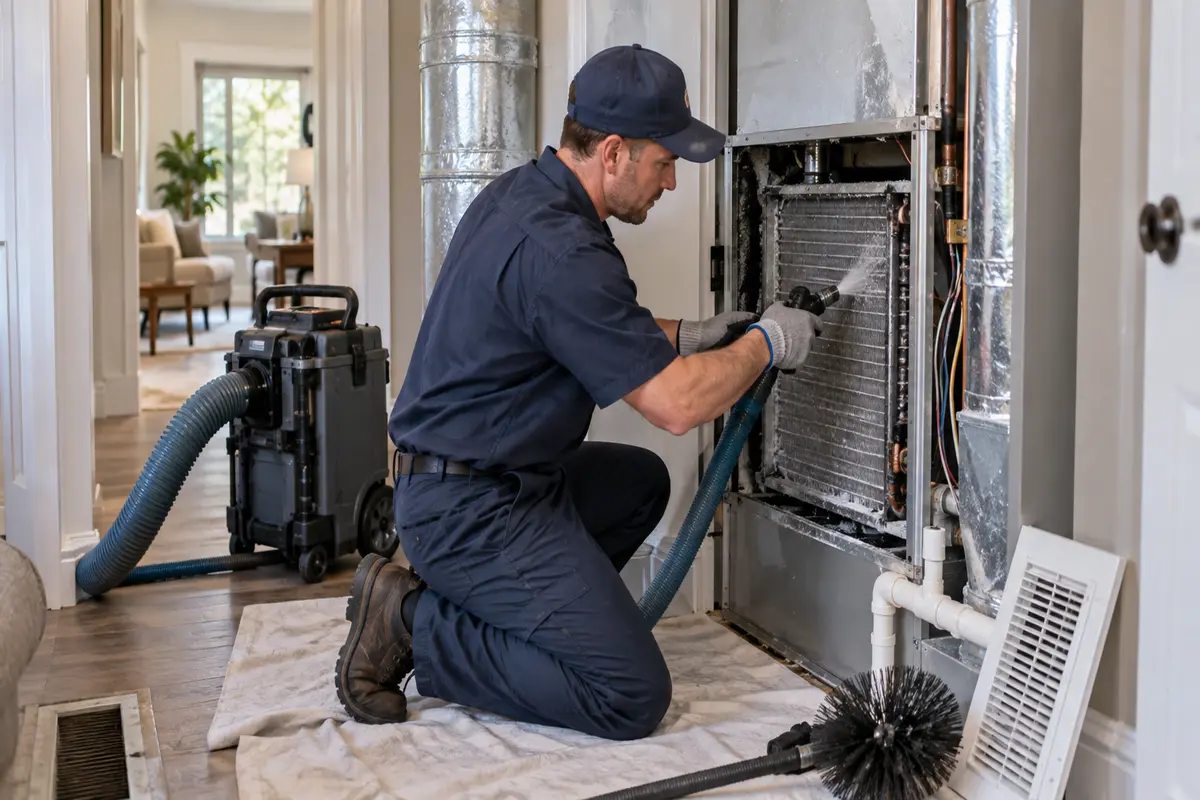
The coil inside your air handler gets cold and wet every time the system runs. Dust that settles on a damp coil turns into a food source for mold, and a dirty evaporator coil is one of the most common reasons an AC smells musty as soon as it cycles on.
Clogged Condensate Drain Line
The condensate line should carry moisture away from the unit. When it clogs with algae or sediment, water backs up and sits in the drain pan instead of draining out, giving mold and bacteria a place to grow undisturbed.
Mold or Moisture Inside Air Ducts
If ducts run through an attic, basement, or crawl space and aren’t properly sealed or insulated, humid outside air can condense on the inside walls of the duct. This is especially common in older New England homes, where duct runs weren’t always insulated to today’s standards. As a result, it can cause a musty smell from vents specifically, rather than a smell that seems to come from the unit itself.
Is a Musty Smell From AC Vents Normal?
There’s a real difference between a brief musty whiff and a smell that won’t quit. If you’re running your AC for the first time after a long winter, a faint musty smell for a day or two is common; dust and light moisture that settled over the off-season get stirred up and usually clear on their own. Some homes also notice a short burst of musty air in the first minute or two of every cycle, as stale air sitting in the ducts gets pushed out before fresher, cooled air takes over. If the smell fades quickly and doesn’t linger, there’s typically nothing urgent to address. By contrast, if the smell comes back every single time the system cycles on and doesn’t fade, that’s a sign of an actual moisture source somewhere in the system that needs to be found and fixed, not something that will resolve on its own. One important distinction: a musty or damp smell differs from a rotten-egg or sulfur smell, which can indicate a gas leak, and from a burning or electrical smell, which can mean a wiring or motor problem. Both of those warrant shutting off the system and calling a professional immediately rather than troubleshooting on your own.
How to Find the Source of a Musty AC Smell
Before assuming the worst, do a few quick checks.
Check the Air Filter
A filter that hasn’t been changed in months traps dust, moisture, and organic material, exactly what mold needs to grow. Pull it out and look at it. If it’s grey, matted, or damp, replace it. Most residential filters need changing every one to three months.
Inspect the Condensate Drain and Indoor Unit
Look for standing water, staining, or a damp smell concentrated near the air handler itself. This usually points to a clogged condensate drain line rather than the ductwork.
Check the Vents for a Musty Smell
Remove one or two registers and shine a flashlight inside. Dark streaking, visible dust buildup, or a musty smell right at the vent opening suggests the contamination is inside the ducts themselves, not just at the unit.
If none of these turn up an obvious answer, or if what you find looks like active mold growth, it’s time to bring in a professional rather than continuing to guess.
Does Air Duct Cleaning Fix a Musty Smell?
This is where homeowners often get confused, so it’s worth being direct: air duct cleaning doesn’t fix every musty smell, and you should know which is which before you book a service.
When You Need Air Duct Cleaning for a Musty Smell
Air duct cleaning is the right call when:
- There’s visible dust, debris, or mold growth inside the ductwork.
- The musty smell travels through the vents themselves rather than concentrating near the indoor unit.
- Ducts run through a damp basement or poorly ventilated crawl space and have never been cleaned.
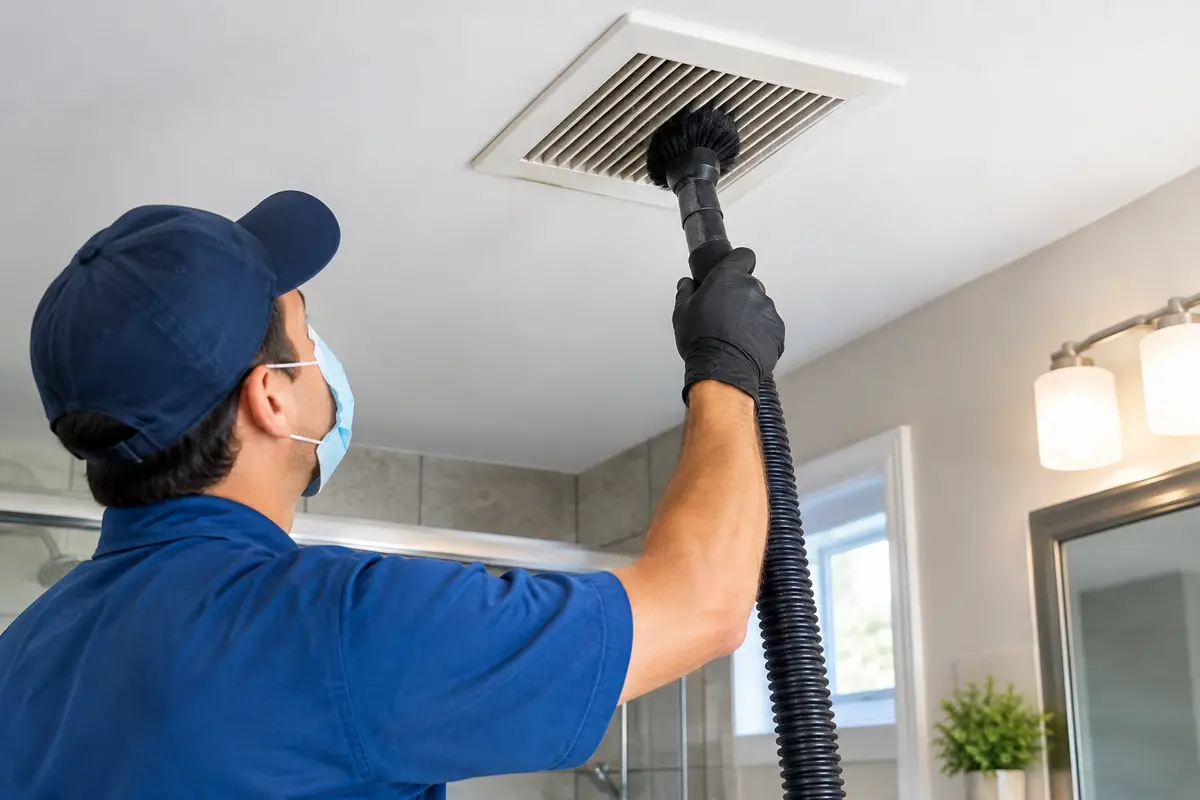
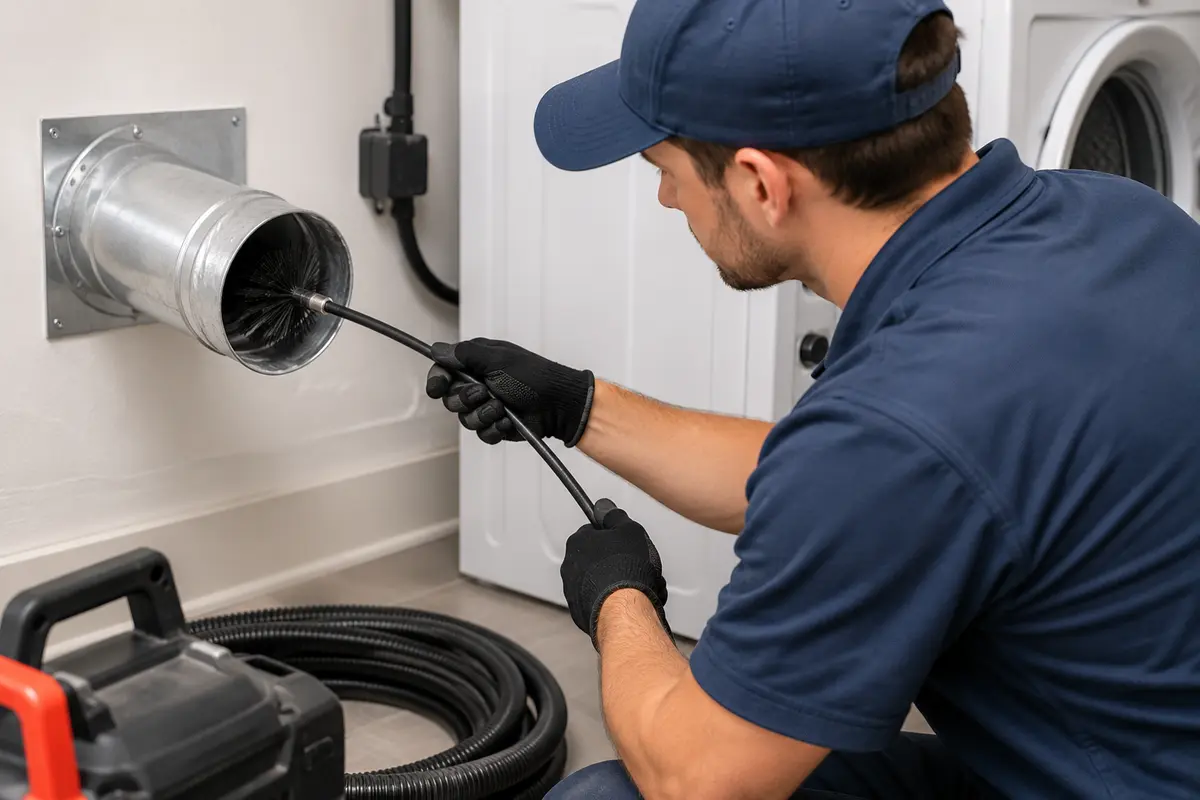
When the smell is coming from the ductwork, a professional cleaning removes the dust and organic material mold needs to survive, using negative-pressure equipment and mechanical agitation to dislodge debris from the full length of the duct run rather than just the areas a homeowner can reach with a vacuum. Mold in ductwork isn’t something that can be safely or effectively treated with a spray bottle — that only masks the smell on the surface without removing what’s growing further down the line.
When You Need an HVAC Technician Instead
Call an HVAC technician if the problem is a moldy or dirty evaporator coil, a clogged condensate drain line or overflowing drain pan, or a refrigerant issue affecting how the system handles humidity. These require opening the air handler and working on mechanical components, which is HVAC repair, not duct cleaning. A lot of homes end up needing both: an HVAC tech to fix the moisture source, and duct cleaning to remove the mold, dust, and debris that already built up as a result.
Can Mold in Air Ducts Cause a Musty Smell?
Yes, contaminated ductwork is one of the most direct causes of a persistent mildew smell from HVAC systems, because every time the blower runs, air moves across the mold-affected surfaces and carries the odour into every room the ducts serve. But cleaning the ducts only solves half the problem if the moisture that let mold grow in the first place is still there. Mold in air ducts needs a moisture source to keep coming back, so addressing condensation, humidity, or a duct leak matters just as much as the cleaning itself.
It’s also worth knowing that this goes beyond the smell. Circulating mold spores and dust from dirty air ducts can affect how you feel at home; allergy and respiratory symptoms that flare up specifically when the AC or heat is running are a common sign the ductwork itself is contaminated.
Why AC Smells Musty in Older Massachusetts Homes
Massachusetts summers bring exactly the kind of humidity swings that create this problem: hot, muggy stretches that push AC systems hard, followed by cooler nights where condensation has time to sit undisturbed. Homes with ductwork running through basements or unfinished crawl spaces, common throughout older housing stock in Needham, Newton, and the surrounding towns, are especially prone to it, since those spaces tend to run damper than the living areas above them. If your ducts haven’t been inspected in a few years, a musty smell that shows up every cooling season is often the first sign worth paying attention to.
How to Prevent a Musty Smell From Your HVAC System
A few habits go a long way toward keeping a musty smell when the AC turns on from becoming a recurring problem:
- Replace your air filter on schedule rather than waiting until it looks obviously dirty.
- Have your condensate drain line checked and cleared as part of annual HVAC maintenance
- Keep indoor humidity in the 30–50% range where mold has a harder time establishing itself.
- Have ductwork inspected periodically for moisture, particularly if it runs through a basement, attic, or crawl space
The EPA’s guide to mold and moisture control confirms that controlling moisture at the source is the most effective long-term fix; treating the smell without addressing the underlying dampness usually means it comes right back within a season.
Frequently Asked Questions
- Why does my AC smell musty when it turns on?
Moisture has settled on a surface inside the system, most often the evaporator coil, the condensate drain line, or the inside of the ductwork, and mold or mildew is growing there. When the blower starts, it pushes air across that surface and carries the smell into the house. - Why does my AC smell musty for the first few minutes?
A brief musty smell right when the system starts, especially early in cooling season, is often just stale air that sat in the ducts while the system was idle. If it fades within a few minutes or clears up after a couple of days of regular use, it usually isn’t a sign of a bigger problem. If it persists every cycle, it’s worth checking further. - Can mold in air ducts cause a musty smell?
Yes. Contaminated ductwork is one of the more common sources of a musty smell that seems to come from the vents rather than the unit itself. Mold needs a moisture source to keep growing, so you must address the underlying dampness along with the cleaning. - Will air duct cleaning get rid of a musty AC smell?
It depends on where the smell is coming from. If the contamination is inside the ducts, professional cleaning removes it. If the source is a dirty evaporator coil or a clogged condensate drain line, duct cleaning won’t resolve it; an HVAC technician will. Many homes with a long-standing musty smell need both services. - When should I call an HVAC technician for a musty smell?
Call an HVAC technician if you notice standing water or staining near the indoor unit, if the smell seems concentrated at the air handler rather than at the vents, or if you suspect the evaporator coil or drain line is the source. Those are mechanical components that need direct service, not duct-side cleaning.