Property managers and laundromat owners rarely think about dryer vents until something goes wrong: a tenant complaint about a dryer that takes three cycles to finish a load, a spike in the utility bill, or worse, a small fire that starts in a laundry room and traces back to a duct nobody had cleaned in years. Air Wolfe Air Duct Cleaning works with apartment complexes and laundromats across Greater Boston to set up commercial dryer vent maintenance plans that catch these problems before they become expensive or dangerous. Here’s what a maintenance plan covers, how often different property types need service, and what Massachusetts fire code expects from building owners.
Why Commercial Dryers Need a Structured Maintenance Plan, Not Just Occasional Cleaning
A single-family home might run its dryer once a day. An apartment building’s shared laundry room or a laundromat runs dryers almost continuously, so lint accumulates in the exhaust duct much faster than residential guidance accounts for. Regular laundry dryer vent cleaning helps keep up with that higher volume and reduces the risk of restricted airflow. A one-time cleaning, or a plan that only reacts once someone complains, doesn’t keep pace with that volume.
The fire risk is well documented. NFPA research on home structure fires involving clothes dryers consistently identifies failure to clean the appliance and its venting system as a leading contributing factor, and lint or fibre buildup as one of the most common materials first ignited. In a multi-unit building, that risk doesn’t stay contained to one unit. A laundry room fire can spread through shared duct chases and walls before anyone notices smoke.
Property managers also can’t ignore the liability angle. Insurance carriers increasingly ask for documented maintenance records after a claim, and a lint-caked exterior vent cap is one of the easiest deficiencies for a fire inspector to spot during a routine walkthrough.
What’s Included in a Professional Commercial Dryer Vent Maintenance Plan
A real maintenance plan is more than someone showing up once a year to brush the vent. Here’s what should actually happen at each visit.
Full Duct Run Inspection, Not Just the Lint Trap
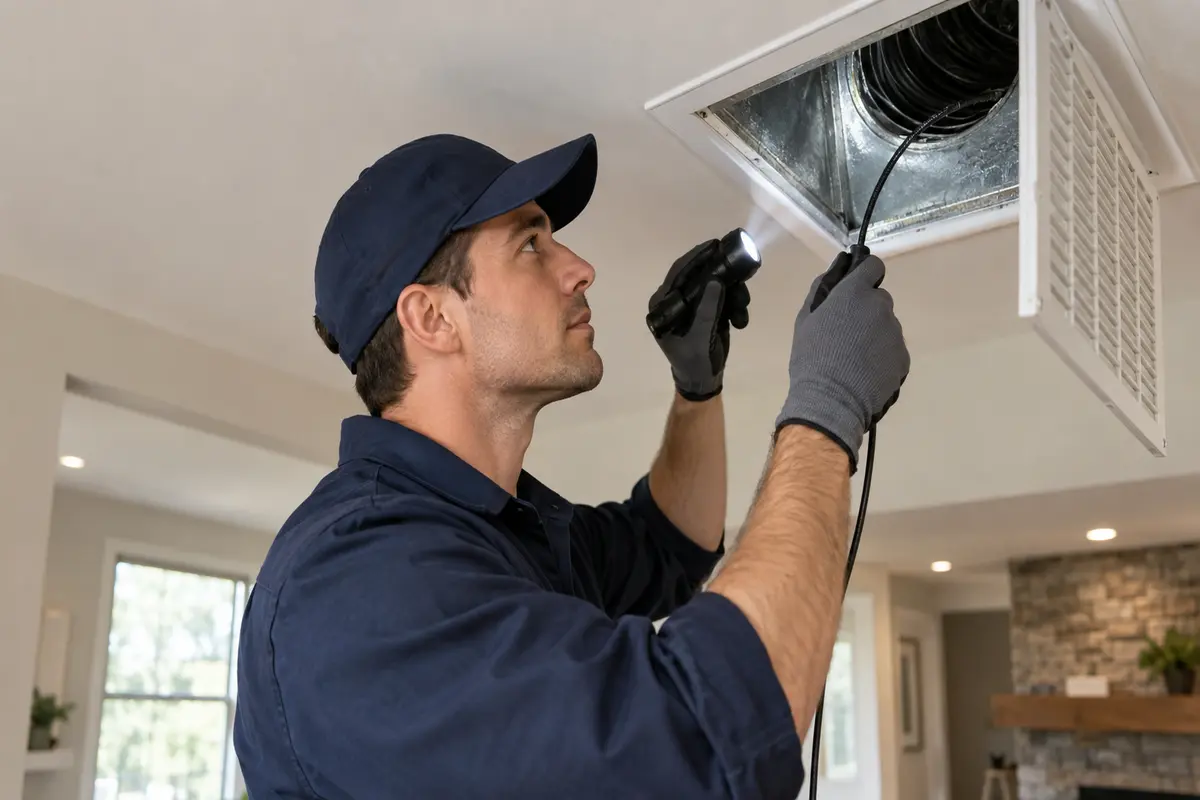
Tenants and laundromat staff can clean the lint trap themselves before every load, but that only catches the fibres that don’t make it past the screen. The rest travels into the duct, where it collects at bends, transitions, and long horizontal runs that a homeowner-grade vacuum can’t reach. A proper inspection checks the full path from the dryer connection to the exterior termination, including any cleanout access points built into the system.
Mechanical Lint Removal Along the Entire Vent
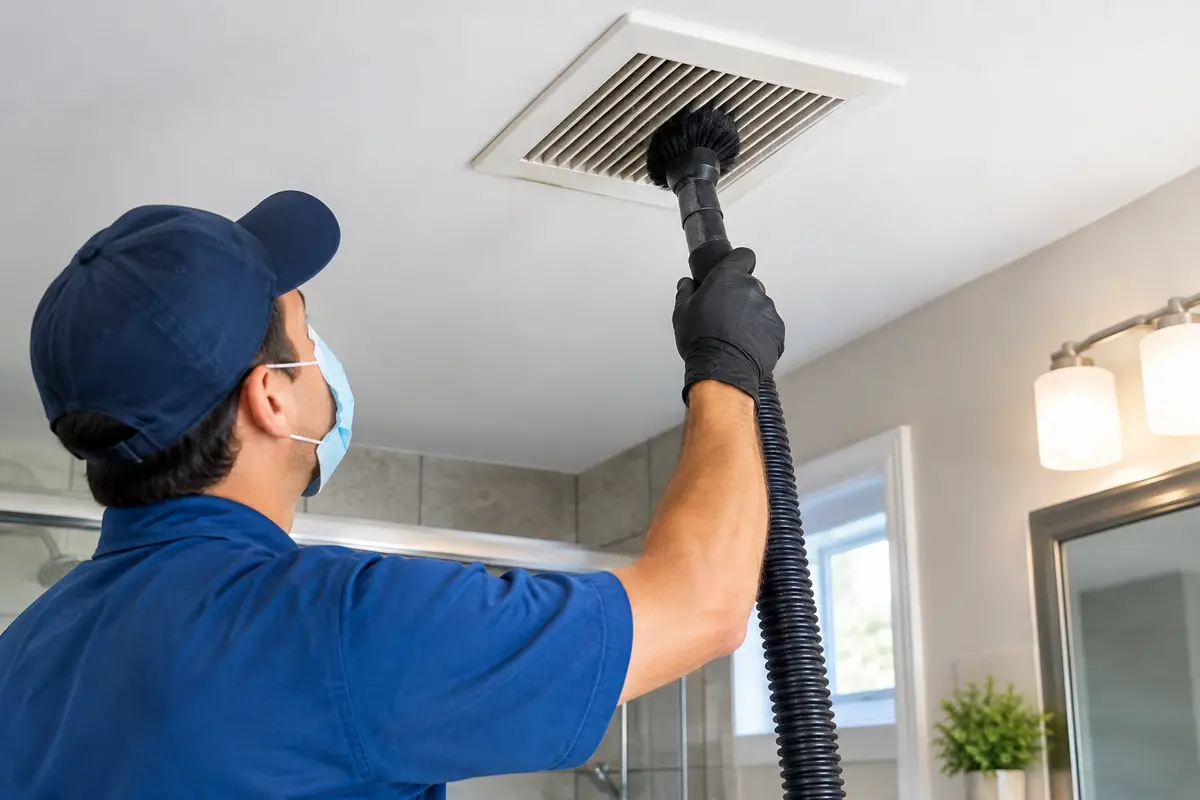
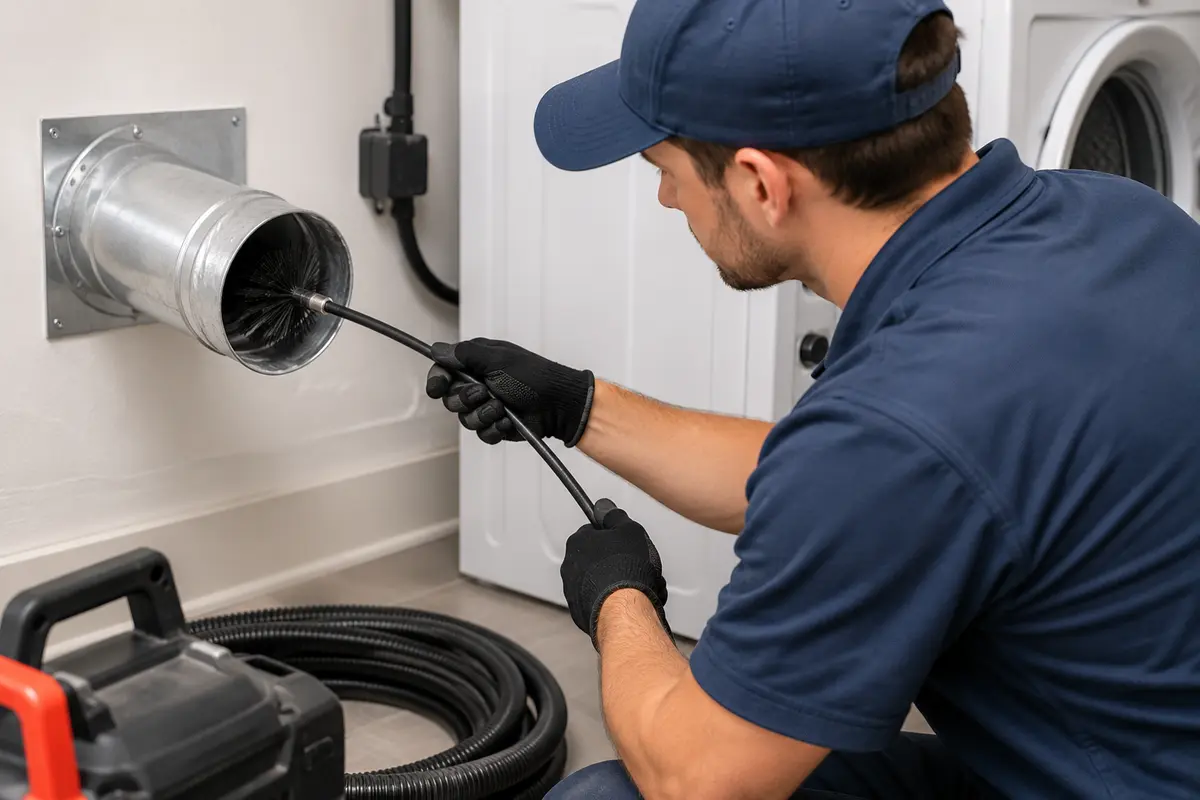
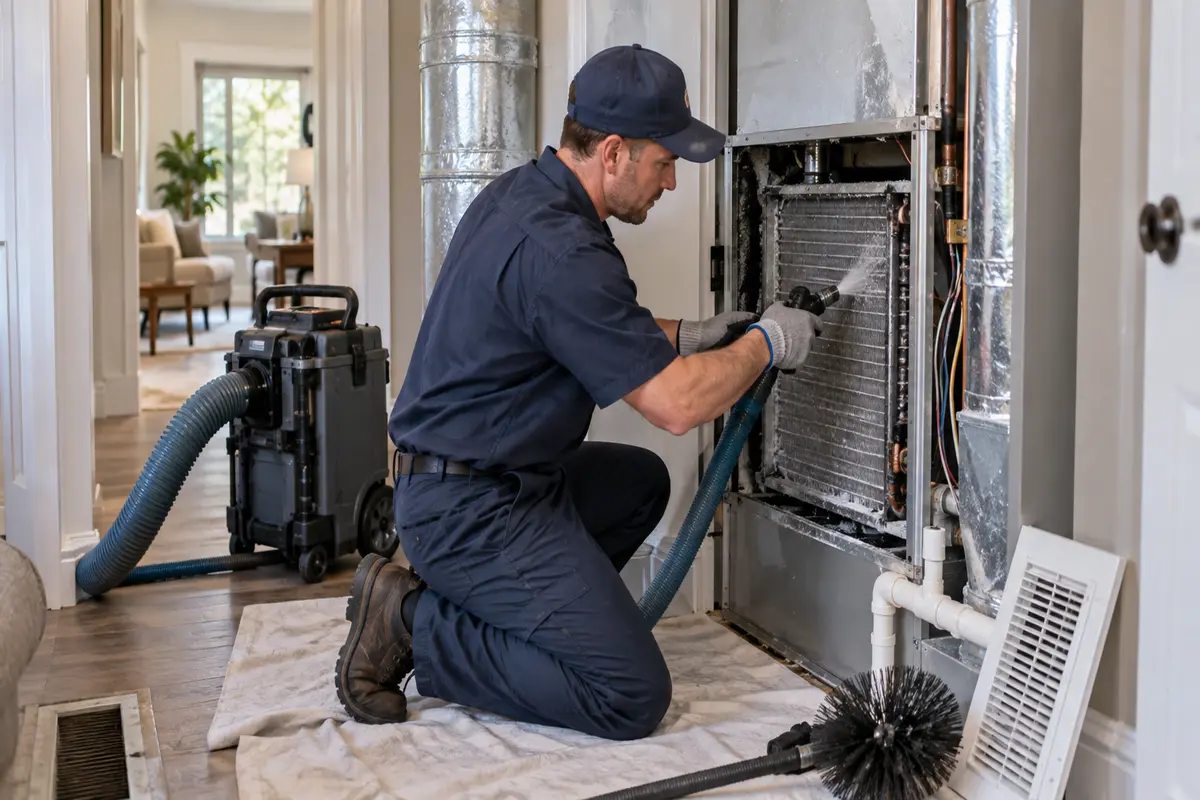
Commercial-grade cleaning uses rotary brush systems, high-pressure air, and industrial vacuum extraction to dislodge compacted lint from the duct’s interior walls, not just what’s visible near the access points. Long runs with multiple bends, common in apartment buildings where laundry rooms are centralised on one floor, need this kind of mechanical agitation to clear lint that’s been packed down over months of continuous use.
Airflow and Termination Check
After cleaning, a technician should confirm that air is actually moving freely through the system and exiting cleanly at the exterior vent. A duct that’s technically been cleaned but still has a damaged or partially blocked exterior cap won’t perform any better than before the service.
Documentation for Compliance and Insurance
Every visit should leave the property with a record: date of service, what was found, what was cleaned, and any repairs or follow-up recommended. This paperwork matters more than most property managers expect; it’s what supports an insurance claim, satisfies a fire marshal’s request for maintenance history, and protects the property if a dryer-related incident is ever investigated.
How Often Apartment Complexes and Laundromats Need Dryer Vent Cleaning
Frequency of professional dryer vent cleaning depends heavily on how hard the dryers are working and how the vent system is configured.
Laundromats with continuous customer traffic typically need cleaning every two to three months. High turnover, older dryers, and long operating hours all accelerate lint buildup well beyond what an annual schedule can handle.
Apartment complexes with shared laundry rooms usually fall somewhere between quarterly and twice-a-year service, depending on the number of units served by each laundry room and how many machines run daily.
In-unit dryers across a multi-family building, where each apartment has its own washer and dryer, generally need less frequent professional attention than a shared laundry room, but coordinating access across dozens of units on a rotating schedule, often timed to unit turnovers, tends to work better than trying to service every unit at once.
Vent length and duct configuration matter just as much as usage. A run with several bends or a long horizontal stretch traps lint faster than a short, straight shot to the exterior wall, so two properties with similar dryer usage can still need different cleaning intervals.
Massachusetts Fire Code Expectations for Commercial Dryer Vents
Massachusetts adopts its fire safety requirements through the Massachusetts Comprehensive Fire Safety Code, 527 CMR 1.00, which is based on NFPA 1. That code framework places maintenance responsibility for dryer exhaust systems squarely on the property owner, and local fire marshals do enforce it. A lint-clogged exterior vent cap is visible from the sidewalk, which makes it one of the easier violations for an inspector to document during a routine check.
Installation standards for the ductwork itself, material, maximum length, and how the system terminates outdoors, generally follow the International Residential and Mechanical Codes, which most Massachusetts municipalities incorporate into their local building requirements. If a property has an older or non-standard vent configuration, especially the retrofit venting common in Boston’s triple-deckers and converted multi-family buildings, that’s worth flagging during an inspection, since undersized or overly long duct runs create fire risk even with regular cleaning.
Code specifics can vary by municipality, so a property manager facing a fire marshal inspection or a specific citation should confirm current requirements with the local fire department rather than relying on general guidance alone.
Signs Your Current Maintenance Schedule Isn’t Keeping Up
Even with a plan in place, a few warning signs mean the interval needs to be tightened up:
- Dryers taking noticeably longer to finish a normal load.
- Tenants or customers reporting a burning smell during operation.
- Visible lint accumulating around the exterior vent cap or flap
- Rising utility bills without a corresponding increase in usage
- The exterior vent flap not opening fully while a dryer is running.
Any one of these on its own is worth a call. Several happening together usually means a clogged dryer vent has already built up well past what the current schedule accounts for.
Setting Up a Maintenance Plan for Your Property
Every property is different, and a maintenance plan should reflect that rather than following a generic annual template. Air Wolfe works with property managers to map out how many laundry connections need service, how heavily they’re used, and how the building’s duct runs are configured, then builds a cleaning interval around that instead of a one-size-fits-all schedule. For buildings that also run centralised HVAC systems, commercial HVAC duct cleaning is a separate service from dryer vent maintenance; the two systems serve different purposes and typically need to be scheduled independently, even though both affect a building’s overall air quality and safety.
Watching for the warning signs of a dryer vent that needs attention between scheduled visits gives property staff an easy way to flag problems before the next service date arrives. NFPA’s own research on home fires involving clothes dryers makes the case plainly: the properties that stay ahead of this maintenance are the ones that avoid becoming part of that data.
Frequently Asked Questions
- How often should a laundromat get its dryer vents cleaned?
Most laundromats need professional dryer vent cleaning every two to three months because of continuous, high-volume dryer use. Properties with older machines or longer duct runs may need to clean even more frequently. - Does law require dryer vent cleaning for apartment buildings in Massachusetts?
Massachusetts fire code, adopted through 527 CMR 1.00 and based on NFPA 1, places responsibility for maintaining dryer exhaust systems on the property owner, and local fire marshals do inspect for compliance. Specific enforcement and documentation requirements can vary by municipality, so confirm details with the local fire department. - What’s the difference between cleaning a lint trap and cleaning the dryer vent duct?
The lint trap catches large fibres before they enter the exhaust duct, and tenants or staff can clean that themselves before each load. The duct itself is the exhaust path running from the dryer to the outside of the building, and lint that gets past the trap collects there over time. That part requires professional equipment to clean thoroughly, especially in long or bent commercial duct runs. - How much lint buildup is actually a fire hazard?
No single visual threshold applies to every system, since duct length, airflow, and dryer usage all affect how quickly buildup becomes dangerous. Warning signs like longer drying times, a burning smell, or reduced airflow at the exterior vent are more reliable indicators than estimating lint thickness by eye. - Can a dryer vent maintenance plan actually lower energy costs?
Yes. A blocked or partially clogged vent forces the dryer to run longer and work harder to dry the same load, which increases energy use per cycle. Keeping the vent clear through scheduled maintenance helps dryers run at their intended efficiency, which matters even more in a laundromat or apartment complex running multiple machines daily.